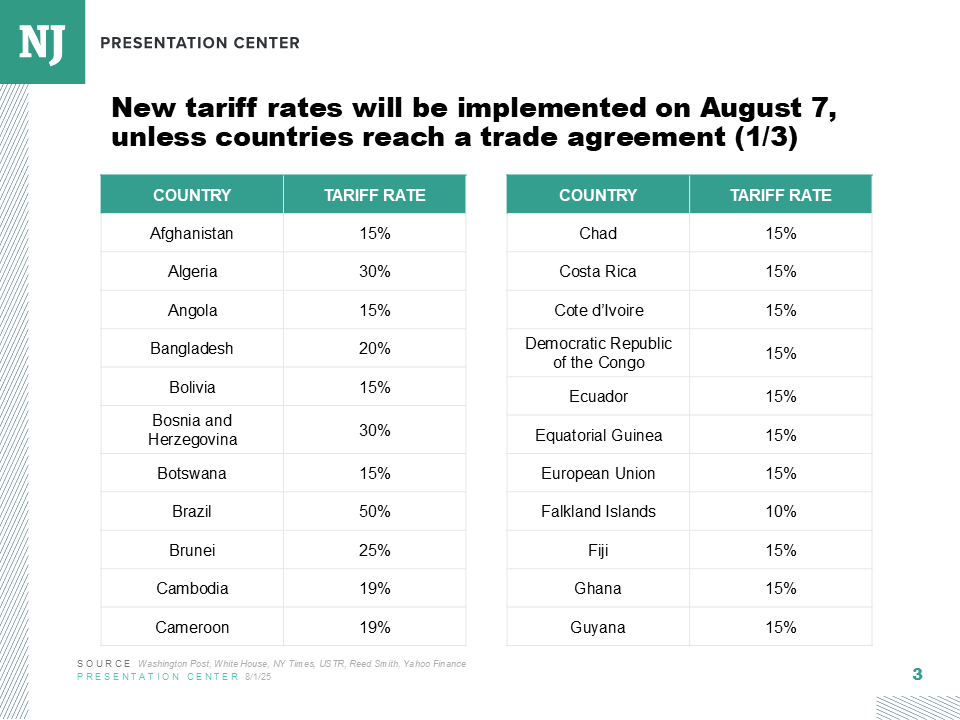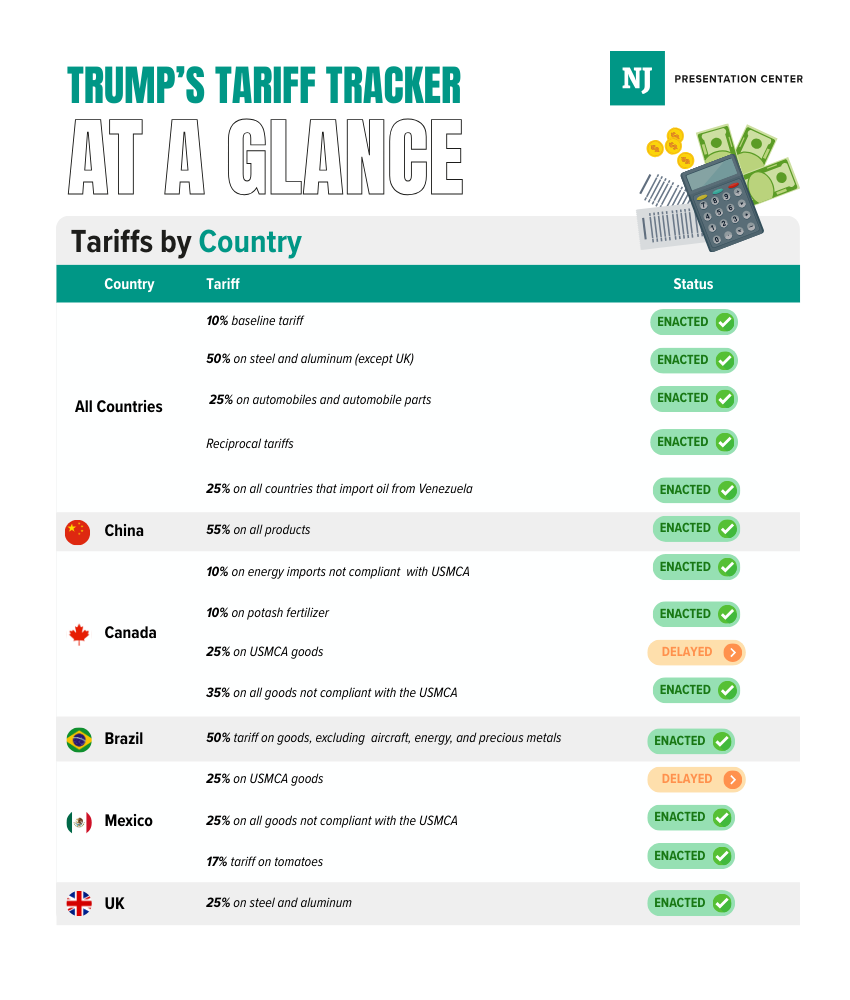
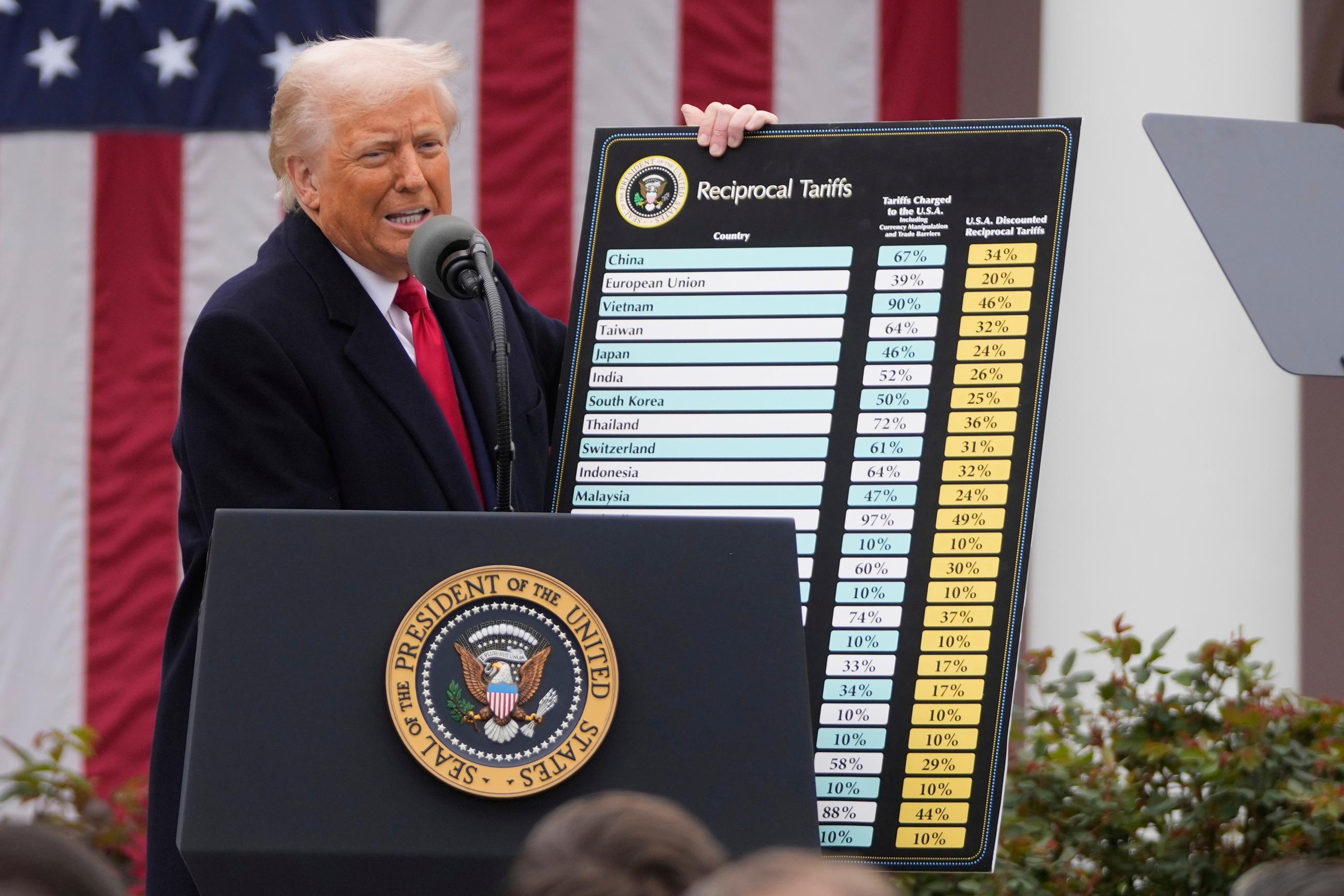

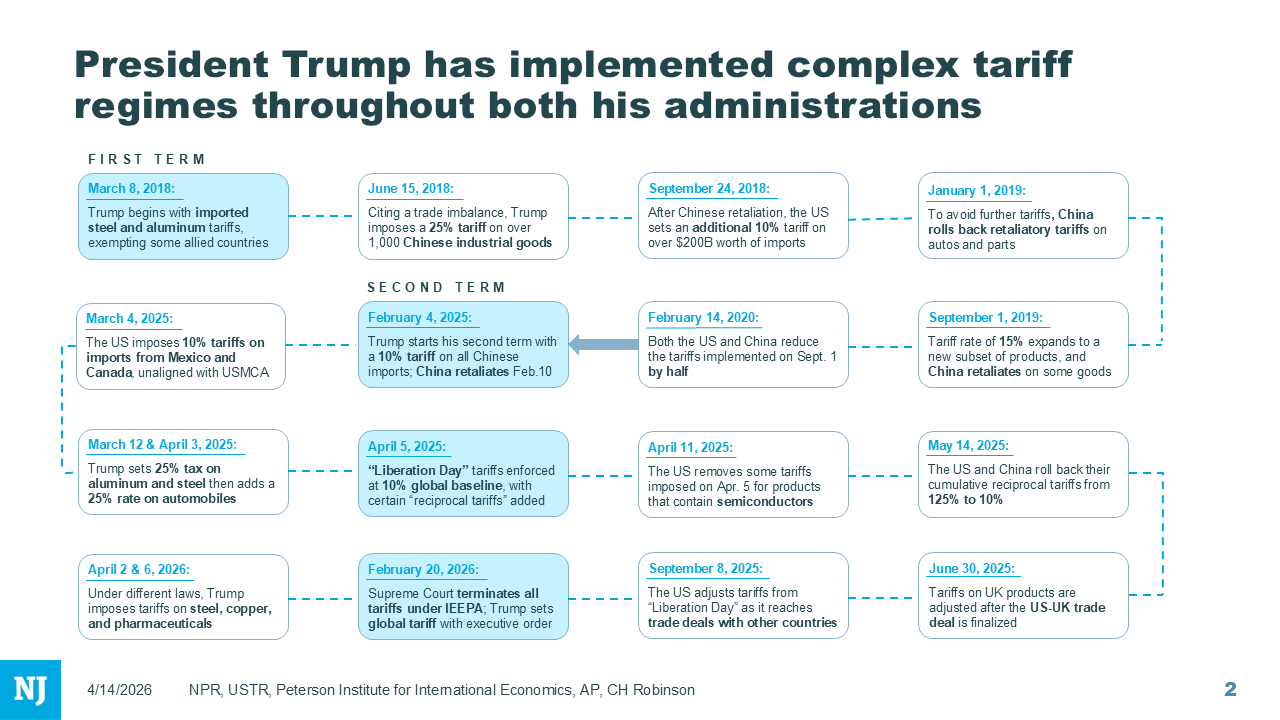
Remember “Liberation Day” last spring, when President Trump rolled out a detailed list of tariffs?
While the legal fate of those tariffs, a tax on imported goods and services, goes up and down, data show that they’re costing consumers more money—despite the president's frequent claims otherwise.
The Tax Foundation estimates tariffs meant an average tax increase of $1,000 per U.S. household in 2025. This year, the group predicts a $700 hit.
Other independent studies have made similar findings.
The Federal Reserve Bank of Dallas estimated in March that tariffs contributed significantly to the inflation rate and found that businesses were often passing tariffs straight through to consumers.
The annualized rate of inflation was 3.3 percent in March and 3.8 percent in April, both among the highest levels in years. While those figures were boosted by fuel-price spikes triggered by the Iran war, the tariffs also contributed in a big way.
There’s little anticipation of the price spikes significantly easing anytime soon. KPMG, an audit and tax firm, surveyed business leaders this spring, and found that 34 percent were passing on more than half the tariff-related costs to consumers.
The survey also found 55 percent of executives intended to raise prices by as much as 15 percent in the next six months. That prospect, KPMG said, is “reinforcing that tariffs are now embedded in standard pricing models rather than treated as a temporary disruption.”
Trump’s emergency
Trump held an elaborate “Liberation Day” ceremony at the White House on April 2, 2025, to introduce and detail his tariff policy.
He officially declared the nation’s trade deficit—long bemoaned by most economists as a serious drag on the economy—as a national emergency.

The president that day issued a lengthy executive order detailing what he said were long-festering trade imbalances that were hurting U.S. manufacturing capacity and putting this country in an unfair trading position.
“Our country and its taxpayers have been ripped off for more than 50 years, but it is not going to happen anymore,” he said.
Trump imposed tariffs nearly everywhere, setting off a furious response from a jolted global financial community. He then quickly pivoted, suspending some tariff increases.
Courts weighed in, and the Supreme Court ruled in February that Trump had no authority to declare such an emergency.
While a long list of tariffs remains in effect, when or even if any of the affected tariffs will be refunded to business and consumers is highly uncertain.
“Given the possibility for prolonged litigation or a less-than-straightforward refund process, it’s too early to estimate when importers will get their money back, and how much of it they will get,” an analysis from the Cato Institute stated.
Consumers feel the pain
Rising gasoline prices may be more obvious to consumers since they’re plastered on signs up and down roads all over the country. But the tariff-influenced increases are arguably causing just as much financial pain.
Take the case of tomatoes. Last summer, the U.S. upped the levy on tomatoes from Mexico, a major supplier to this country.
“Mexico remains one of our greatest allies, but for far too long our farmers have been crushed by unfair trade practices that undercut pricing on produce like tomatoes. That ends today,” Commerce Secretary Howard Lutnick declared at the time.
“This rule change is in line with President Trump’s trade policies and approach with Mexico,” Lutnick added.
Recently, the Bureau of Labor Statistics found that tomato prices were up 15.1 percent in April after climbing 15.3 percent the previous month.
What’s ahead?
At the Tax Foundation, senior economist Alex Durante said that while “some relief has been offered for agricultural products like coffee, our analysis shows that more than half of food imports still face tariffs, so we should still expect some impacts there too.”
A Tax Foundation analysis considered Trump’s defense of tariffs as an important way to increase domestic production and boost job growth.
But, the group said, “in the case of food imports, it is often difficult or impossible to onshore production due to land scarcity and a lack of suitable climates for certain goods."
“Consumers also often prefer the foreign alternative to American-grown products, such as European wine and spirits,” the Tax Foundation said.
“While the administration has tacitly recognized that the tariffs have impacted food prices by introducing new exemptions,” the group found, “consumers are still made worse off by the tariffs that remain on more than half of food imports.”