Democratic National Committee Chair Ken Martin said the committee’s "autopsy" of the 2024 election “does not meet my standards, and it won’t meet your standards,” shortly before releasing the long-delayed after-action report on Thursday.
As I was reading through the 192-page report, I couldn’t help but agree with the embattled party chair. This was an incomplete picture of why Democrats came up short. There was no mention of Israel or Gaza, no discussion of how President Biden’s advanced aged and diminished faculties impacted the race, and it’s riddled with factual errors—in one memorable footnote, an editor reminds the author that in fact Biden was the president in 2022, not Trump.
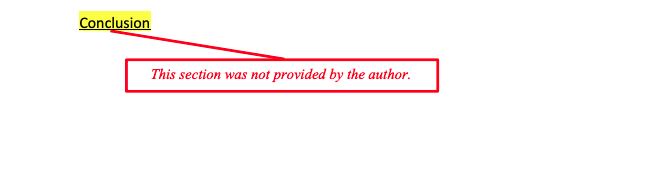
The report is littered with these annotations. A page titled “Executive Summary” was blank with a note in red reading: “This section was not provided by author.” Other whole sections are missing, and the annotations point out many contradictions and factual inaccuracies.
Despite these obvious shortcomings, there are still insights worth highlighting from this self-flagellating act of self-reflection.
Kamala Harris wasn’t prepared
The report takes great pains to emphasize that Biden’s political operation did not set Kamala Harris up for success. Republicans were able to define her early in her tenure as vice president as the failed “border czar,” and the White House did not do enough to counter the message. Harris herself came to the same conclusion, as she detailed in her memoir.
Key passage: “The White House did not position or prepare the Vice President. Had the White House explored and evaluated ways to leverage Kamala Harris earlier in the administration, perhaps it would have improved the President’s standing, and it certainly could have helped prepare her to lead the ticket.”
Biden was an issue, but why?
Instead of delving in to concerns about Biden’s age and how they impacted the electorate, the report vaguely gestures at the White House’s difficulty in messaging on “Bidenomics.”
The closest the report comes to acknowledging Biden’s age is a short transition line about how the infamous June 2024 debate “obviously changed many things.” Talk about an understatement.
Key passage: “Having Kamala Harris on the ballot actually helped down-ballot Democrats maintain part of their base support. Had Biden remained on the ballot, down-ballot Democrats might haven [sic] faced even steeper challenges.”
Democrats look to governors to lead
The author of the report, Democratic strategist Paul Rivera, pointed to the successful gubernatorial candidates as a blueprint for future campaigns. He cited Josh Stein’s romp over Republican Mark Robinson in North Carolina as a template other Democrats should follow. But while governors are topping most lists of potential 2028 presidential candidates, replicating the unique circumstances of Stein’s success will be difficult. Yes, the Democrat focused less on “identity politics” and more on the economy, but that’s not the full story.
His Republican opponent, Robinson, praised Adolf Hitler, shared graphic details of an extramarital affair, and expressed support for bringing back slavery in a series of unearthed online comments on the pornographic website Nude Africa—not exactly a formula for winning middle America. Robinson was a uniquely terrible candidate whom any generic Democrat could have beaten in their sleep.
Key passage: "Robinson imploded, but Stein's results suggest a fundamentally different campaign approach to address the weaknesses the national campaign struggled to fix: stronger performance among male voters, improved competitiveness in rural areas, early messaging, and more balanced coalition-building."
Party infrastructure needs a facelift
The Democratic state party infrastructure has been atrophying for years, and that degradation came to a head in 2024. Republicans, meanwhile, had gained an upper hand in party registration in key swing states, effectively putting Democrats in a hole.
Key passage: “Unfortunate reductions in support and training for our state parties, consequential shifts in voter registration, a loss of partisan organizing capacity, and a persistent inability or unwillingness to listen to all voters has provided the other major party with opportunities for advancement at the expense of Democratic growth, evolution, and ability to find common ground with seemingly disparate groups of voters from coast to coast, and the heartland Democrats tend to ignore.”
Bullying works
Martin did not want to release this document. But months of pressure, from the lowest levels of the party organization to Harris herself, forced his hand. It’s obvious why Martin did not want this sloppy report to see the light of day, and its release amounts to an embattled party leader ripping off the Band-Aid. But finally relenting won’t silence his critics.
Monthly fundraising reports filed Wednesday found the Republican National Committee has nearly 10 times as much cash on hand as the DNC. Martin’s real concern should be making up that fundraising gap to avoid a repeat of 2024.