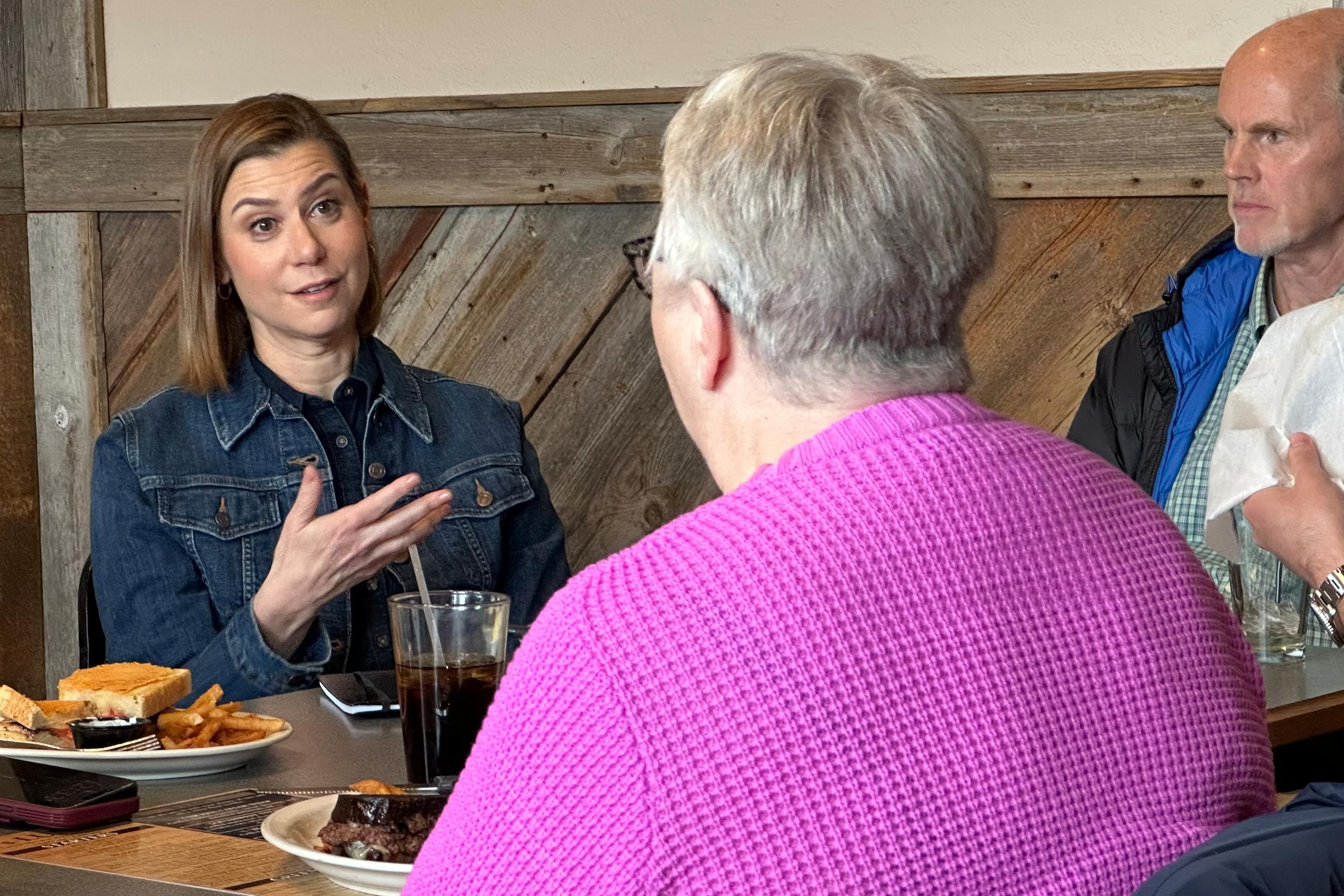

For some Democrats, the path back to power is to go big or go home.
Sen. Elissa Slotkin (D-MI) offered up some of her bold ideas at the Delivering an Effective Economy conference, hosted by the Effective Governing Coalition in D.C. Tuesday. She said Democrats have fallen into a habit of waiting for consensus before moving forward with policy ideas.
“Democrats need to get comfortable with ideas that are big and bold and don’t always make everybody happy,” she said, later referencing a bill she introduced earlier this year to declare a housing emergency.
Slotkin said she was concerned that Democratic leaders will “mistake winning a midterm for winning a general presidential election.” She said the midterms are a referendum on the party in power, but the general presidential election will require Democrats to go past criticizing President Trump and offer an affirmative solution to voters’ problems.
The last two presidents have taken power in both chambers of Congress, albeit with slim majorities, and they have promised wide-ranging agendas. Faced with divided caucuses, their agendas have hit procedural snags. Former President Biden battled with former Sens. Kyrsten Sinema (I-AZ) and Joe Manchin (I-WV), who pushed back on key components of his Build Back Better plan. While Trump was able to lean on congressional Republicans to pass the One Big Beautiful Bill Act, Congress took 76 days to end the partial DHS shutdown amid resistance to Trump’s immigration enforcement agenda and has yet to pass legislation funding ICE and CBP.
Democrats are preparing for the possibility of retaking the House after the midterms, and some are road-testing proposals that might show up in 2028 presidential campaigns. Some strategists advocate shooting for the fences.
“You start off as strong as possible knowing that it’s going to go through that sausage-making process and that you are going to have to give up stuff,” Democratic strategist Eric Schmeltzer told National Journal. “So if you start off where you want to be at the end, then you’re going to end up with a substantially weaker product.”
—Erika Filter