National Journal Logo
×

Welcome to National Journal!

Enjoy this premium "unlocked" content until July 31, 2026.

Continue

Embattled DNC Chair Ken Martin bets on state parties

Facing a cash crunch, Martin continues investments to party organizing in red states.

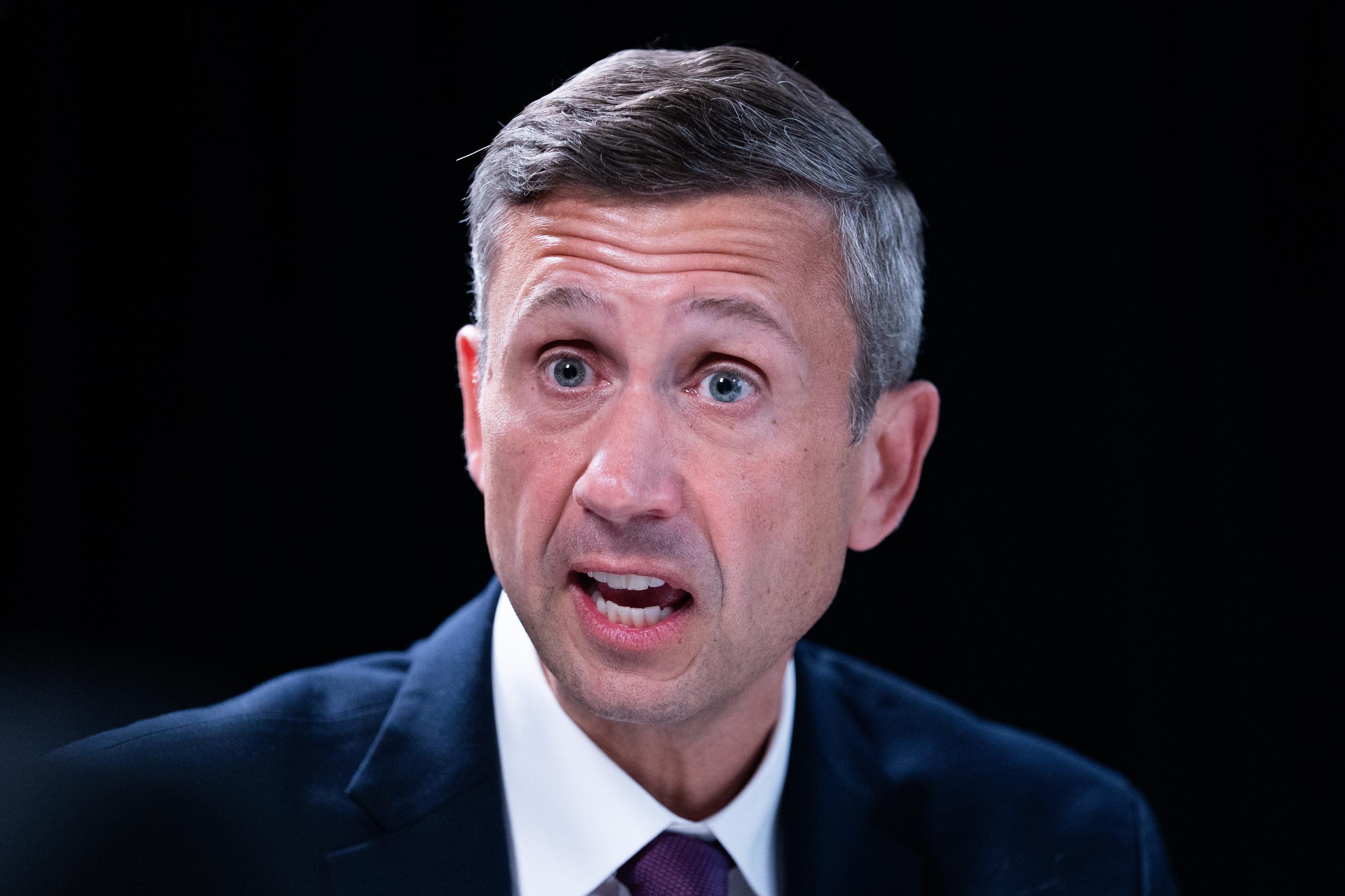
Democratic National Committee Chair Ken Martin (AP Photo/Allison Robbert)
ASSOCIATED PRESS
Add to Briefcase
Erika Filter
April 30, 2026, 5:15 p.m.

In the winter following the 2024 election, Ken Martin, a former state party chair, ran for chair of the Democratic National Committee on the platform of bolstering state parties. More than a year later, as Democrats criticize Martin's management of the party and the committee faces a cash disadvantage, state parties say the investments have helped them grow.

These gains could help Democrats bounce back after their losses in 2024 and help set up the party to win back more than just the White House in 2028 and beyond.

The program started in October when the DNC increased its funding for state parties from 8 percent to 25 percent of its overall budget. It increased its monthly contribution to blue states by $5,000 and red states by $10,000, bringing the national party’s contributions up to $17,500 and $22,500, respectively.

More than six months after receiving the increased investment, state party leaders say the DNC’s increased investments have allowed them to expand their staffs, candidate-recruitment efforts, and voter-outreach efforts.

Arkansas Democratic Party Chair Marcus Jones said the funding was instrumental in get-out-the-vote efforts ahead of a special election for a state legislative seat in the state that coincided with its primary. Democrats flipped the seat, and turnout for the race was nearly 10 points higher than turnout for the primaries. Jones said that without the DNC’s investment, the party likely would have had to rely on an all-volunteer program, which he said would have been less effective.

“A dollar in Arkansas is worth four or five East Coast or West Coast dollars,” Jones said. “So a $5,000 investment in us as a red state is pretty significant.”

Lucas Fralick, the chair of the Wyoming Democratic Party, said the investment allowed the party to expand its budget for staff travel in order to visit county parties across the state. He said the investment also allowed him to give raises to his staff, which consists of three full-time employees and one part-time employee, many of whom had not received raises in over four years.

“It’s amazing how it doesn’t take much just to show other Democrats that the party is there,” Fralick said. “The investment even itself isn’t that big, but we just needed more money to do it. It’s going a long way.”

We’re not a lost cause. We’ve got to stop writing the South off. 
—Rachel Campbell, Tennessee Democratic Party chair

Tennessee Democratic Party Chair Rachel Campbell said the investment has allowed the party to “move beyond election-to-election survival” and better develop its voter outreach, communications, and candidate development.

She said the investment allowed her to hire one new staffer working as a new deputy executive director and communications director.

“We’ve shifted away from this idea that we can’t win and started leaning into this idea that we can win everywhere that we organize and compete,” Campbell said. “And that has been a real shift, both in attitude and in the work.”

Campbell said focusing on local elections can more directly impact voters in the state, improving their perception of Democrats in higher office.

“We’re not a lost cause,” Campbell said. “We’ve got to stop writing the South off. If we’re going to make anything better in the country, it has to run through the South.”

The investments in the states come as the party faces a massive cash disadvantage compared to its GOP counterpart. As of March 31, the DNC had $13.9 million in the bank and $18.4 million in debt, compared to the Republican National Committee’s war chest of $116.8 million.

The glaring gap is causing alarm among Democrats.

In a recent Substack post, influential liberal columnist Matthew Yglesias argued Martin’s pitch to focus more DNC resources on state parties “is not a compelling pitch to donors.”

“The state parties wanted to put one of their own in charge and they did, even though there was pretty broad agreement across factions of high-profile people on the outs that they should go in a different direction,” Yglesias wrote. “And what state party committees think is going to continue to be an important force in shaping the national party committee.”

Martin defended his approach, citing Democrats’ recent successes at the ballot box.

“Our strategy is simple: When we invest everywhere, we can win anywhere,” Martin said in a statement to National Journal. “That’s why we're building the infrastructure we need to compete and win now and expand our map to win in the battlegrounds of today and tomorrow. And our strategy is already paying off. In election after election since Donald Trump took office, Democrats are racking up wins in blue, purple, and red areas alike—and we’re just getting started.”

Since Trump was elected a second time, Democrats have flipped 12 state legislative seats, and they have overperformed in most special elections.

Both parties have attempted this playbook before. Following the 2010 census, Republicans spent millions to gain control of state legislative chambers across the country. They now control 28 state legislatures compared to Democrats’ 18.

Jane Kleeb, president of the Association of State Democratic Committees and DNC vice chair, said the DNC’s fundraising is “competitive” considering Democrats do not hold the White House. Kleeb said voters care more about Democrats continuing to fight against Republican policies and secure electoral victories.

Past DNC leaders have chosen to focus their often limited resources on bolstering state parties.

Howard Dean, who served as DNC chair from 2005 to 2009, received early criticism for his 50-state strategy, which similarly tried to strengthen Democratic presence across the country. Democrats argued he was squandering the party’s limited resources in the South and the West before Democrats retook the House in 2006 and Barack Obama won 28 states in 2008. Under Obama, support for state parties lapsed again, and the party went from controlling 59 percent of state legislatures at the start of his presidency to only 31 percent at the end.

“I know that we’re doing the right strategy,” said Kleeb, who is also chair of the Nebraska Democratic Party. “I’ve seen, I’ve lived through both strategies as a leader in the Democratic infrastructure.”

Welcome to National Journal!

Enjoy this featured content until July 31, 2026. Interested in exploring more
content and tools available to members and subscribers?

×
×

Welcome to National Journal!

You are currently accessing National Journal from IP access. Please login to access this feature. If you have any questions, please contact your Dedicated Advisor.

Login