April 20, 2026, 7 p.m.
Mid-decade redistricting has defined the 2026 midterm cycle, and the latest chapter takes place in Virginia, where voters head to the polls to decide whether to approve a plan passed by the Legislature that would likely gash four Republican-held seats in the commonwealth, giving Democrats a 10-1 advantage.
Despite Gov. Abigail Spanberger’s November romp, this election is expected to be closer. Democrats involved in the effort are tepidly optimistic the measure will pass.
Polls show a close contest, with support for the new map hovering just over 50 percent. The race has drawn major money on both sides: Democrats have spent upwards of $50 million on advertising, and Republicans have spent nearly $20 million.
While Democrats will be holding their breath as they await results Tuesday night, some—like National Democratic Redistricting Committee President John Bisognano—say they already see the effort as a win.
“I feel so proud of [NRDC Chair] Eric Holder and our entire organization for blunting Trump’s attack on the whole process,” Bisognano told National Journal in a pre-election briefing last week.
Political developments over the past year and a half suggest Democrats may not need the four seats in Virginia to secure a House majority, even after redistricting punches thrown in Texas, Missouri, and North Carolina. Democrats need to net just three seats, and President Trump’s approval ratings remain stagnant, the war in Iran is unpopular, and prices are high.
After Texas rushed to redraw its map under pressure from Trump to give Republicans upward of five seats, the Democratic outlook was bleak. After Democrats in 2024 lost the White House and the Senate and failed to make significant inroads in the House, the redistricting battle looked like another example of asymmetrical warfare in which a feckless minority party would lose again.
In the wake of Trump’s 2024 victory, headlines about the Democrats’ lack of fight have abounded. A leadership vacuum and internal turmoil have helped fuel that perception.
But California Gov. Gavin Newsom spearheaded a counter, championing a special-election referendum that could give Democrats five seats of their own. Virginia could be the culmination of a successful resistance effort for a party steamrolled over the last few years.
“It calls into question why Republicans believed this was a winning strategy. Beyond that, they just never thought Democrats would fight back,” Bisognano said. “So it's not a war I wanted; it's just the war that we've had to fight, and I feel like we've won.”
In a slide deck viewed by National Journal, Bisognano’s NDRC outlined the redistricting state of play. If Virginia passes, Democrats would likely take the lead in net seats—with Florida’s potential Republican redraw outstanding.
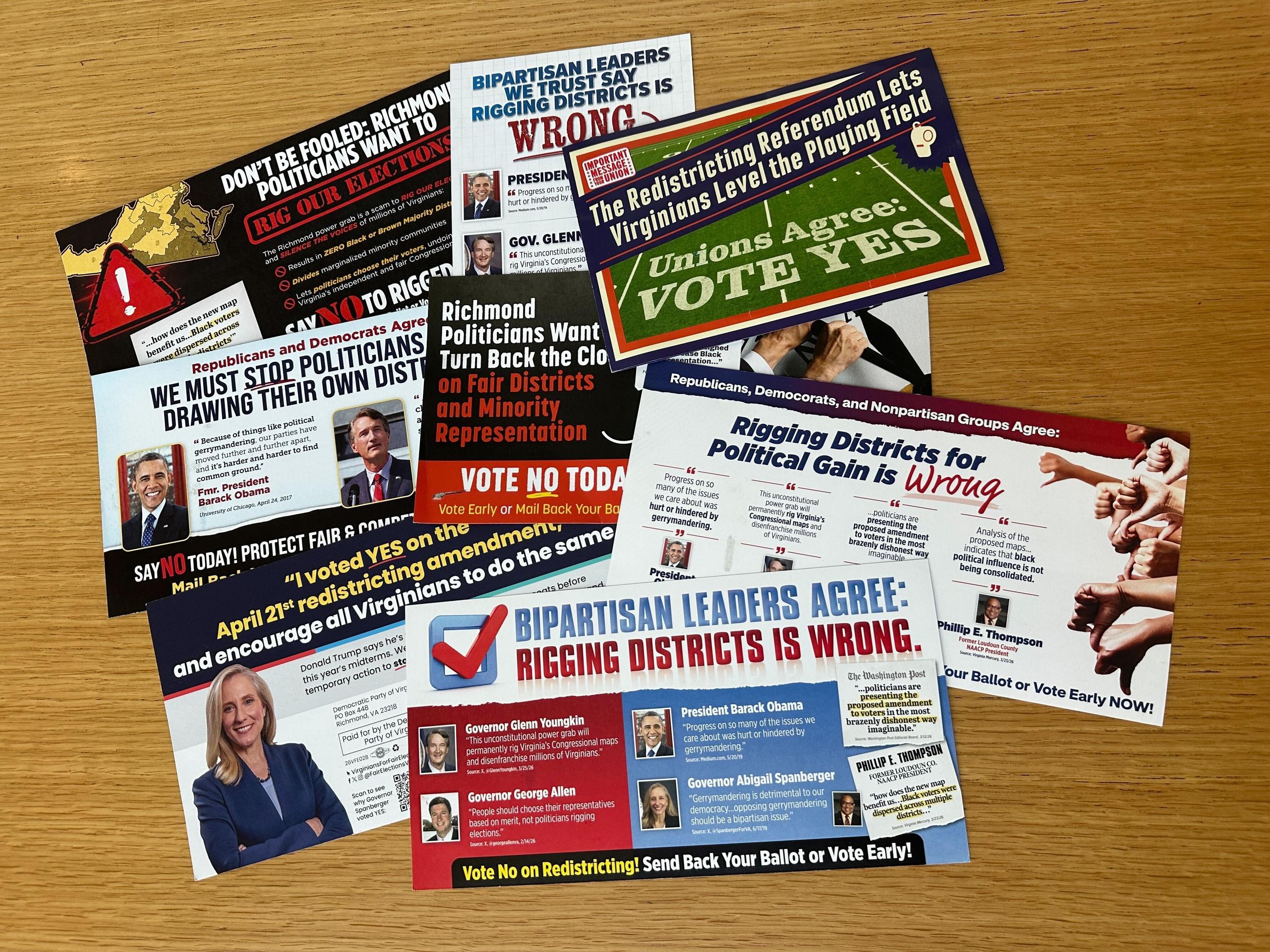
This election has been defined, in some ways, by deliberately confusing tactics, which has shined a light on the ugliness of these contentious and partisan referendum persuasion campaigns. That includes mailers targeted at Black voters invoking Jim Crow, as well as Republican ads suggesting that Spanberger and President Obama oppose the measure, despite the fact that both publicly supported redistricting and cut advertisements for the pro-redraw group.
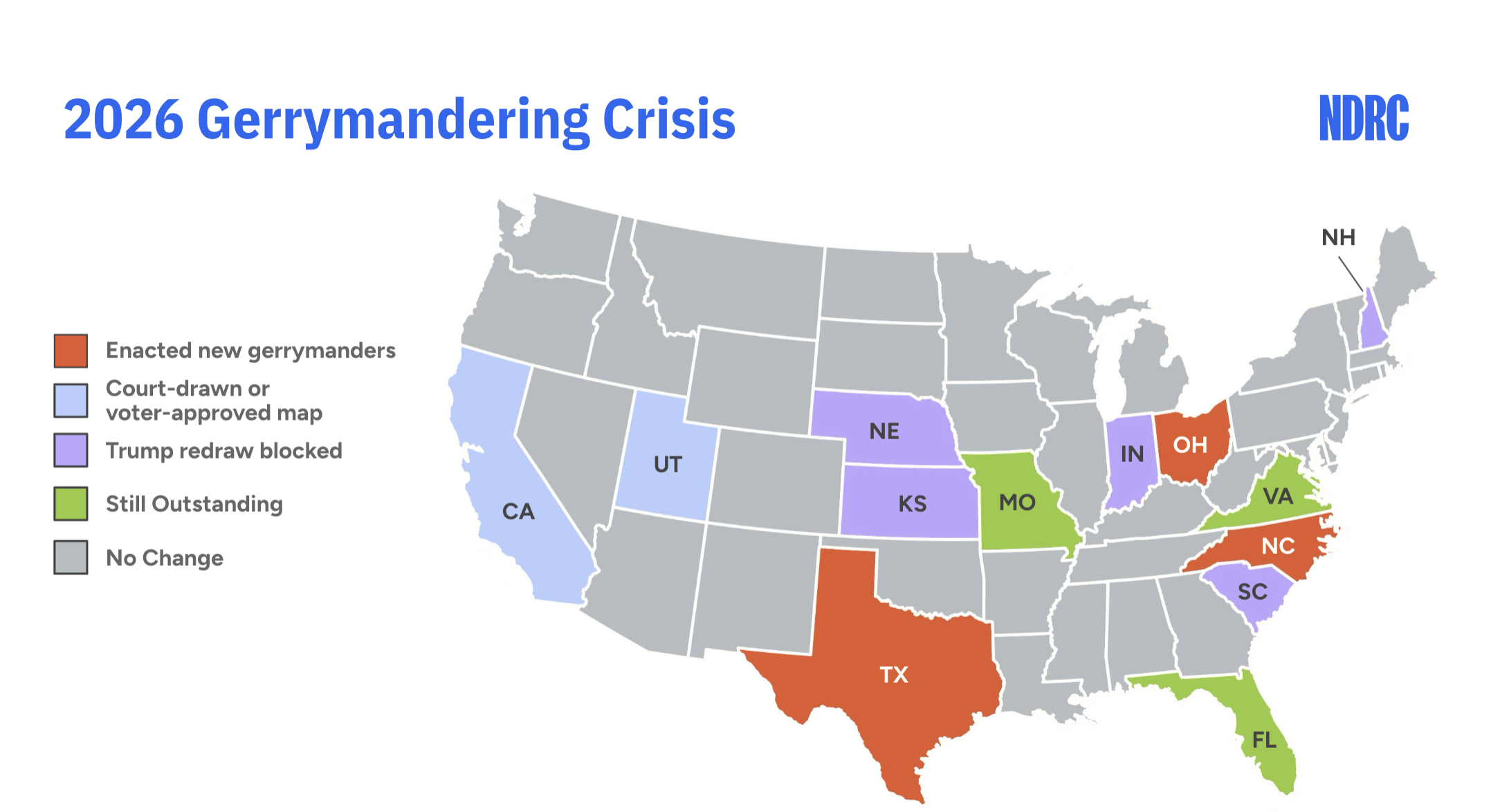
Slide from the National Democratic Redistricting Committee outlining the state of 2026 redistricting, as of April 20
(NRDC)

NRDC slide previewing where redistricting fights could unfold in future cycles
(NRDC)
Democrats in the Virginia legislature also faced criticism for their ballot language, which opponents have described as misleading. Critics point to the word “fairness” on the ballot as a politically motivated and vague term.
“Democrats have disingenuously rephrased the ballot question on ‘fairness’ when, in reality, they are disenfranchising 47% of Virginians,” wrote Virginia Republican Party Chairman Jeff Ryer in his analysis on the new map.
But Bisgonano and Democrats defended the wording.
“I think it's pretty straightforward. I feel like the places we've been with ballot language … have been so dark," Bisognano said, referring to 2024 Ohio ballot language that confused voters into rejecting an anti-gerrymandering measure. "This doesn’t feel off base.”
A win for Democrats would also mark a major victory for House Minority Leader Hakeem Jeffries, whose aligned group House Majority Forward has been the principal funder behind Virginians for Fair Elections, the pro-redistricting committee. HMF has contributed nearly $40 million toward the effort, according to the Virginia Public Access Project.
Republicans have seen some positive trends throughout the election, with higher turnout numbers in the more conservative areas of the commonwealth. Whether that will be enough is unclear. More early-voting centers opened up in Northern Virginia, where a heavy concentration of Democrats reside, within the last few weeks. And the early vote could cannibalize the Republican Election Day vote, especially in the less populous areas of the state.
“This [Republican] effort has failed because Democrats haven't stepped back,” Jeffries said at a Monday press conference. “We fought back and are going to continue to fight back all the way through the finish line tomorrow in Virginia, and then we'll take the fight to Florida.”
The fight in Virginia is unlikely to end Tuesday. Democratic operatives expect Republicans to immediately challenge the referendum. A Tazewell County judge previously ruled that Democrats in the Legislature violated procedure when trying to jam the measure through both chambers in Richmond. Similar lawsuits could arise in the aftermath of the election.
Moreover, the Virginia Supreme Court stayed the Tazewell rulings throughout the referendum period. A ruling on whether or not the measure was constitutionally permissible is expected after the election.
Similarly, Democrats are prepared to respond with litigation in Florida, should the uncertain remap occur. If Democrats have to respond in Florida, the redistricting wars are unlikely to slow down for 2028.
“If Republicans do pick up the pen and redraw the maps in Florida, it will be for partisan reasons, and there will be litigation, 100 percent,” Bisognano said.
“And I think that litigation has a very strong path to success.”