
Senate Republicans are looking to use the budget-reconciliation process to fund key agencies under the Homeland Security Department. But appropriators in both parties worry about the precedent this sets for the future funding battles—and how one of the few cross-party exercises left in Congress could morph into a more-partisan struggle.
Top appropriators have expressed concerns about passing DHS funding under reconciliation, the procedural maneuver that bypasses the legislative filibuster in the Senate. It’s been increasingly used by the party controlling Washington to pass priorities that wouldn’t normally have buy-in from the minority, and increasingly utilized to boost funding for certain agencies. Now it’s being floated as a way to pass an annual funding measure and bypass the Appropriations committees.
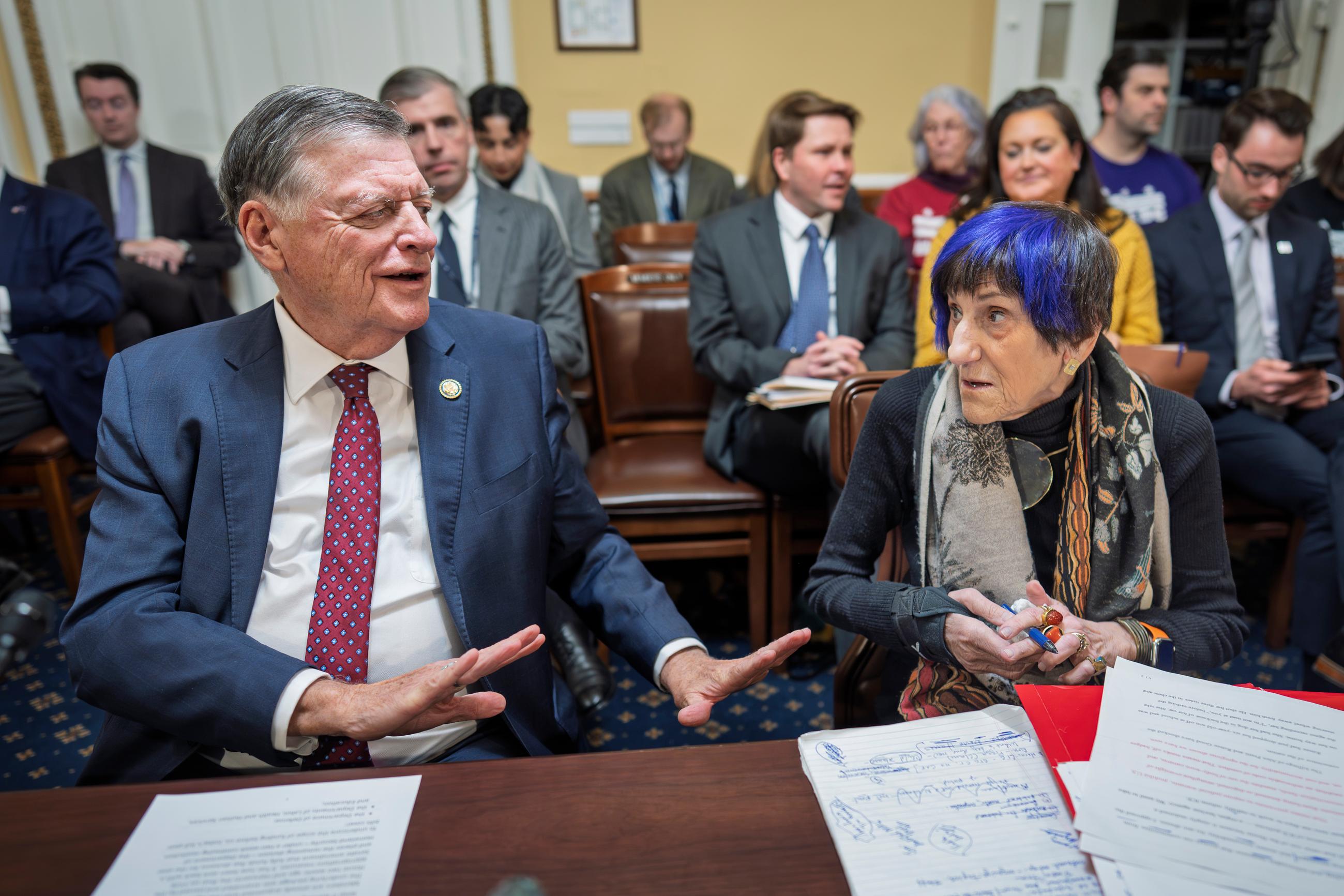
“You guys all think this is a great idea. You won’t think it's such a great idea if they decided to fund Planned Parenthood for five years,” House Appropriations Committee Chair Tom Cole said of his GOP colleagues who support using reconciliation. “This is a very dangerous thing that we're doing now.”
Democrats aren’t retreating from the possibility of using this strategy if they retake Washington.
“I’m not going to promise anything—give me a break,” top House Democratic appropriator Rosa DeLauro told reporters when asked whether reconciliation would be in play under Democratic rule.
DHS has been shut down for over two months after Democrats refused to fund Immigration and Customs Enforcement, along with Customs and Border Protection, without significant reforms to immigration enforcement following the killings of protesters during crackdowns in Minneapolis. These reforms include banning the use of masks by officers, requiring judicial warrants, and codifying a uniform use-of-force policy.
However, negotiations between the White House and Senate Democrats collapsed last month. That led to the Senate passing a measure funding all of DHS except ICE and Border Patrol, with Republicans intending to fund those key agencies through reconciliation. But the House hasn’t moved on the Senate-passed DHS funding measure—waiting for the upper chamber to move on the reconciliation bill before moving to fund the rest of DHS.
The budget resolution, which hasn’t been released yet, is expected to fund ICE and CBP for three years at a price tag of $65 billion to $75 billion, Senate Majority Leader John Thune told reporters Tuesday.
The Senate Budget Committee is expected either this week or next to publish those details. Leadership has stressed that any budget resolution would be “skinny,” focusing solely on immigration enforcement. However, some Republicans have been pressing the conference to broaden the scope of any measure.
“This is something we can do, we should do, and we shouldn’t miss this opportunity to go big,” Sen. Ted Cruz told Fox News. “I've got to tell you, there ain’t gonna be another reconciliation [bill]. ... This is the only train that’s leaving the station.”
Republican appropriators who are supportive of the Senate GOP plan insist this is a one-time exception to the normally bipartisan process of funding the government. They argue that without a bipartisan deal, they had no other option, especially since Federal Emergency Management Agency and Coast Guard employees are working without paychecks as well.
“I don't like this at all. But the bottom line is, we've got to get something done,” said Rep. Stephanie Bice, a Republican appropriator. “This can't continue, and I think it's the only option that we have right now.”
But senior appropriators from both parties are worried about the chipping away of power that Congress has over the nation’s purse strings. The Trump administration, through its first and second term, has tried repeatedly to assert power over the legislative branch through rescissions packages scaling back funding in various areas. This effort met with some success last summer, when Congress passed Trump’s request to rescind $9 billion in foreign aid and public broadcasting.
Many fret that the appropriations panels are slowly—but surely—facing an existential threat.

“The appropriations process has been undermined very substantially by reconciliation by both parties, and I am worried about that because it takes the discipline out of the system,” said Rep. Steny Hoyer, a senior Democratic appropriator. “I’m worried about it becoming a less relevant exercise.”
Senate Appropriations Chair Susan Collins joined in Hoyer’s lament, and encouraged her Democratic colleagues to come back to the negotiating table, in an interview with Axios. So far, she openly opposes Senate Republicans’ move of resorting to reconciliation to fund DHS.
The appropriations process has long been revered as one of the remaining bipartisan processes in Congress, next to negotiating the annual defense-authorization bill. But the appetite for across-the-aisle work has increasingly faded as both parties lurch further to the extreme ends of the political spectrum. Strategic maneuvering in Congress can be likened to Pandora’s box: It can be hard to contain once one party uses it to their advantage.
“Everything that we blow up around here, it doesn't go back to normal,” said Sen. Martin Heinrich, a Democratic appropriator. “It becomes the norm.”
Originally, budget reconciliation was created to cut the deficit. Ironically, however, it has morphed into a process that has further exacerbated the country’s debt, as shown by the cost estimates of Republicans’ One Big Beautiful Bill Act and Democrats’ Inflation Reduction Act.
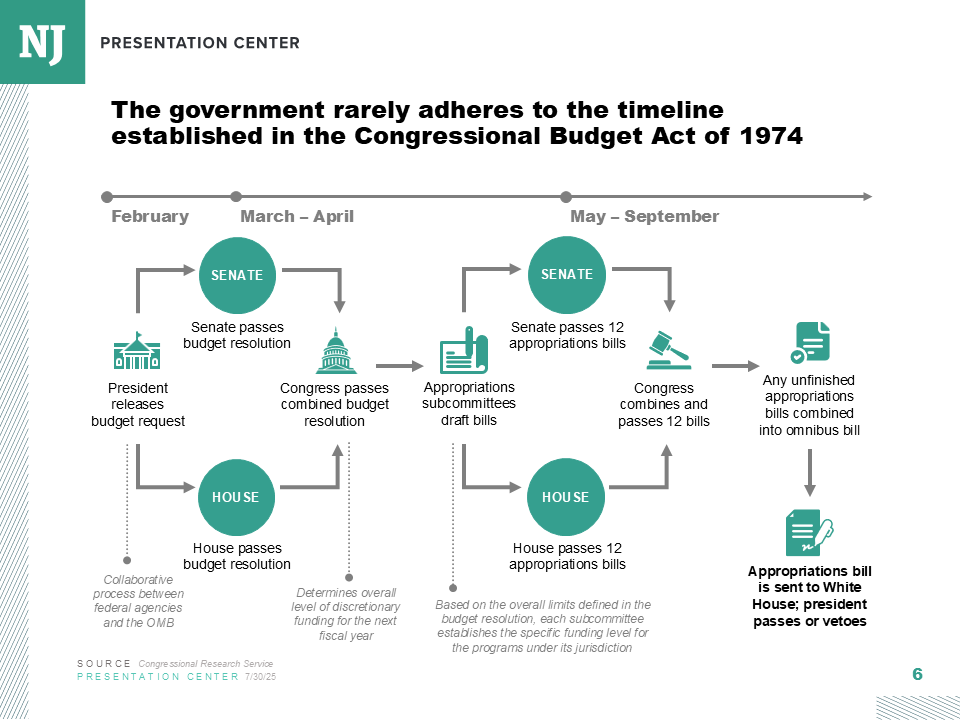
Congress also has not been passing many spending bills on time—resorting to stopgap resolutions that continue funding at current levels, or large omnibus bills that often bypass the regular order of the committees.

Moving the annual appropriations process through reconciliation would be complex. The Senate parliamentarian, who oversees what can go into a reconciliation bill, would be thrust into the appropriations process instead of having lawmakers debate funding levels themselves.
“Budget reconciliation is very complicated. It’s a lot of work, very time-consuming, and it opens up unlimited amendments,” said Sen. John Hoeven, a Republican appropriator. “So if they want to go down that trail and force everything into reconciliation, it makes a very laborious process. To me, it doesn't make much sense.”
Reconciliation will heighten the risk for shutdowns, experts warn.
“If both parties are involved in crafting the legislation, there's an incentive to pass that legislation,” said J.D. Rackey, an associate director of the Bipartisan Policy Center’s Structural Democracy Project. “If the majority party starts using reconciliation to pass everything in a partisan manner, it kind of undermines the ability to engage in negotiations around the appropriations process.”
Some experts argue lawmakers should look toward a more comprehensive overhaul of the budget process that focuses more on compromise.
“I think the most desirable thing is if our lawmakers could work together and compromise, and we would benefit from that rather than the pendulum of going back and forth between a variety of policies. We would be able to have policies that are the result of fundamental compromises,” said Maya MacGuineas, president of the Committee for a Responsible Federal Budget. ”That said, given the state of politics right now, that doesn't seem likely.”