

There aren’t many greater advocates for the U.S. military than Sen. Jack Reed, the former Army Ranger who’s the ranking member on the Armed Services Committee.
Not only does the Rhode Island Democrat want to equip troops with cutting-edge gear and pay them well, he’s also worried about having the resources to deal with fallout from the Iran war and the need to modernize America’s Nuclear Triad—the network of land-based missiles, submarines, and bombers, and the nuclear command and communication systems supporting them.
“We're looking at having to rebuild our Triad, and that's something that comes along every 60-plus years—the land base [component] particularly,” Reed told National Journal this week. “The technology has to keep up with it.”
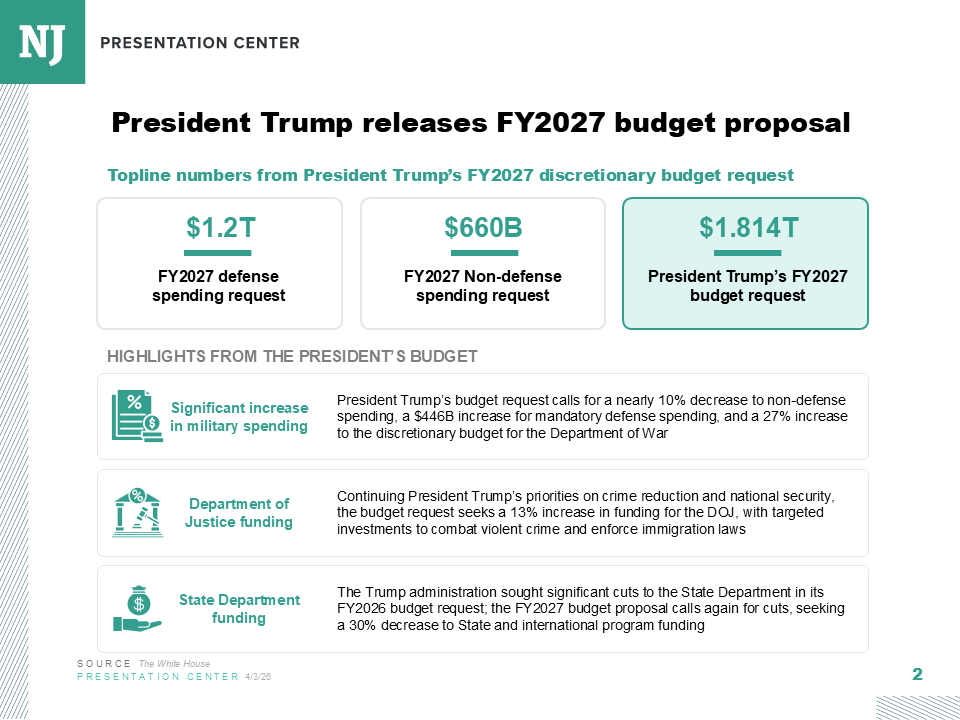
But $1.45 trillion for the Pentagon may be a bridge too far. That’s how much President Trump has requested for fiscal 2027, which is nearly $500 billion—or 44 percent—more than the current year. That same budget proposal also calls for drastic cuts in domestic programs, including Health and Human Services (-12 percent), Agriculture (-19 percent), Labor (-26 percent), Housing and Urban Development (-13 percent), and Interior (-13 percent).
“We need to increase our military spending, but we can't do it at the expense of programs that are critical to communities, and already cuts in Medicaid are showing up in communities, and also the SNAP program,” Reed said, referring to program reductions in the One Big Beautiful Bill Act Republicans passed last year. “This is really a turning point in terms of our national security. But we can't neglect the American people.”
As Appropriations hearings kick off this week in both chambers, Reed’s comments are an important marker regarding congressional sentiment towards Trump’s budget. A low-key but influential senator known for favoring consensus-building over rhetorical bomb-throwing, his seat on the Appropriations Committee means he’ll have considerable say over spending bills, especially as they relate to the Pentagon.
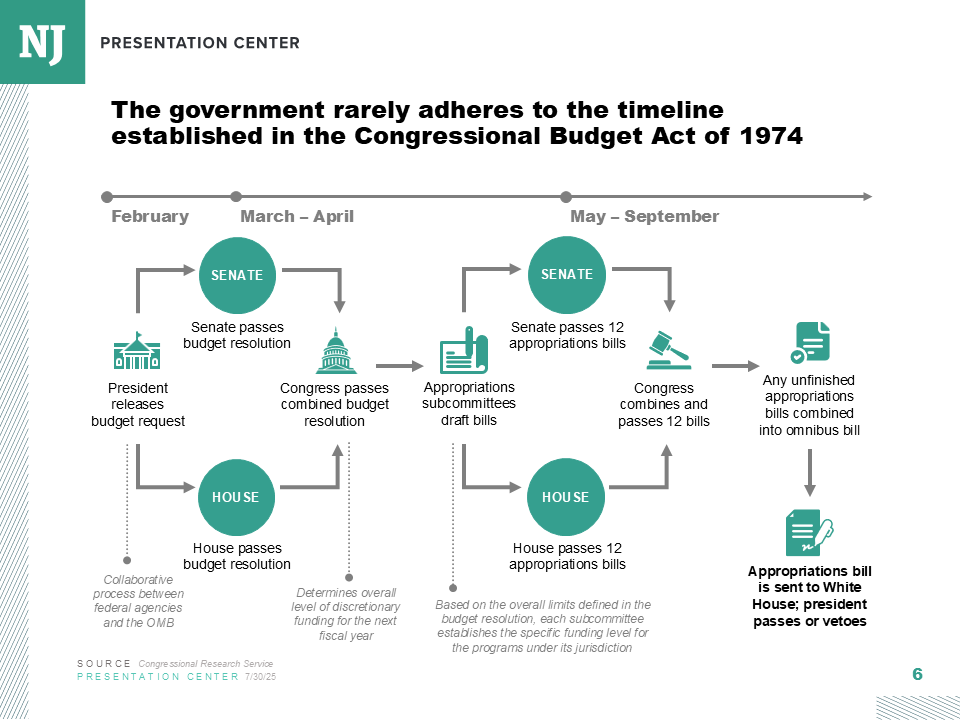
Capitol Hill has traditionally flexed its muscle come budget time, often viewing a president’s spending blueprint as merely a starting point. The GOP-led Congress, which has been particularly deferential to Trump on a host of issues, largely ignored his 2026 plan. He proposed cutting Labor Department spending by 35 percent (from $13.2 billion to $8.5 billion), but Congress approved an increase to $13.3 billion. The budget proposal would have slashed the Environmental Protection Agency by more than half ($9.1 billion to $4.2 billion), but the final spending bill included $8.8 billion—a slight haircut. NASA faced a nearly 25 percent reduction to $18.8 billion but landed at $24.4 billion, less than a 2 percent cut. Remember how the Education Department was supposed to disappear? The $79 billion it received was more than it got in President Biden’s last year ($78.7 billion).
The president’s budget request this year is less draconian. It proposes increasing discretionary funding to $2.2 trillion, though most of that goes toward increased defense and border-security programs while gashing domestic items including research grants, climate science, and safety-net programs. In his message to Congress, Office of Management and Budget Director Russell Vought said the proposal would “constrain non-defense spending and reform the Federal Government.”
“The President’s Budget Request is just that, a request,” Senate Appropriations Committee Chair Susan Collins posted on social media as she took issue with proposed cuts in biomedical research, energy assistance, and job training. She also objected to the administration’s proposed $372 million reduction in the Essential Air Service program, which subsidizes flights to rural communities nationwide, including in her home state of Maine. Presidents from both parties have tried to eliminate the program, but its bipartisan backing on Capitol Hill means it will probably rise from the dead again.
The administration will be selling a budget plan at a time when the president’s approval numbers are low, gas prices are high, and Republican incumbents in swing districts are trying to convince voters they should be reelected. Trump partly ran on a platform of lowering the debt (now $39.1 trillion and climbing) and keeping America out of foreign wars, but his proposal runs counter to both ideals.
Already, there’s House GOP skepticism about the Pentagon request.
“They got to sharpen their pencil,” Republican Rep. Glenn Grothman, one of several Budget Committee members who met with Defense officials this week, told Bloomberg. “I don’t think they get the financial crisis we’re in. They think it’s just going to be another year. No, pal. We’re broke.”
Reed said he understands the “very difficult decisions” facing Congress, especially as it relates to military funding. “But we can't sacrifice the American public for the president's grand aspirations.”