
Saturday was the 77th anniversary of the creation of the NATO alliance. But unlike all previous NATO birthdays, there was no celebration in Washington, and only muted and anxious observances in the capitals of the other nations bound together by the treaty signed amid such high hopes in Washington on April 4, 1949.
The only fireworks were 6,000 miles away, where American missiles were striking targets that lit up the night skies over Iran.
Those 1949 hopes, more than realized for seven decades, today face the reality of an American president who refuses to comprehend how NATO works but delights in mocking and belittling his allies, leaving anxious Western leaders who no longer trust the American commander in chief.
The transatlantic friction, building since President Trump first took office in 2017, now threatens to become an open break following the president’s decision to bomb Iran without consulting the allies he now attacks for not rushing to his rescue when things turned sour.
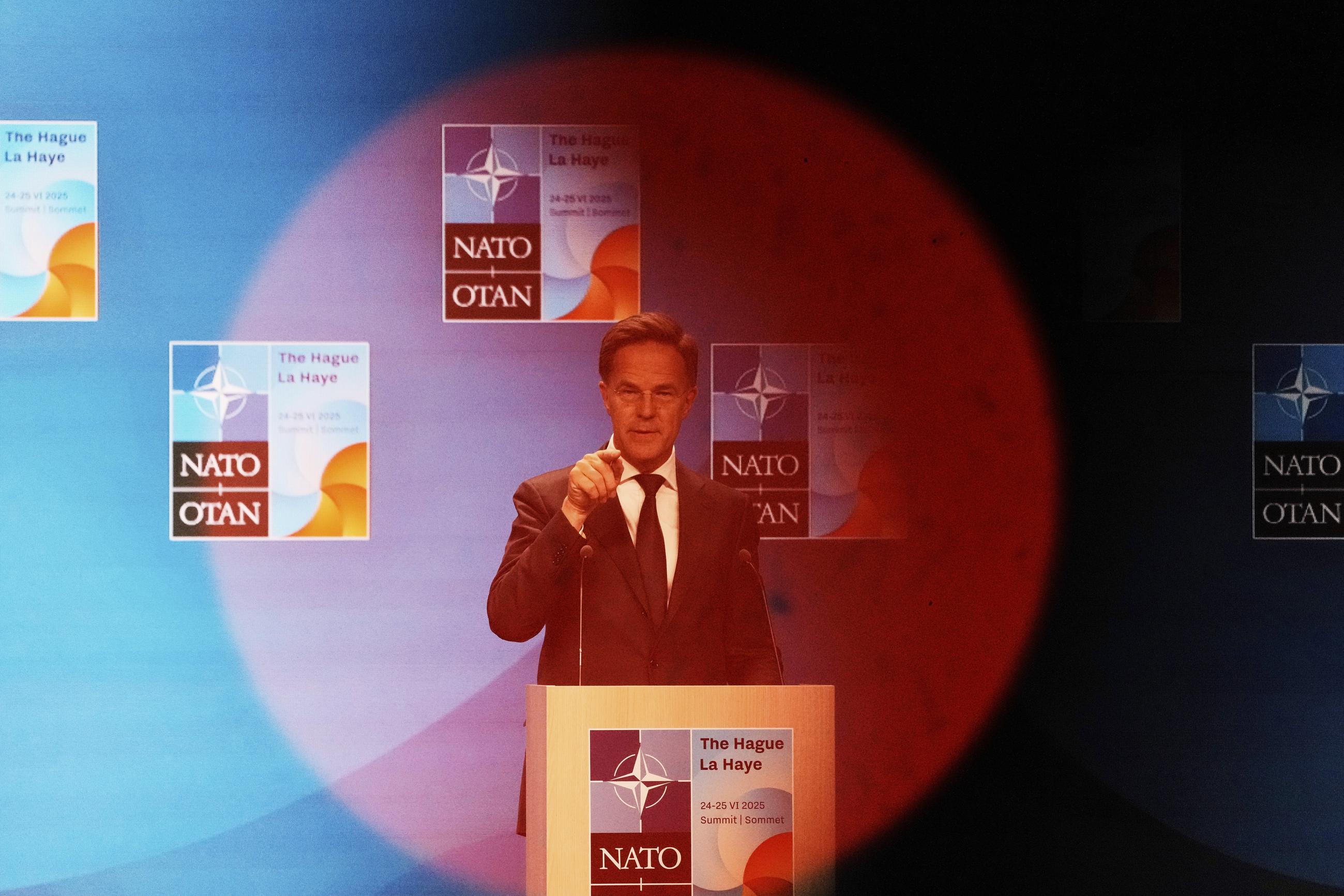
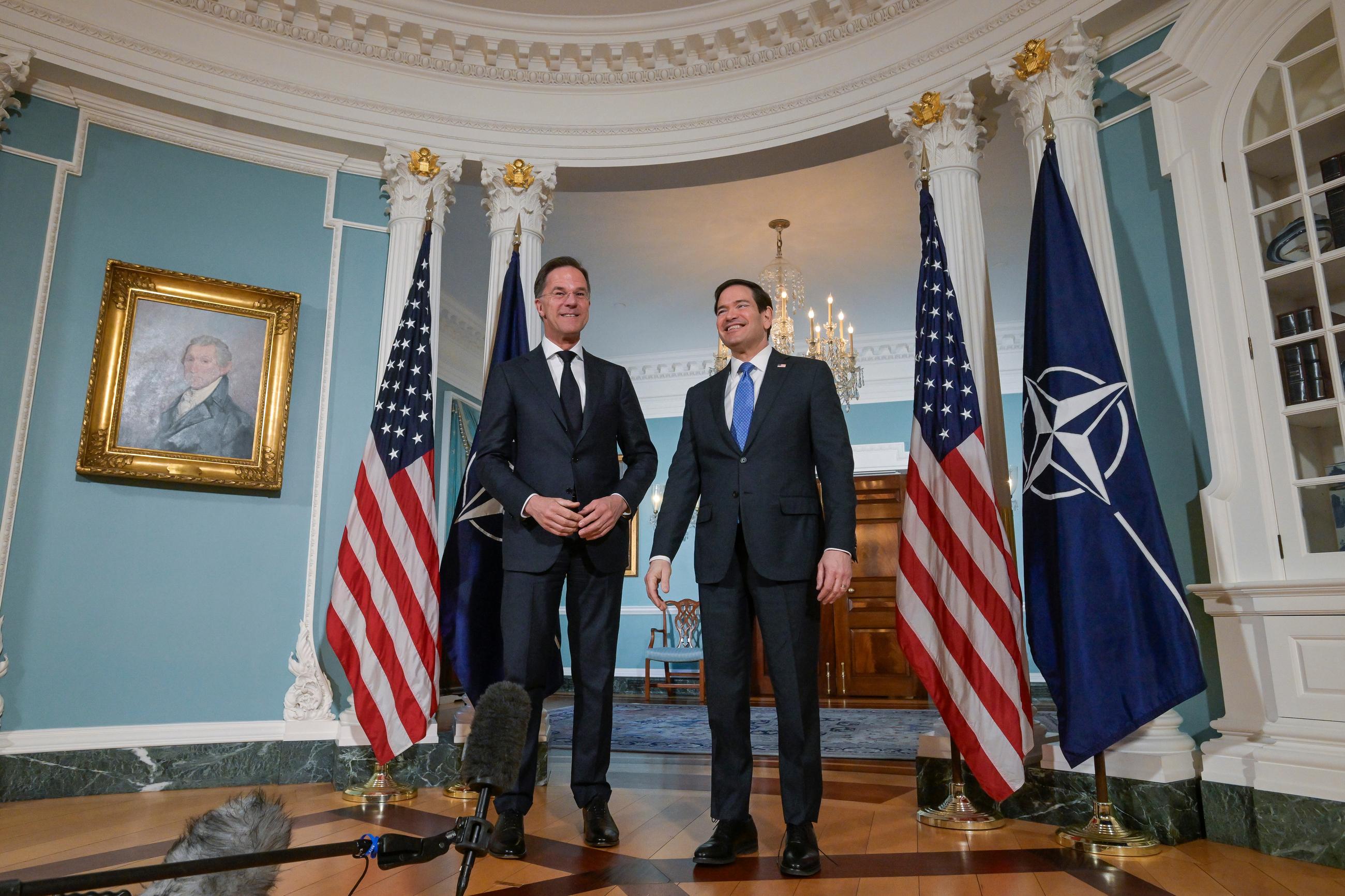
On Wednesday, in a hurriedly scheduled trip to Washington, NATO’s top diplomat attempted some damage control. NATO Secretary General Mark Rutte, the former Dutch prime minister, met Trump in the Oval Office hoping at least to lower the public temperature of the president’s attacks and move the disputes behind the scenes.
Trump has been resistant to such entreaties, preferring to air his grievances quite publicly. His rhetorical assault on NATO, now a regular feature of his speeches, press conferences, and social media posts, rivals—and sometimes tops—his criticism of Iran’s new leaders, whom he calls “much more reasonable” and “smarter.”
In the six weeks since the first missiles struck Iran, Trump, describing himself as “very disappointed,” has called NATO “a paper tiger” and said its leaders are "cowards" who “made a terrible mistake.”
His complaints reflect a misunderstanding of the steps that need to be taken before NATO adopts any mission outside the treaty area of Europe or North America. Such misunderstandings persist despite his now having spent more than five years in office and having attended four NATO summits.
His persistent ignorance of both NATO history and the way the alliance operates has long perplexed aides who tried to brief him. In his 2020 memoir The Room Where It Happened, John Bolton, who was Trump’s national security adviser, recalled the frustrations of Defense Secretary Jim Mattis and the National Security Council staff trying to educate the president on the alliance.
His favorite piece of misinformation in the first term concerned NATO’s financing. For years, he insisted that allied countries were in arrears on what he called their “dues” or their “bills”—no matter how many times aides and fact-checkers have explained that NATO is not funded that way.
A leader in the effort to educate the president has been Ivo Daalder, who was President Obama’s ambassador to the alliance. In Trump’s first term, he frequently publicly corrected the president’s misstatements on financing, often noting, “That’s not how NATO works.”
In the second term, Daalder has offered a broader critique, reflecting his concern that the alliance faces a critical moment and that no one should still believe better briefings could get the president to grasp the essence of NATO. “We’re beyond that point,” Daalder told National Journal, “because he rejects the underlying foundation of NATO, which is that American security depends on the security of Europe.”
He added, “He looks at the alliance as something that is a favor we do to others as opposed to something that is fundamental to our own security.”
Trump’s current anger was stoked by the refusal of some allies—notably Spain and Italy—to let him use bases on their territory to wage the war, even as military bases in Germany, Romania, and the United Kingdom did play important roles in the war.
Trump openly acknowledged he made little effort to consult with those countries before he launched the war, a stark contrast to both George H.W. Bush and George W. Bush, who spent months in intense talks with allies before launching Middle East wars. Those wars were not NATO operations, but many NATO countries committed troops because of that diplomatic groundwork.
In an interview with The Telegraph, Trump said, “I didn’t do a big sale. I just said, ‘Hey, you know.’ I didn’t insist too much. I just think it should be automatic.” In a speech in Florida, Trump elaborated: “I didn't try too hard, actually, you know, because I wanted to prove a point. I didn't sell—they probably think I'm a lousy salesman." He then mocked the French and British responses.
Daalder, who is president emeritus of the Chicago Council on Global Affairs, said Trump should have learned a lesson from the Bushes—that you can’t enlist reluctant allies after the shooting has started. “It takes careful planning, careful engagement, and careful consultation,” he said. “You can’t start a war that then goes wrong or leads to entirely predictable results that you hadn’t thought about and then say, ‘Can you please come and help me clean up the mess?’” He added, “The other thing that the president doesn’t seem to recognize is that all of these countries have domestic publics and domestic politics. That’s why it has been the norm for 77 years for the United States to sit down with allies in quiet consultation even when we disagree.”
But Trump said the lesson he learned is very different. It is, he said, that “if the big one ever happened—and I don't think it will—but if the big one ever happened, I guarantee you they wouldn't be there, and we learned from that.”
He told The Telegraph that withdrawal from NATO is “beyond reconsideration.” The president is barred from a full withdrawal without congressional approval. But, as a practical matter, he can take steps on his own that would render the alliance toothless.
To do so would be at odds with American public opinion. A 2024 survey taken by Ipsos for the Chicago Council showed 67 percent of the public saying NATO is essential to U.S. security. That includes 83 percent of Democrats, 61 percent of Republicans, and 60 percent of independents.
The fact that Trump is considering withdrawal, coupled with the reality that the allies have a fundamental distrust of the U.S. president, puts the alliance in a crisis unlike any in its history. “Even during times when it’s been in crisis, underneath it all, there was this shared commitment, and that just doesn’t exist with Donald Trump,” said James Goldgeier, professor of international relations at American University. “His presidency is, in fact, the biggest crisis the alliance has ever faced.”
After enduring Trump’s first term, the allied leaders were repeatedly reassured by then-President Biden that “America is back.” But after watching voters again turn to Trump, the leaders are not likely to buy that reassurance a second time, said Joseph Cirincione, former president of Ploughshares Fund, a global security foundation. “The view of most countries in the world is that the U.S. is going to oscillate between extremes for the foreseeable future,” he said. “We’ve seen nothing like this, because it quite likely is going to get worse.”
Goldgeier expressed a similarly glum outlook as NATO begins its 78th year. He says he fears it is already too late to restore the trust that is essential to any alliance. “With NATO, we’ve built something really special over the decades, but he doesn’t care,” he said. “He doesn’t understand how it works. And, really, no matter what happens from this point forward, NATO can continue to exist, but it’s no longer the organization that it was.”