State attorneys general are on the front lines enabling or resisting President Trump’s efforts to exert federal control over elections.
The president signed an executive order Tuesday to restrict mail-in voting and establish a national voter roll, adding to his previous call for Republicans to “nationalize” and “take over” elections. This order is the latest in a string of maneuvers from Trump to take sweeping control over how elections are conducted and who gets to participate. Last March, he signed a separate executive order punishing states for accepting mail-in ballots that arrive after Election Day and requiring proof of citizenship to register to vote, but the order was struck down in court.
Republican attorneys general are positioning themselves to assist the administration’s efforts. Meanwhile, their Democratic counterparts have challenged both of Trump’s executive orders on elections and are bracing for future legal battles before and after Nov. 3.
“We’re as prepared and as coordinated, as organized as we can be, which is very prepared and organized,” Connecticut Attorney General William Tong told National Journal. “But at the end of the day, it’s a mess. It’s a mess because Donald Trump has made it a mess, because he wants to empower poll workers to question the citizenship and the right to vote of everyday Americans.”
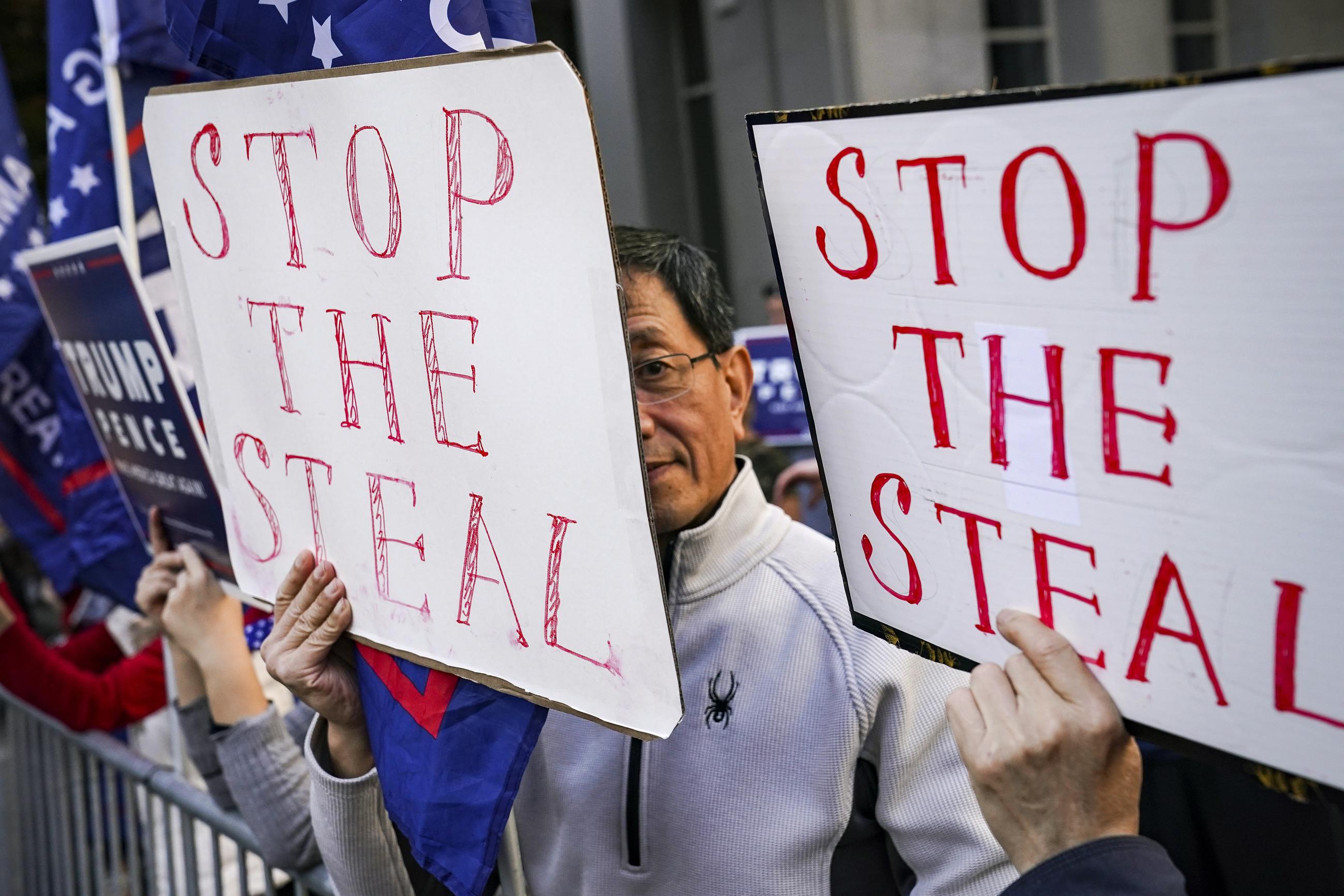
Many Democratic attorneys general defended their states’ election results in 2020 as Republicans affiliated with the Trump campaign waged legal challenges to his loss. In Pennsylvania, then-Attorney General Josh Shapiro sued to block a Republican-led subpoena of the 2020 election results. In Michigan, Attorney General Dana Nessel defended the state against lawsuits seeking to delay or overturn ballot certification.
“There’s no end to the possibilities of what he might do. 2020 was just an example,” California Attorney General Rob Bonta said. “And our democracy and our structures held firm but were stress-tested, and I think he might even do more this cycle and this time around.”
The Trump administration has reopened investigations into the 2020 election, subpoenaing election records from Maricopa County, Arizona, and sending the FBI to search an election office in Fulton County, Georgia. The Justice Department has also requested states provide their voter rolls—including sensitive voter information—to check for noncitizen voters.
Ballots themselves are being targeted long after certification, raising concern over whether the Trump administration may intervene while they’re still live. Stephen Richer, who was elected as the Maricopa County recorder in 2020, said ballots are at their most vulnerable before final tabulation and certification. The federal government seizing ballots during this window would set up an unprecedented situation, he said.
Bonta is already fighting for California’s ballots. Riverside Sheriff Chad Bianco, a Republican running for California governor, seized over half a million ballots from the Proposition 50 special election, alleging fraud.
“People know what their duties are, and some choose to violate the law, and that’s Sheriff Bianco,” Bonta said. "He’s breaking the law.”
Bonta sued to stop Bianco’s investigation, but a state court blocked his move.
Attorneys general are also preparing to counter Trump’s influence as he sows doubt on the upcoming midterms. In Colorado, Attorney General Phil Weiser’s office helped prosecute Tina Peters, a former county clerk who was convicted of tampering with voting machines after Joe Biden’s win in 2020. Weiser told National Journal that Peters’ successful conviction “sets a very important and clear precedent.”
“Election officials need to follow the law,” Weiser said. “They need to protect the integrity of our elections, not undermine them.”
An appeals court on Thursday overturned Peters’ nine-year sentence and ordered her to be resentenced.
As Democrats try to predict and respond to Trump’s next move, Republican attorneys general have vowed to stand by him this cycle as many of them did in 2020.
Texas Attorney General Ken Paxton was influential in Trump’s initial challenge in 2020, filing a doomed Supreme Court case that alleged election irregularities in Georgia, Michigan, Pennsylvania, and Wisconsin. Since then, Paxton, who is running for Senate, launched an investigation into potential noncitizen voting and created an “illegal voting” tip line.
Rep. Chip Roy, who is running to replace Paxton, plans to continue that mission. The congressman told National Journal that there’s still work to be done in ensuring that “it’s only Texans, American citizens voting.”
South Carolina Attorney General Alan Wilson, one of a few AGs still in office who signed onto Paxton’s lawsuit, said “millions of Americans still have serious questions about what happened in 2020” and that those concerns have to be addressed “head on.”
“Attorneys general serve as the constitutional backstop, and President Trump has been leading the national conversation on securing our elections,” Wilson said in a statement to National Journal. “Our role is to take those ideas and ensure they are implemented in a way that strengthens the law, protects the integrity of the process, and restores public trust.”
Not all Republican attorneys general joined the effort to challenge election results in 2020. Georgia Attorney General Chris Carr, who is running for governor, was one of just a few GOP AGs who didn’t sign onto Paxton’s lawsuit to overturn the election results. He later stepped down from his position as chair of the Republican Attorneys General Association, citing the “vastly opposite views of the significance of the events of January 6.” Of the 27 current Republican attorneys general, just five were elected before 2020, as many others have termed out or retired.
As Democratic AGs challenge Trump’s executive orders in the courts, they remain prepared for any future challenges to voting.
Nevada Attorney General Aaron Ford told National Journal his office plans to exercise every legal option, including expedited motions, to prevent any last-minute chaos.
“We stay ready so we don’t have to get ready,” Ford said.