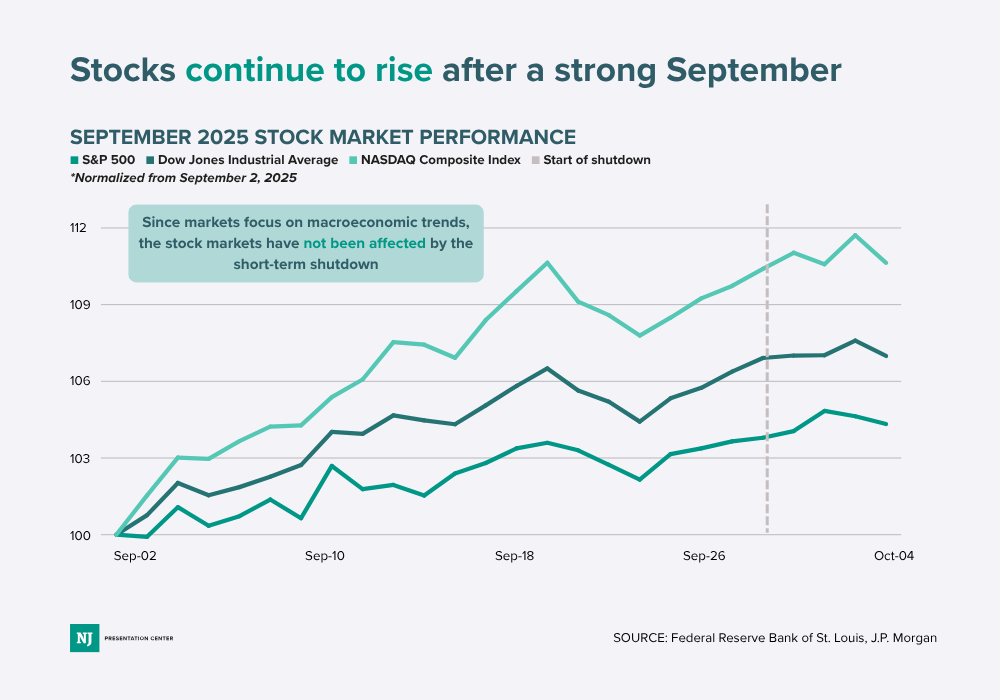

Interest rates are largely stuck, with few analysts confidently saying whether they’re headed significantly up or down anytime soon. That says a lot about where experts see the entire economy headed.
The Federal Reserve last week decided to do nothing to change its key rate. The Fed’s rate target of 3.5 percent to 3.75 percent has been in place since December.
“The truth is it's completely out of our hands,” Fed Chairman Jerome Powell told reporters last week. “Like everybody else, we have to just wait and see what happens."
That’s because it’s impossible to say how long the Iran war, now entering its fourth week, will last. Markets are being whipsawed, as President Trump threatened Iran’s power supply over the weekend, then revealed Monday he was seeking a negotiated end to the war.
The financial world is watching nervously. Late last year, it was widely predicted the Fed would lower interest rates in 2026. All the pieces seemed to be in place: The rate of inflation had cooled, unemployment was comfortably stable just above 4 percent, and there seemed to be no huge shocks on the horizon.
But one big roadblock proved stubbornly persistent even before the U.S. and Israel attacked Iran on Feb. 28: lagging consumer confidence. Survey after survey showed that Americans weren’t buying the idea that inflation was under control.
“A broad swath of consumers across incomes, age, and political affiliation all reported declines in expectations for their personal finances,,” said Joanne Hsu, Survey of Consumers director at the University of Michigan.
Most of Hsu's data was compiled before the war began. Once the invasion started, energy prices soared, stoking new doubts. After the Fed meeting last week, Powell emphasized the economy’s unpredictability.
“It’ll come down to how long … the current situation lasts and then what are the effects on prices, and then how do consumers react to that kind of thing,” he said. “Really, I wouldn't speculate in any way.”
CME FedWatch said in February, before the start of the Iran war, that there was a 28 percent probability the Fed would lower rates at its April 28-29 meeting.
Today, that probability has disappeared, replaced with an 8.3 percent chance the rate will go up one-quarter of a point.
Stubbornly high mortgage rates
For consumers, the most closely watched interest rate involves home mortgages. The rate peaked at just above 7 percent in October 2022, according to Freddie Mac, which tracks the data.
Last week, the rate on a 30-year fixed-rate mortgage loan was 6.22 percent, down from 6.67 percent a year earlier but still well above the 2.65 percent of five or six years ago.
While the Fed influences the path of rates, mortgage rates are affected by other factors, notably bond markets and what investors see as future economic trends. The less optimistic markets seem to be about the future, the higher the rate.
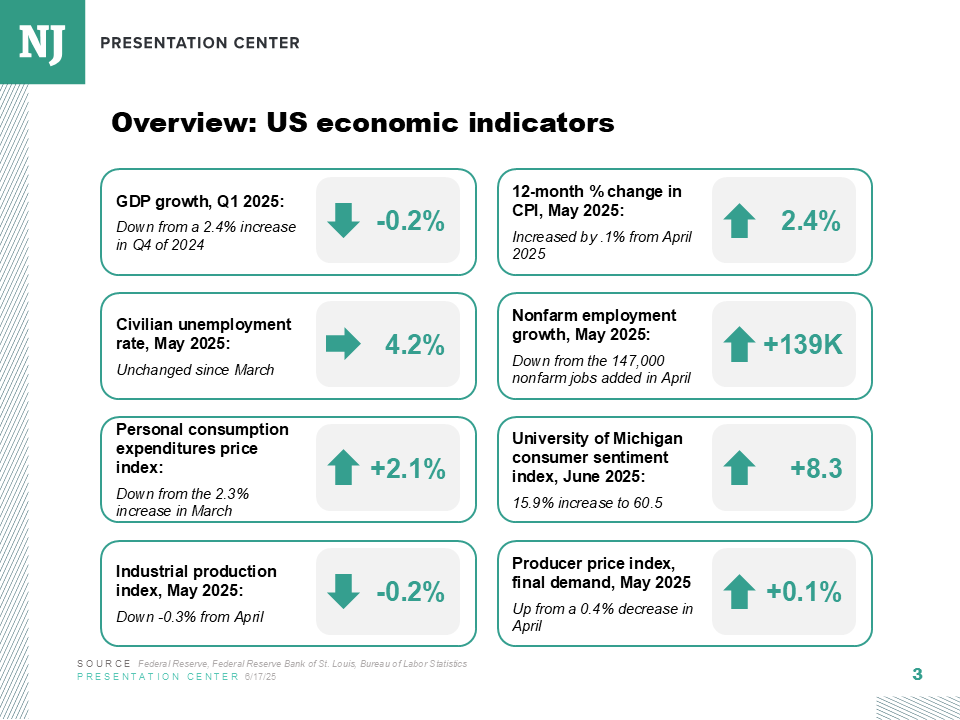
The Fed’s mission is to keep prices stable while maintaining robust employment. Its inflationary expectations rely heavily on the federal government’s personal-consumption index. The latest reading, taken in January, had it going up at an annualized rate of 2.8 percent. The Fed’s target is 2 percent.
At the same time, the Bureau of Labor Statistics reported that the nation’s unemployment rate ticked up slightly to 4.4 percent last month, a decent reading, though it included a loss of 92,000 jobs.
‘A tricky, stagflationary mix of risks’
So does the Fed lower rates, which in theory would help motivate consumers to spend and thus create more jobs? Does creating more demand risk sending inflation higher at a time oil prices show few signs of relenting?
The average price of a gallon of regular gasoline Monday was $3.96, AAA reported. A month ago, it was $2.94. After news about negotiations to end the war Monday, however, oil prices dropped significantly.
Alternatively, should the Fed raise interest rates as a way of easing inflation, of cushioning the economic pain of higher oil prices? Doing that could mean more job losses as higher prices discourage consumers further.
“Add higher oil prices given conflict in the Middle East and renewed tariff uncertainty to the convoluted jobs-market story, and you have a tricky, stagflationary mix of risks in the backdrop for the Fed,” said Elyse Ausenbaugh, head of investment strategy at J.P. Morgan Wealth Management.
At his news conference last week, Powell was pressed on where rates could be headed. Be patient, he advised.
He tried to show some confidence in the economy. “Right through this whole period, the overwhelming majority of the things we look to—including markets, including surveys of the public and also of forecasters—they've all been pretty solid on longer-term inflation expectations being right where they need to be,” he said.
But there are ominous signs that energy prices and war are upending economic logic.
“I think everyone does agree we’ll be watching those extremely carefully,” Powell said of economic indicators.
So at the moment, he said: "There's really not a lot we can do, other than kind of watch and see.”