Not all ballot language is created equal. As more redistricting ballot referenda emerge to counteract the Texas redistricting session last summer, the language of these initiatives itself can potentially influence voters.
The latest example is in Virginia, where early voting has begun and voters head to the polls next month to approve or reject new congressional maps. The ballot, prepared by the Democratic-led General Assembly, has been the subject of online scrutiny. Many, especially those on the Right, have taken issue with the measure’s phrasing.
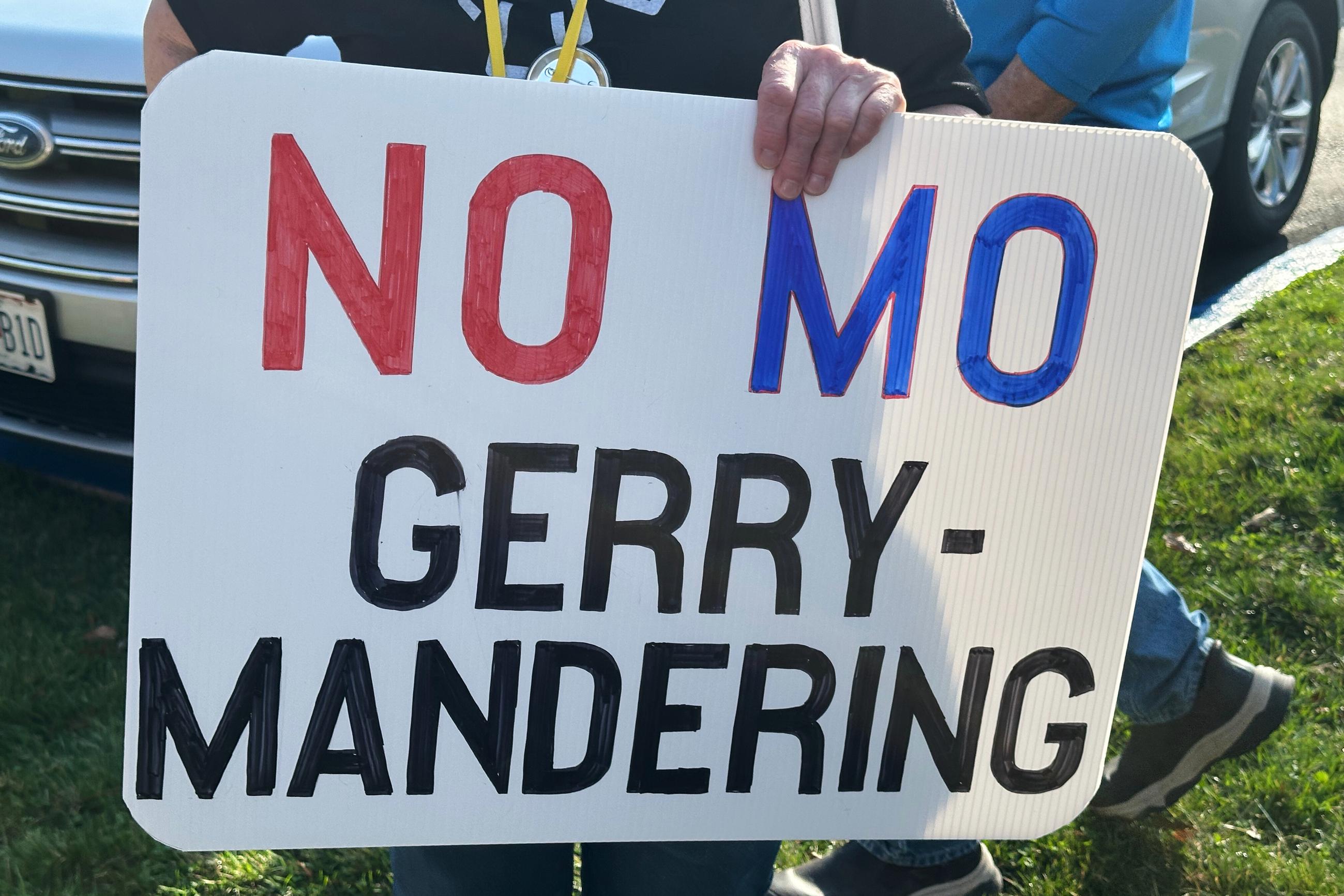
The process to get a referendum on the ballot can be particularly volatile. On Friday, a Missouri judge rewrote the original Republican-proposed ballot summary, removing parts of the proposal that even the Republican secretary of state admitted were misleading and biased. The new summary removes some of the political language, but not all.
Chris Melody Fields Figueredo, the director of the progressive Ballot Initiative Strategy Center, said biased language can sway elections. Fields Figueredo, who sees Virginia and other states’ amendments as necessary to counter Republican gerrymandering in other states, said “we’re seeing even more efforts to manipulate that language,” pointing to Ohio’s Issue 1 in 2024.
BISC prepares, trains, and informs state leaders, organizations, and campaigns seeking to pass ballot initiatives or defeat them. The group also builds coalitions and does research for these initiative campaigns.
Fields Figueredo sees ballot initiatives as a check-and-balance tool empowering citizens to vote on issues they care about. She criticized election officials crafting biased ballot language, calling it a manipulation to reinforce “power and control.”
“It's the work of the ‘yes’ or the ‘no’ campaign to convince the voters,” Fields Figueredo said of politically motivated language. “And that's where we should be having those conversations—not tilting the scales on the title of that ballot measure or language that will have unnecessary influence on how somebody will vote.”
A handful of states have completed or pending statewide referenda on redistricting. More Democratic states, such as Colorado, are expected to pursue referendums during the 2028 cycle as a continued response to the Trump-catalyzed mid-decade redistricting.
The following is a sampling of ballot language from past, current, and future redistricting amendments.
The initial ballot language, prepared by Missouri Republicans, used the phrase “existing gerrymandered congressional plan” as a ploy to confuse voters. However, the same Republican-controlled Legislature passed the current 2021 plan, which favors Republicans by a 6-2 margin. The language went to court, where Secretary of State Denny Hoskins admitted the wording could be misleading. A state judge struck down the initial language, removing some key components but keeping intact the phrase that suggests the new lines “keep more cities and counties intact,” wording that could benefit the Republican side. The group opposing the ballot measure has not decided whether to appeal this ruling.
This long Ohio ballot question, which featured 10 different provisions, was designed to be confusing and misleading, state GOP officials admitted. The measure, which failed by a vote of 55 percent to 45 percent, would have enacted a 15-member citizen redistricting commission, barring politicians and lobbyists from participating in the redistricting process. But you wouldn’t have found that out until you read down to provisions 6 and 7, also the most verbose sections on the ballot. Many voters likely thought a “yes” vote would have enacted gerrymandering, though the current process is partisan.
“Fairness” is a subjective term, but it’s an intentional word choice in this Virginia ballot measure in order to suggest the restoration of some sort of parity. The defense is that Virginia Democrats are referring to the national landscape—as Texas opened up the redistricting Pandora’s Box—but, in a narrow reading of the state electoral process, there is not necessarily a restoration of fairness needed. The Virginia Supreme Court drew the 2022 map that currently stands.
This California ballot title took the unprecedented state of referencing Texas, a blatantly political move that encapsulated the current political moment. By including that language, the referendum became nationalized, which was what Gov. Gavin Newsom and Democrats wanted in order to catalyze anti-Trump turnout and run up the score. It worked: The referendum passed overwhelmingly and was called on Election Night, a rarity in the Golden State.
Utah’s ballot-initiative process ends with a referral of the proposal to a nonpartisan legislative office, which then creates the ballot language. There’s limited bias in this one, and the election results support this claim. Proposition 4, this anti-gerrymandering law, passed narrowly, 50.3 percent to 49.7 percent. The law is likely to be back on the ballot this year as Republicans pursue a repeal.
The repeal effort has not yet qualified for the ballot, and language is not yet available for the potential referendum this year. Per the Utah Code, the lieutenant governor in June will present to the Office of Legislative Research and General Counsel proposals for the November ballot. The office will then prepare a title and summary, which the sponsors of the ballot initiative can challenge if they believe it “false or biased.”