National Journal Logo
×

Welcome to National Journal!

Enjoy this premium "unlocked" content until May 31, 2026.

Continue

Hotline’s Gubernatorial Power Rankings

Democrats shift into offense mode following Virginia, New Jersey wins last year.

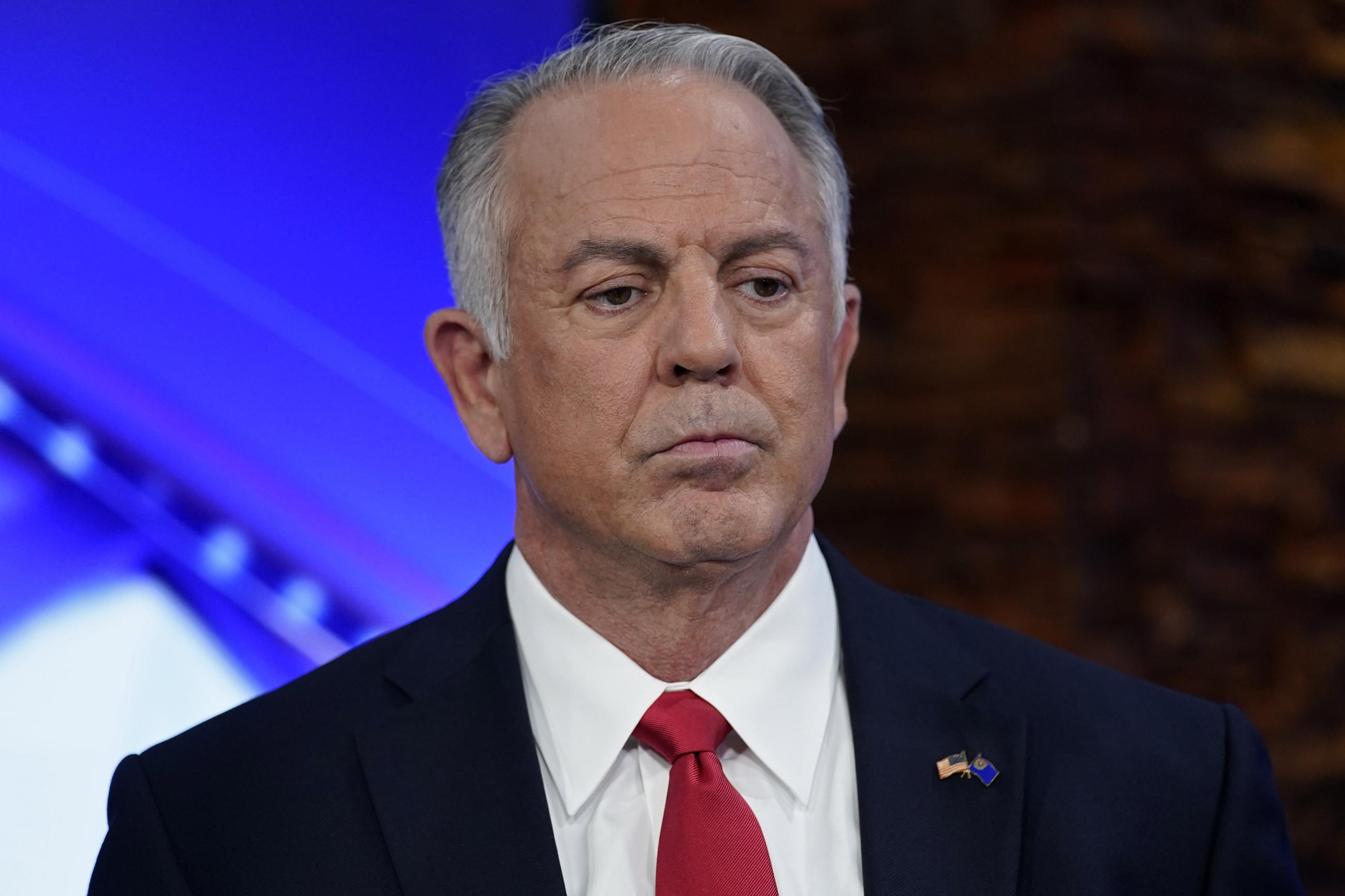
Nevada Gov. Joe Lombardo AP Photo/John Locher, Pool, File)
ASSOCIATED PRESS

Want more stories like this?

Subscribe to our free Sunday Nightcap newsletter, a weekly check-in on the latest in politics & policy with Editor in Chief, Jeff Dufour.

Add to Briefcase
Abby Turner and Kirk A. Bado
March 18, 2026, 5:53 p.m.

Democrats entered off-year contests in Virginia and New Jersey bullish, framing the races as an early referendum on President Trump’s second term. The landslide victories of Govs. Abigail Spanberger in Virginia and Mikie Sherrill in New Jersey have only sharpened that optimism, offering a blueprint Democrats are replicating in the midterms.

Democrats now see a broader gubernatorial map in play. They say they’re confident that they can hold onto vulnerable seats and flip states where a Democratic governor hasn’t served in decades.

That shift is already apparent. Several governor’s races in red states have grown more competitive since Hotline’s previous rankings. Still, these races often remain more removed from bluer national headwinds that may sway House and Senate races. Instead, the competitive governor’s races on this list will be defined by hyperlocal issues and candidate authenticity. Democrats will also have to contend with tough math in red states they’re targeting, where there is deeply entrenched partisanship and a GOP voter-registration advantage.

The findings are based on interviews with committees and operatives, as well as analysis of fundraising and polling.

1) Kansas: Open (D)

This race boils down to a simple question: What can Sam Brownback do for Democrats? For the third cycle in a row, Democrats are running against the unpopular former GOP governor. Blowback to Brownback’s controversial tax policies propelled Democratic Gov. Laura Kelly into office in 2018, and denigrating his allies kept her in the governor’s mansion in 2022. But eight years and a political lifetime later, Democrats might start to see diminishing returns with this worn playbook.

The primary is not until June, but state Sen. Ethan Corson has already consolidated state Democratic support with endorsements from Kelly and former Gov. Kathleen Sebelius. He hasn’t cleared the field, though. Fellow state Sen. Cindy Holscher is still in the race, and polling is scant. A clear dividing line in the primary is over support for Kelly’s plan to build a new Kansas City Chiefs stadium using taxpayer money on the Kansas side of the Missouri border. Corson tentatively supports the plan. Meanwhile on the GOP side, former Gov. Jeff Colyer, Secretary of State Scott Schwab, and state Senate President Ty Masterson are jockeying for position. GOP strategists said that this field’s ties to Brownback—all of them either served alongside the former governor or supported his tax cuts in the legislature—are not a liability. In a state that President Trump carried by 16 points, they might be right.

2) Michigan: Open (D)

Democrats jockeying to replace term-limited Gov. Gretchen Whitmer are fighting a war on two fronts. On one side is a formidable Republican field headlined by Rep. John James, a two-time statewide nominee who flipped a swing district in 2022. On the other front is former Detroit Mayor Mike Duggan, who is mounting a serious independent bid. Duggan is siphoning support from both parties, but his base of support is in deep-blue Detroit and its surrounding area, where Democrats cannot afford to lose votes in one of the most tightly contested swing states. Months ahead of the August primary, Duggan is steadily polling between 20 and 30 percent. To head off a potential disaster, Democrats are pressuring Duggan to drop his bid by the April 21 filing deadline, clearing the path for Secretary of State Jocelyn Benson to take on the eventual GOP nominee mano-a-mano.

But Republicans are not out of the woods either. Perry Johnson, the wealthy Republican businessman who ran for governor in 2022, jumped into the race just as some GOP strategists began wringing their hands over what they considered James’ lackluster campaign. Johnson committed to a $10 million barrage of ads in early March targeting James and denigrating his record in Congress. Even if Johnson doesn’t secure the nomination, the ad campaign could leave James bruised heading into the general election.

Rep. Tom Tiffany of Wisconsin (AP Photo/Scott Bauer)
Rep. Tom Tiffany of Wisconsin (AP Photo/Scott Bauer) ASSOCIATED PRESS

3) Georgia: Open (R) ↑

Health care executive Rick Jackson's surprise entrance into the Republican primary has upended the race, undercutting Trump-endorsed Lt. Gov. Burt Jones. Jackson dumped $30 million into TV ads and almost instantly gained a lead in multiple polls. At the same time, a mysterious dark-money group, Georgians for Integrity, has spent over $13 million accusing Jones of enriching himself in office. Now coming to Jones’ aid, Republicans will have to spend big to keep him afloat in this likely runoff and rebuild his image after the primary—diverting resources away from attacking the Democratic field in the process.

Democrats are relishing the GOP chaos as they see the Peach State as the best shot to flip a red seat. The state, which never expanded Medicaid, is feeling impacts from the federal Republican budget bill—and the recent FBI raid of the Fulton County election office has riled up a Democratic base in a state where the wounds from Trump’s 2020 election challenges are still fresh. Republicans are eager to run against former Atlanta Mayor Keisha Lance Bottoms. With her high name ID and lead in the polls, the Democratic primary is now coalescing into a fight for the second runoff spot between former state Sen. Jason Esteves and former Lt. Gov. Geoff Duncan.

4) Wisconsin: Open (D) ↓

Republicans have found their presumptive nominee after Rep. Tom Tiffany secured the Trump endorsement and raised $2.1 million in the final months of 2025. The Democrats, by contrast, remained unsettled nearly eight months after Gov. Tony Evers announced he wouldn’t seek reelection. Democrats' top fundraiser, Milwaukee County Executive David Crowley, raised $789,000 in the same time period as Tiffany. Former Lt. Gov. Mandela Barnes has led in some limited polling of the primary, but upwards of two-thirds of voters remain undecided.

That asymmetry is shaping the race. Tiffany has a head start defining both himself and his eventual opponent. Republicans want to run against Barnes, who carries baggage from his narrow 2022 Senate loss. Yet the unsettled Democratic field cuts both ways, denying Republicans a clear target while giving Democrats flexibility to test attacks against Tiffany. Trump had his slimmest margin in the Badger State, winning by just 1 percentage point in 2024. With no third-party spoiler and tight margins, the race will be a two-party test as each eventual candidate races to 50 percent.

Iowa state Auditor Rob Sand (AP Photo/Charlie Neibergall)
Iowa state Auditor Rob Sand (AP Photo/Charlie Neibergall) ASSOCIATED PRESS

5) Iowa: Open (R) ↑

State Auditor Rob Sand has cleared the Democratic field for governor, entering general-election territory with unusual momentum for a Democrat in Iowa. He raised a record-breaking $9.5 million in 2025. His likely opponent, Republican Rep. Randy Feenstra, is facing a more uneven path. The four other qualified Republican candidates have attacked Feenstra for skipping debates and forums, and he has yet to lock down the Trump endorsement.

This race will be all about hyperlocal issues. Under Gov. Kim Reynolds, the state faces a nearly $1.4 billion budget deficit and is ranked dead last for economic growth. Trump’s tariffs impacting agriculture are only adding fuel to the fire. Democrats see parallels to the backlash to Brownback’s tax experiment that paved the way for Kelly’s success in Kansas. Sand, as state auditor, doesn’t have a voting record to use against him. That hasn’t stopped Feenstra from pledging an early multimillion-dollar ad campaign to define the Democrat. Limited polling in the race shows a competitive head-to-head matchup. Sand and Democrats will still have to contend with the sheer partisanship of the state; Republicans hold a nearly 200,000-voter registration advantage. As Sand, who has already won statewide twice, attracts support from independents and Republicans, Democrats see this as one of their best flip opportunities.

6) Arizona: Gov. Katie Hobbs (D) ↓

While Republicans acknowledge that the national environment is darkening for their party, Arizona remains a rare bright spot. They point to Hobbs’ lackluster approval ratings and the GOP primary field slowly consolidating behind Rep. Andy Biggs. Trump endorsed 2022 candidate Karrin Taylor Robson in December 2024, then offered dual support to Biggs once he jumped in the race a few months later. The insult from Trump to endorse an additional candidate, plus Turning Point USA's endorsement of Biggs before Charlie Kirk’s assassination, was too much for Taylor Robson to overcome. Her exit from the race threw the ball into Biggs’ court. Rep. David Schweikert, who represents a swingy seat in Scottsdale, is still in the race, but he has not made much traction in the primary.

Hobbs has her work cut out for her as this cycle’s most vulnerable incumbent. There’s growing evidence that backlash to establishment leaders will be a key motivating factor for voters this cycle. Hobbs will need to make her case to a skeptical electorate that she has the solution to their economic woes. Biggs, a member of the House Freedom Caucus and MAGA ally, might not be as strong a general-election candidate as Taylor Robson could have been, but the anti-incumbent backlash could power him over the line in November.

7) Nevada: Gov. Joe Lombardo (R) ↓

Five years after COVID-19 shut down the Silver State, Nevada’s post-pandemic economy is still struggling to recover. Tourism is down, energy prices are rising, and voters are angry. Lombardo rode this fresh wave of voter frustration into office in 2022 as he defeated former Gov. Steve Sisolak—the only governor booted from office that cycle. Now, that same wave threatens to wash him out. In addition to the statewide economic fallout of the struggling Las Vegas Strip, energy costs are emerging as a key concern. Critics are blaming Lombardo for allowing NV Energy’s controversial peak-demand charge to increase consumers’ bills by more than $20 a month. State Attorney General Aaron Ford, the governor’s main Democratic challenger, is leveraging his office to investigate the practice. The race has yet to heat up, but this early divide over affordability concerns could be a defining trend.

8) Ohio: Open (R) ↑

As the general-election matchup is set between former presidential contender Vivek Ramaswamy and former state Department of Health Director Amy Acton ahead of the primary, each is looking to define the race. Gone is the Ramaswamy of the 2024 presidential campaign, who ran to the right of Trump by proposing to abolish the FBI and promoting the "great replacement" conspiracy theory. He has now sworn off social media, and launched a $10 million ad campaign casting himself as a tried-and-true conservative. He hasn’t won everyone over. He’s taken a hit from far-right Republicans who have berated him with anti-immigrant rhetoric. Term-limited Gov. Mike DeWine reluctantly endorsed Ramaswamy after shopping for other candidates to run against him.

Democrats see Acton as a stronger candidate than their nominee in 2018, the last time this seat was open, when DeWine won by 4 points. She’s centered her campaign on affordability, presenting a contrast with billionaire Ramaswamy. But her leadership role during the COVID-19 shutdowns remains a potential liability in a state where pandemic restrictions were polarizing. No Democrat has won statewide in Ohio since 2018, when former Sen. Sherrod Brown won reelection. For now, polling remains competitive even as Ramaswamy dominates in fundraising.

9) Alaska: Open (R) ↑

Republicans with their eye on the governor’s race may breathe a sigh of relief that former Democratic Rep. Mary Peltola set her sights on the Senate seat instead of this one. But the state’s top-four primary system, and a large candidate field, still leave the race highly unsettled. Three Democrats are running: former state Sen. Tom Begich, former state Rep. Jonathan Kreiss-Tomkins, and state Sen. Matt Claman. Claman’s campaign says he’s leading the Democrats in fundraising.

But Begich’s surname, shared with his nephew, Republican Rep. Nick Begich, could provide him with a built-in boost.

The Republican field is even more fractured. Conservative activist Bernadette Wilson, former Anchorage Mayor Dave Bronson, and former state Sen. Click Bishop have led in early polls, while retired podiatrist Matt Heilala and former Attorney General Treg Taylor led in fundraising. Lt. Gov. Nancy Dahlstrom, once seen as a potential front-runner, has faltered, raising just $17,000. If Democrats coalesce around one candidate while Republicans remain divided, this race could quickly come more online.

10) Maine: Open (D) ↓

The race to replace Democratic Gov. Janet Mills has not cleared up since the last iteration of Hotline’s Power Rankings. Crowded primary fields dominate both sides, with scions of political dynasties jockeying for position. Five Democrats and eight Republicans qualified for the June 9 primary, and there aren’t any clear front-runners. However, there are some signs of life. For Republicans, health care executive Jonathan Bush recently launched a statewide ad campaign, making him the first candidate on air. On the Democratic side, former Maine Center for Disease Control and Prevention Director Nirav Shah has seen a spike in recent polling, despite trailing other candidates in fundraising. Without a strong candidate on the Republican side, this should stay in Democrats’ hands thanks to the partisan lean and the favorable national environment. Independent candidate Rick Bennett could throw a wrench in both parties’ plans.

Welcome to National Journal!

Enjoy this featured content until May 31, 2026. Interested in exploring more
content and tools available to members and subscribers?

×
×

Welcome to National Journal!

You are currently accessing National Journal from IP access. Please login to access this feature. If you have any questions, please contact your Dedicated Advisor.

Login