National Journal Logo
×

Welcome to National Journal!

Enjoy this premium "unlocked" content until April 18, 2026.

Continue

RFK Jr. wants to define junk food. He’s going to get sued over it.

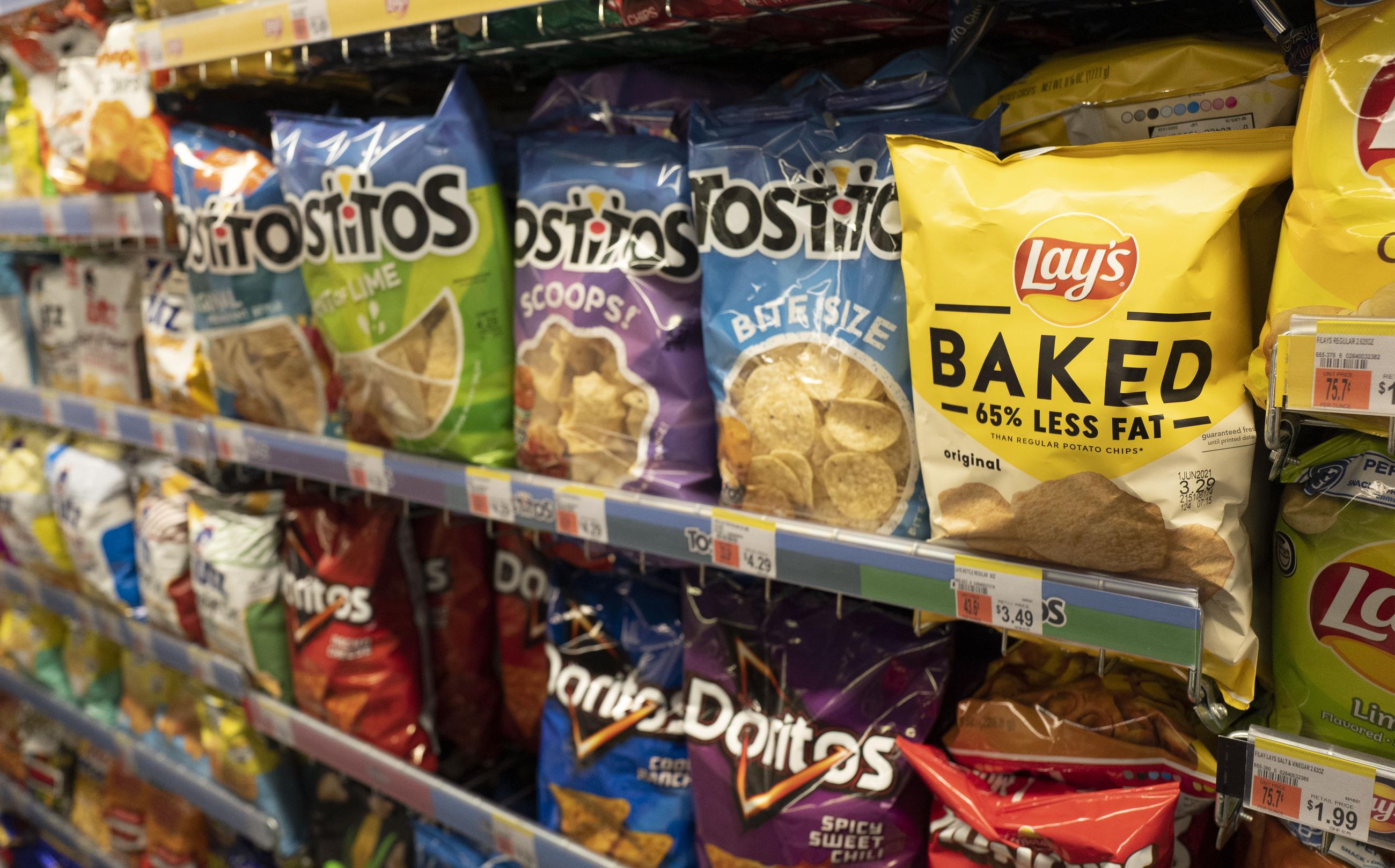
Pinning down the term will be tricky territory, since not all ultra-processed foods are considered unhealthy.

(AP Photo/Mark Lennihan, file)
None

Want more stories like this?

Subscribe to our free Sunday Nightcap newsletter, a weekly check-in on the latest in politics & policy with Editor in Chief, Jeff Dufour.

March 17, 2026, 7:06 p.m.

Health and Human Services Secretary Robert F. Kennedy Jr. promised to rein in junk food. But it likely won’t be through the Food and Drug Administration’s regulatory authority.

Kennedy has sent out signals through various media interviews that the department would not look to formally regulate packaged snacks, sugary drinks, and other ultra-processed foods made with preservatives, sweeteners, and artificial flavors. Instead, the administration will look only to define the term—likely through a simple policy statement, lobbyists and former FDA policymakers tell National Journal.

This would be the first time the federal government attempts to define the term. Industry observers tell National Journal that they’re expecting the administration to side-step the normal rulemaking process, while pursuing a public education campaign about the potential harmful impacts of consistently consuming junk foods.

The effort to target the industry could trigger broad dietary consequences nationwide: what makes it into school lunches, how far states can go to improve nutrition and, ultimately, what Americans choose to eat.

The expected definition—which HHS officials say could come in April or May—is all but certain to invite lawsuits, experts said. Kennedy has waged a public war against ultra-processed foods, calling them “poison” and blaming them for the nation’s surging rates of obesity and chronic diseases. But defining the term itself can be tricky territory, as not all ultra-processed foods have been considered unhealthy by nutritionists.

“If they don’t do it using rulemaking, or guidance with an opportunity for public comment, I could imagine lawsuits—and I’m not kidding,” said one former FDA policymaker. “This is going to be a legal battle. Big companies will say, 'You cannot do this.' … The lawyers will have a field day with this.”

While the Administrative Procedure Act—which governs how federal agencies issue regulations—mandates a notice-and-comment period, putting out a simple policy statement would avoid the requirement for public commentary. However, the FDA, HHS, and the Agriculture Department did put out a request for information, or RFI, in July to help develop a uniform definition in order to “allow for consistency in research and policy to pave the way for addressing health concerns associated with the consumption of UPFs.”

In recent days, Kennedy has given signals in media interviews that HHS would not look to formally regulate junk foods—a promise going back to his confirmation hearings in the Senate. The administration and Kennedy have mainly avoided using the agency’s regulatory authority to rein in the food industry, but instead have used the threat of regulation as a bully pulpit to leverage cooperation from food companies.

“Well, I'm not saying that we're going to regulate ultra-processed food,” Kennedy said in a CBS interview. “Our job is to make sure that everybody understands what they're getting, to have an informed public.”

While there isn’t a federal, uniform definition of ultra-processed food, researchers have described it as anything that would be impossible to make in a kitchen due to the inclusion of chemical-based preservatives, artificial colors and flavors, and hydrogenated oils. Such foods also undergo a number of processing techniques like molding or fractioning that leave them unrecognizable from their original state.

Not all UPFs deemed unhealthy

More than 73 percent of the U.S. food supply is considered ultra-processed. But while many ultra-processed foods can be considered high in saturated fats, sodium, and sugar, not all are considered unhealthy. Whole-grain breads and instant oatmeal are considered ultra-processed, but they can be nutrient-dense and offer a number of health benefits.

The range of the UPFs makes it difficult to define the term. Earlier this year, HHS and USDA released new dietary guidelines that discourage eating “highly processed foods.”

The RFI released last year drew some 5,000 public comments from different health associations, food companies, doctors, and members of the public. The comments offer a wide range of perspectives on the issue, with some urging the administration to adopt Brazil’s NOVA classification, which sorts food and beverages into four categories based on the extent and purpose of processing applied to them. Others called for a nuanced grouping of foods based on nutritional quality.

“I just think there's been too much internal fighting, and they don't really know where to land the plane on it,” said an industry lobbyist in the FDA-regulated space. “Overall, they also know there's some healthy parts of the category that are ultra-processed, so they don't want to [muck] that up.”

In response to questions regarding whether or not the RFI would be the only mechanism for the public to weigh in on the pending UPF definition, a USDA spokesperson said the department and HHS are “currently reviewing comments to inform next steps in this process.” An HHS spokesperson did not immediately respond to a request for comment.

Lessons from 'genetically modified' definition

Some legal experts noted that there is a possibility for the policy statement to survive litigation, depending on how prescriptive the definition is.

In 1992, the FDA made a similar move by issuing a policy statement that genetically modified foods were considered “generally recognized as safe”—otherwise known as the GRAS designation—and would not be regulated as a food additive. The agency also said that companies would be allowed voluntary, not mandatory, consultations to market their products, and would not be forced to label their food as genetically modified because the engineering of the foods did not change it in any “material” way. The Alliance for Bio-Integrity and other groups sued, arguing the absence of mandatory labeling and testing violated food-safety laws. The plaintiffs also asserted that the agency had failed to allow for public comment on the new policy and did not file an environmental-impact statement.

However, a federal judge upheld the FDA’s policy statement on the grounds that the agency’s move was not "arbitrary and capricious.” The judge also noted that because the policy statement was not a regulation, the agency did not need to seek public comments or file an environmental-impact statement.

“I think it could be on good legal standing,” Emily Broad Leib, the director of Harvard’s Food Law and Policy Clinic, told National Journal about the pending "ultra-processed" definition. “It's going to very much come down to a question of how close is it to an interpretive guidance or a statement of policy, versus [the agencies] requiring or changing any way that food is going to be treated.”

A potential ripple effect

How the federal definition of UPFs will be used in other forms of regulation could possibly invite further lawsuits. USDA is in the middle of drafting proposed guidance for school meals to match the latest federal dietary standards—and a new definition of UPFs could be applied here, according to Broad Leib.

Some states are actively working to define ultra-processed foods in law. In October, California became the first state to pass into law a bill to define the term. It requires the state’s Department of Public Health to adopt regulations with the aim of phasing “restricted school foods” and “ultra-processed foods of concern” out of school systems no later than July 1, 2029.

The Consumer Brands Association, which represents manufacturers of consumer packaged goods, asserted in a statement to CBS that there “is currently no agreed upon scientific definition of ultra-processed foods.”

“Companies adhere to the rigorous evidence-based safety standards and nutrition policy established by the FDA to deliver safe, affordable and convenient products that consumers depend on every day,” the group stated. “Americans deserve facts based on sound science in order to make the best choices for their lifestyle needs."

Other regulatory fronts

Ahead of the midterms, HHS has refocused attention on the department’s efforts promoting nutrition and reining in the junk-food industry. Kennedy has put out a number of high-profile, attention-grabbing ads that highlight the department’s dietary guidelines by encouraging voters to eat “real food” rather than highly processed junk food.

And across different agencies, officials are working on different regulatory efforts that cut across the "ultra-processed foods" definition.

Earlier this year, the FDA’s Human Foods Program released a wish list of deliverables for 2026. It includes a federal definition of UPFs, GRAS reform, post-market safety reviews of chemicals found in food additives, and front-of-package nutrition labeling to inform consumers on sugar and sodium levels. Currently, the administration’s regulation on GRAS is at the White House for review. The FDA could look to finalize its food-labeling regulation in the spring.

In his interview with CBS, Kennedy noted that HHS will also be acting on the citizen petition led by former FDA Commissioner David Kessler. The petition, filed in August of last year, argued the FDA has the authority and evidence to revoke the GRAS status for dozens of processed, refined carbohydrates, such as corn syrup and refined flours.

“We will act on David Kessler's petition,” Kennedy said. “And the questions that he's asking are questions that FDA should've been asking a long, long time ago.”

However, the FDA is required to respond to Kessler’s petition within 180 days of its filing—and that deadline came and went last month. In direct response to the petition, the agency stated that it has not “reached a complete final decision on the petition,” but that it is currently under “continuous review” with an expectation of a more “fulsome response soon.”

What We're Following See More »

Whoa Powell says he’s going to stay on the Fed board as long as Trump's investigation into him is ongoing. Has not made a decision as to whether he'd stay beyond that, assuming the investigation is dropped.

— Catherine Rampell (@crampell.bsky.social) March 18, 2026 at 2:52 PM

Welcome to National Journal!

Enjoy this featured content until April 18, 2026. Interested in exploring more
content and tools available to members and subscribers?

×
×

Welcome to National Journal!

You are currently accessing National Journal from IP access. Please login to access this feature. If you have any questions, please contact your Dedicated Advisor.

Login