In 1994, two governors lost renomination: Rhode Island Gov. Bruce Sundlun (D) and South Dakota Gov. Walter Miller (R).
Sundlun’s popularity plunged over controversial policy decisions, and Miller asked voters to grant him a full term after ascending to the seat. It was the last time two governors lost their primary elections in the same cycle.
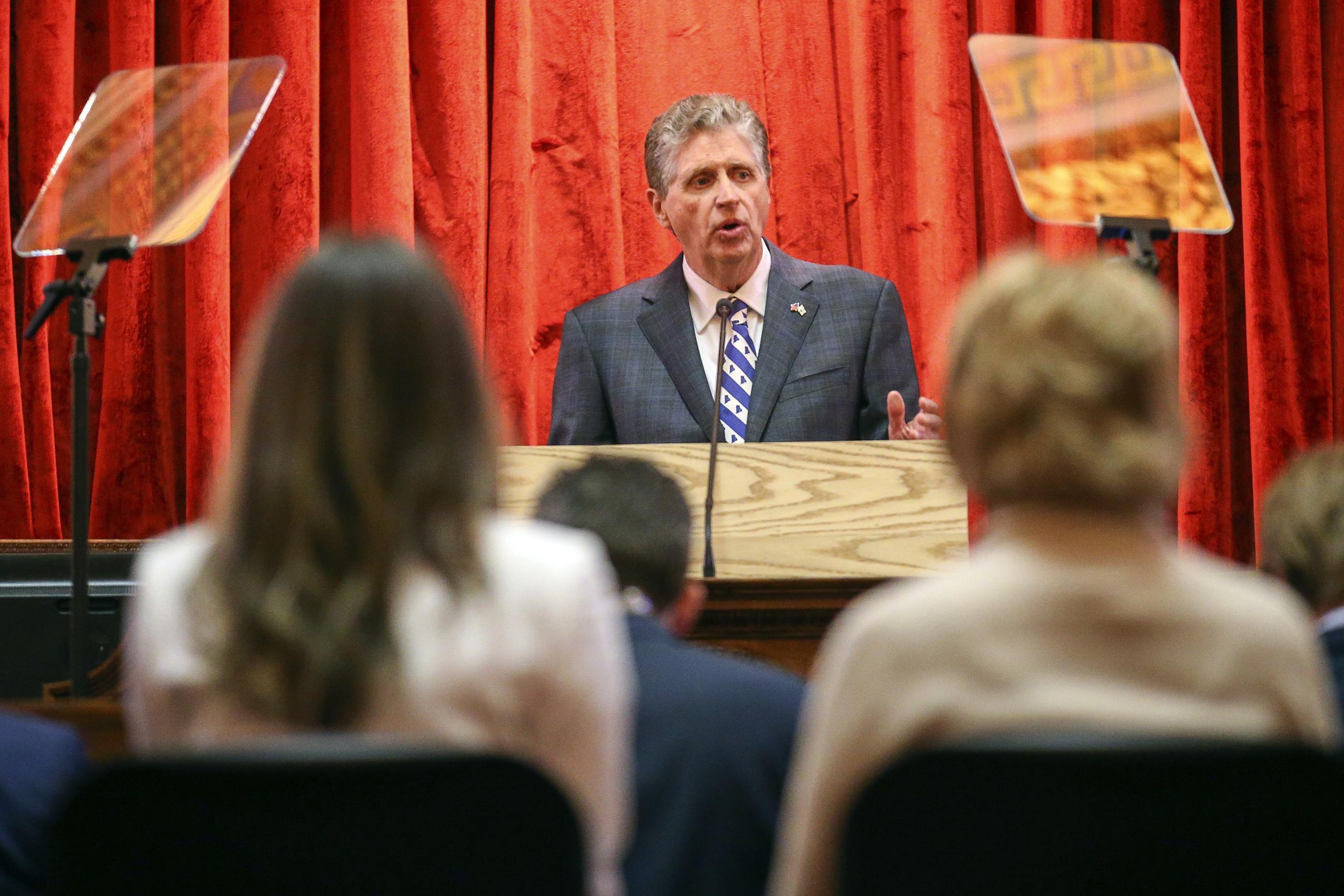
Thirty-two years later, the governors of the same states, Rhode Island’s Dan McKee (D) and South Dakota’s Larry Rhoden (R), may repeat history under similar circumstances.
The two governors didn’t appear on Hotline’s power rankings of governor’s seats most likely to flip, but they are the cycle’s most at-risk incumbent governors.
Rhoden is more at-risk than McKee. He faces a larger primary field and is asking voters to grant him the seat after he succeeded DHS Secretary Kristi Noem.
It’ll be a tough task for Rhoden. He has consistently trailed Rep. Dusty Johnson (R-AL) in polling, who has a unique statewide name ID thanks to representing the entire state in its only House seat. He also faces state House Speaker Jon Hansen (R) and businessman Toby Doeden (R).
Rhoden has spent just over a year in office, giving him few successes to tout. He recently signed a law to increase the state sales tax to fund property tax relief, an idea originally introduced by Hansen that Rhoden was at odds with.
The chances may look a little better for McKee, who has already won his seat as governor once before, but he isn't out of the woods yet.
His first full term has been overshadowed by the Washington Bridge closure after engineers discovered it was at risk of collapsing. Despite initial assessments that the bridge could be repaired, McKee announced the bridge would need a full replacement, which is expected to be completed in 2028. His approval ratings have tanked. A recent poll found just 18% of primary voters would back him for another term.
McKee faces a rematch with 2022 candidate Helena Foulkes (D), who holds a steady fundraising and polling lead. She trailed him by just 3% in the 2022 primary.
The 1994 midterms ushered in a Republican wave and signaled a willingness among voters to reject governors of their own parties. As 2026 shapes up to be a wave year for Democrats, Rhode Island and South Dakota may test that same intraparty vitality in a year of political swings.
— Abby Turner