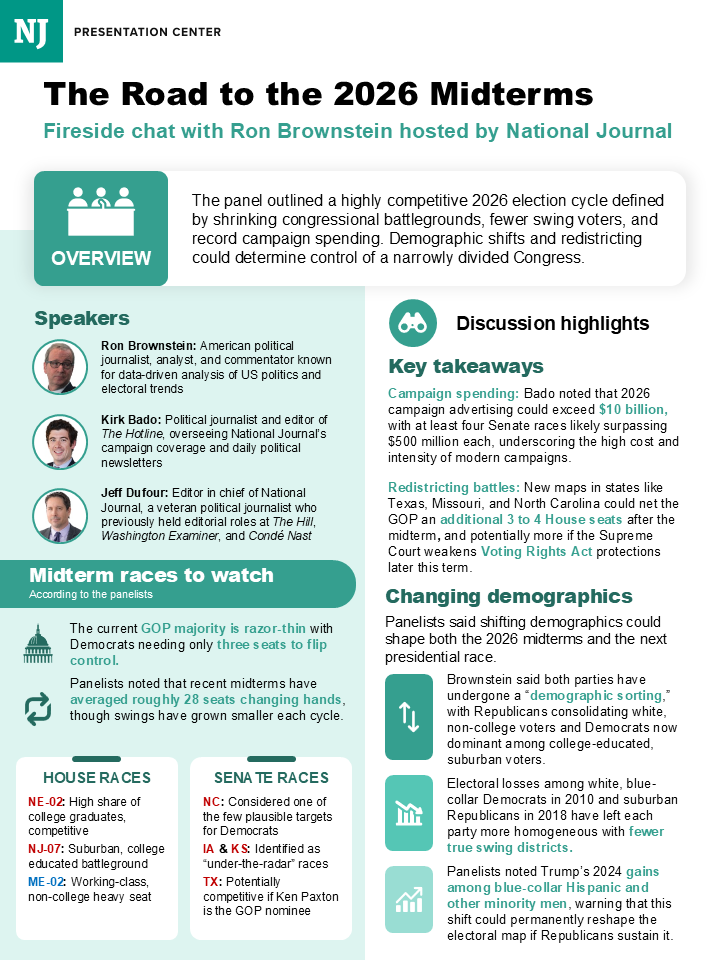
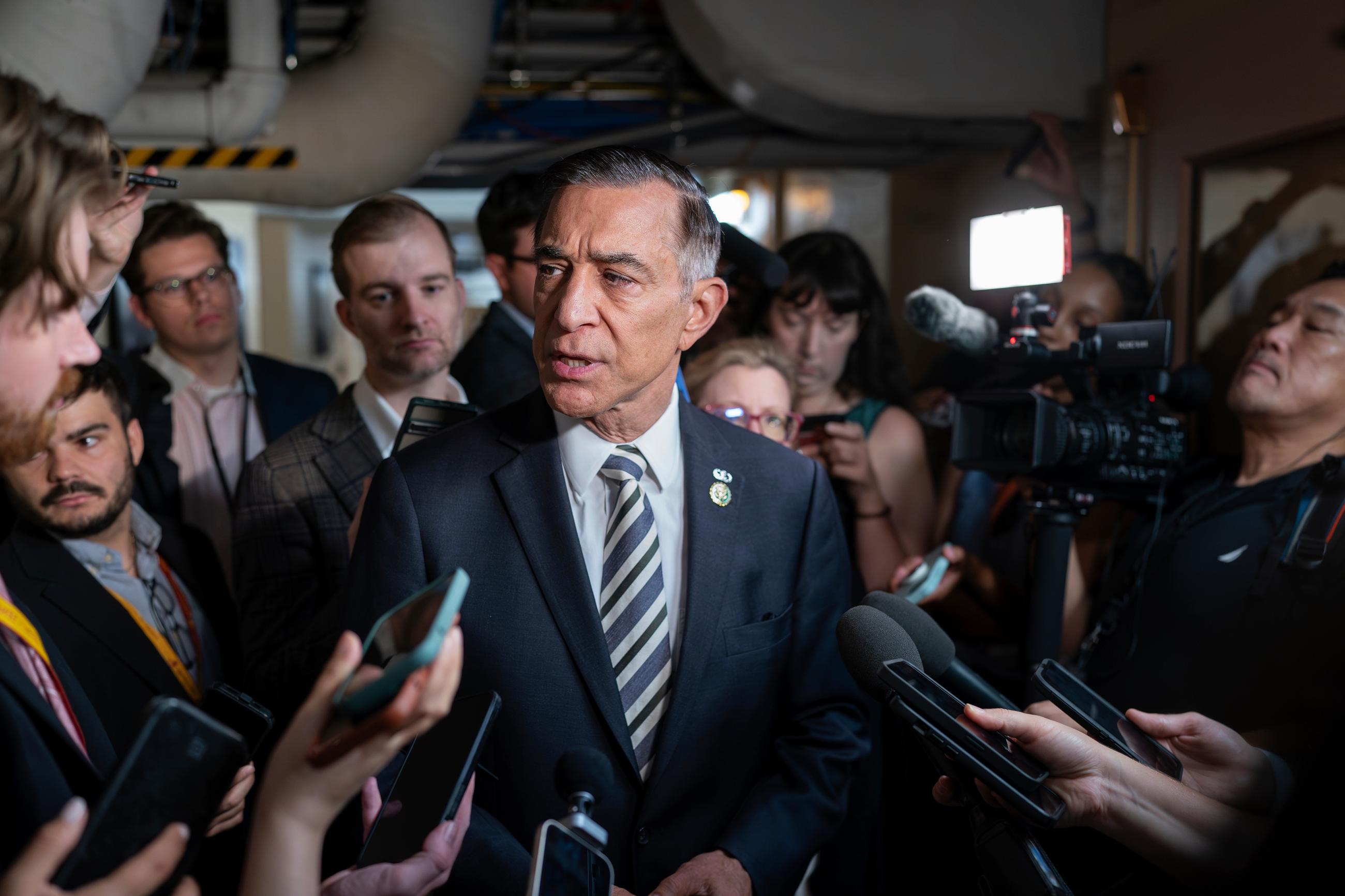

Rep. Darrell Issa’s (R-CA 48) recent decision to not seek reelection was the latest of high-profile GOP retirements after a somewhat sleepy start to off-ramping. House Republicans now have 35 members of their conference retiring or seeking a different office, surpassing the 2018 total and marking the most since at least 1930, according to the Brookings Institution.
Democrats see the retirements of Issa and dozens of his GOP colleagues as a sign of a political environment trending in their favor. “Issa abandoning his voters now is the clearest sign yet that Republicans know he can’t win on his record,” DCCC spokeswoman Anna Elsasser said in a statement.
A handful of other retirements in traditionally less competitive seats have also caught Democratic eyes. Vacancies in KY-06, IA-02, and TX-23 have emboldened Democrats to expand their playing field. President Trump won each of these seats by at least 10 points in 2024.
It’s much easier to flip an open seat than defeat an incumbent. Democrats have, for the last few cycles, targeted Reps. David Schweikert (R-AZ 01), John James (R-MI 10), Ryan Zinke (R-MT 01), and Don Bacon (R-NE 02), to no avail. In 2024 alone, Democrats spent roughly $60.3 million across those four seats and lost each of them. Now, each of them are either retiring or running for higher office.
Republicans don’t see it that way, however. NRCC Chairman Richard Hudson recently told Punchbowl News that his party doesn’t have a "retirement problem.” He said they have retirements in four competitive seats, compared to 24 during the 2018 midterms, which resulted in a Democratic wave. His comments suggest he’s not too worried about a handful of openings on the peripheries of the battlefield.
There’s historical precedent for flipping open seats. In 2006, also a wave year for Democrats, the party flipped eight seats that Republicans had vacated. Democrats also held on to every one of their congressional seats that was previously occupied by a Democrat.
Like 2006, this cycle Democrats have so far limited retirements in competitive seats, though they have a glaring hole in ME-02, where Rep. Jared Golden’s (D) retirement makes Republicans the odds-on favorite to flip the seat. Historically competitive seats in MN-02 and NH-01 could also potentially be competitive, but Democrats don’t seem worried about them in this political environment.
— James A. Downs