National Journal Logo
×

Welcome to National Journal!

Enjoy this premium "unlocked" content until May 31, 2026.

Continue
POWER RANKINGS

Hotline’s Senate Power Rankings

Democrats find their four-seat playbook.

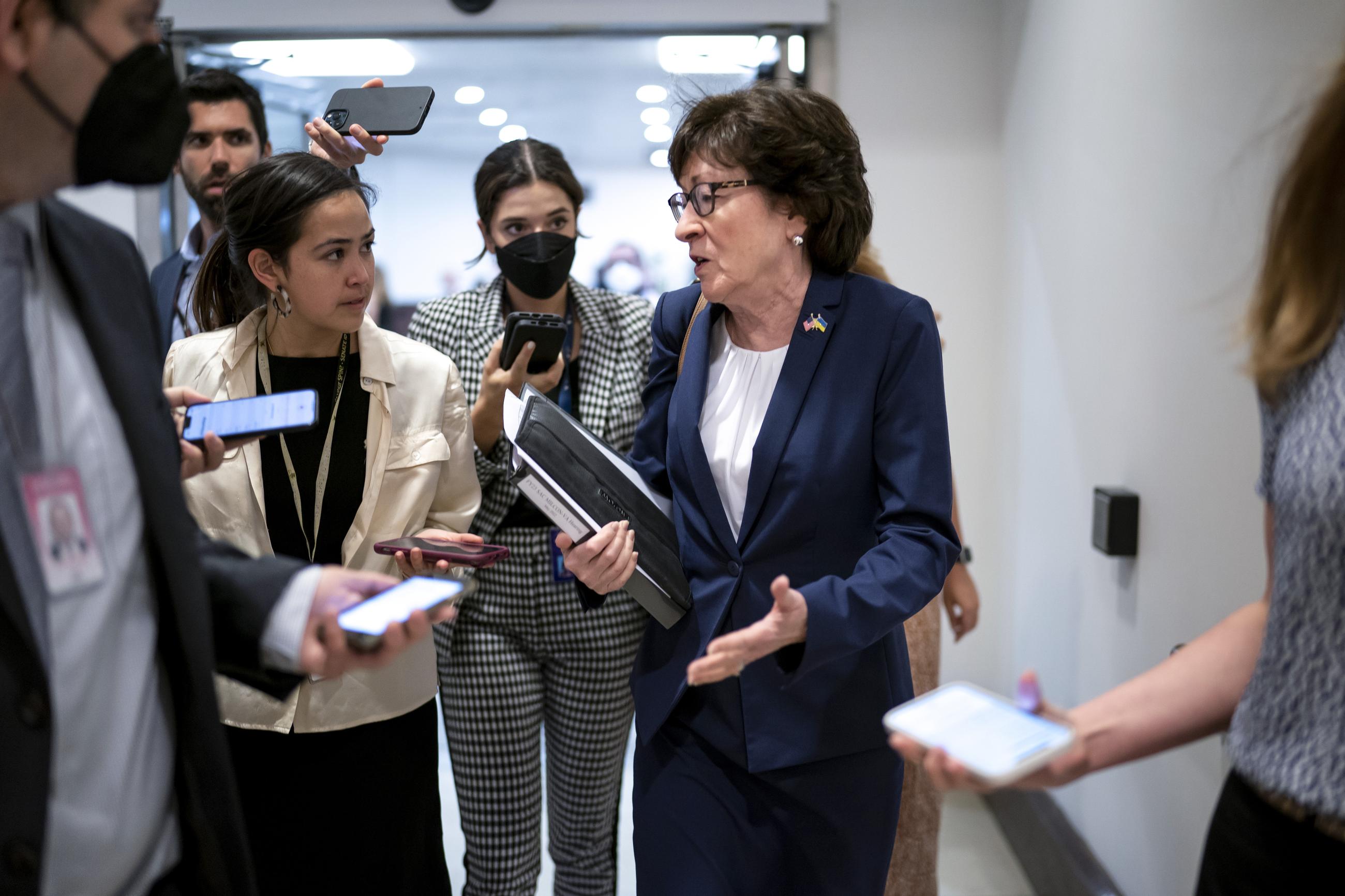
Sen. Susan Collins (AP Photo/J. Scott Applewhite)
ASSOCIATED PRESS

Want more stories like this?

Subscribe to our free Sunday Nightcap newsletter, a weekly check-in on the latest in politics & policy with Editor in Chief, Jeff Dufour.

Add to Briefcase
Nicholas Anastácio and Kirk A. Bado
March 9, 2026, 5:59 p.m.

Senate Democrats need to flip at least four seats to win a majority this November. Despite a rocky start to the cycle and a daunting map, the minority party says it's found a narrow path back to power.

The Democratic playbook runs through Alaska, Maine, North Carolina, and Ohio. Bolstered by the recruitment of former Rep. Mary Peltola of Alaska in January, Minority Leader Chuck Schumer is once again touting candidates who have already won tough races in the past as the foundation of Democratic Senate campaign strategy this cycle.

Strategists from both parties view the Senate as a heavier lift for Democrats than the House, based on Republicans’ partisan advantages in most GOP-held seats. Democrats posit that voters’ affordability concerns, rising health-insurance costs, and President Trump’s controversial tariff policy give them inroads in reddish states.

Republicans say they remain assured of their majority’s durability, and they continue to prioritize offensive targets to expand their 53-47 hold on power. The GOP isn’t running away from its legislative accomplishments this session, heralding its immigration policy and the One Big Beautiful Bill Act’s tax breaks.

Bruising primaries for either party could still jumble the map and our subsequent rankings. In Texas, for example, the president is expected to make an endorsement "soon" ahead of a May Republican primary runoff. However, if state Attorney General Ken Paxton prevails over Sen. John Cornyn, the trajectory and the price tag of the Senate landscape could fundamentally change.

These rankings are based on conversations with operatives, strategists, campaigns, and pollsters in both parties.

1. North Carolina: Open (R)

The open seat in the perennial battleground state might top Hotline’s list from wire to wire this cycle, thanks in large part to former Democratic Gov. Roy Cooper. Successfully persuading the popular two-term governor into the Senate race might be Schumer’s biggest recruitment coup. Cooper starts this race with a clear name-ID and cash advantage. After formally securing the nomination at the beginning of March, he entered the general-election campaign with $14.2 million on hand—nearly seven times that reported by his GOP opponent, former Republican National Committee Chairman Michael Whatley. Whatley has his work cut out for him as Democrats hammer his shortcomings as the Trump-appointed Hurricane Helene “recovery Czar.” Meanwhile, Republicans plan to drag down Cooper’s favorability by claiming he was too soft on crime during his tenure as governor.

2. Maine: Sen. Susan Collins (R) ↑

Collins’ biggest challenge heading into her fifth reelection race is the Democratic lean of the Pine Tree State. The state hasn’t elected a Democrat to the Senate since 1988, but it has voted for Democratic presidential hopefuls and other statewide positions. Collins isn’t new to electoral overperformance, often finding her political magic closer to a general election as she reintroduces herself to voters. But 2026 could be her toughest midterm environment yet. Schumer hopes Gov. Janet Mills—a two-time statewide winner—can get the job done. She’ll need to compete for the Democratic primary spotlight against oyster farmer Graham Platner, a progressive upstart who’s already faced political scandal. Senate Republicans are prepared to defend Collins at all costs, as evident by the GOP-aligned Senate Leadership Fund’s initial $42 million investment into the race. Strategists from both parties anticipate the eight figures could swamp Platner ahead of a general election, even as some public polls show him ahead of Collins in a November matchup. The senator isn’t dead on arrival as pundits and pollsters had presumed in 2020, but her fresh New Balance sneakers are unlikely to stay clean either.

3. Georgia: Sen. Jon Ossoff (D) ↓

Ossoff is the most vulnerable Democrat in the Senate, but his stock is steadily improving as the GOP primary remains muddled. Gov. Brian Kemp passed on a challenge to Ossoff, clearing the way for a field of understudies to jockey for position. Kemp endorsed former University of Tennessee football coach Derek Dooley, but he has not pulled away from Reps. Buddy Carter and Mike Collins, the two MAGA-aligned members of Congress also running in the primary. An endorsement from Trump might clear the field, but the messy gubernatorial primary demonstrates that’s not always the case. Ossoff is content to set fundraising records while he waits for his potential opponents. He entered 2026 with $25.5 million cash on hand, significantly more than the war chests of every Republican in the race combined.

Former Rep. Mike Rogers campaigning for Donald Trump in Warren, Mich., in 2024 (AP Photo/Paul Sancya)
Former Rep. Mike Rogers campaigning for Donald Trump in Warren, Mich., in 2024 (AP Photo/Paul Sancya) ASSOCIATED PRESS

4. Michigan: Open (D)

The larger battle for the soul of the Democratic Party won’t happen until 2028, but a skirmish for the party’s soul is unfolding in Michigan. Three leading Democrats are jockeying to replace retiring Sen. Gary Peters—Rep. Haley Stevens, who has the tacit support from party leadership; state Sen. Mallory McMorrow, who has steadily picked up support from Democrats looking to buck Schumer; and 2018 gubernatorial candidate Abdul El-Sayed. Tensions between Stevens and El-Sayed are boiling over as the latter has made Israel’s war in Gaza a dividing line.

This primary isn’t until August, and there’s no indication that any of the front-runners will bow out early. Former Republican Rep. Mike Rogers has cleared the field and is already running general-election-style ads focused on making housing more affordable. Despite the clear field, there are some concerns that Rogers will have a repeat of his poor showing in 2024 when he lost to Sen. Elissa Slotkin. Despite Trump handily carrying Michigan, Rogers lost by 20,000 votes.

5. Ohio: Sen. Jon Husted (R) ↑

Democrats hope former Sen. Sherrod Brown will find redemption after he lost reelection to Sen. Bernie Moreno. Despite the state’s transformation from a must-win swing state to a Republican stronghold, Brown lost his 2024 reelection by less than 4 points; former Vice President Kamala Harris lost Ohio by 11 points. Now, Brown is running as a challenger for the first time in two decades. Democratic strategists suggest that Brown’s past statewide wins, campaign experience, and fundraising prowess could help the party secure its third seat flip. Yet Ohio still remains outside the top four spots on our rankings given its red-state status. Husted needs to define himself to voters ahead of November, but Trump, Vice President J.D. Vance—previously an Ohio senator—and outgoing Gov. Mike DeWine are expected to be invested in holding this seat for Republicans.

6. New Hampshire: Open (D) ↓

Granite State Republicans have comfortably held onto the governor’s seat for nearly a decade and maintained state legislative control since 2020. Yet a Republican presidential candidate hasn’t won the state since 2000, a Republican hasn’t won a Senate seat there since 2010, and the GOP has failed to win a congressional race there since 2014. Democrats contend that Rep. Chris Pappas can keep their federal winning streak alive, but they recognize that the open Senate race could be more competitive than either of the state’s two House races. Former Republican Sen. John Sununu brings a well-known last name and electoral experience, even if he hasn’t won a race since 2002. He also garnered Trump’s endorsement, a double-edged sword that could both aid him against former Sen. Scott Brown of Massachusetts in the GOP primary and damage him in a Harris-won state during the general. Republicans anticipate Gov. Kelly Ayotte’s reelection to boost their eventual nominee in November. Most polling shows Pappas narrowly ahead of Sununu in a general election, an indication that this race isn’t set in stone.

7. Alaska: Sen. Dan Sullivan (R) ↑

Peltola’s entrance into the race puts the Last Frontier back onto the Senate battleground map for the first time since Sullivan flipped the seat in 2014. Similar to Brown in Ohio, Peltola’s overperformance over Harris in 2024 is enticing to Schumer and Senate Democrats, especially as this year’s environment seems more favorable for Democrats. She lost to Republican Rep. Nick Begich by roughly 2 points in the final round of ranked-choice voting for her at-large district, while Harris lost to Trump by 13 points in the state. Apart from her state’s GOP lean, Peltola’s biggest obstacle is amassing the resources that go into a Senate run versus a House campaign. Peltola said she raised $1.5 million in the first 24 hours of announcing her bid in January. Sullivan—a two-term incumbent with Sen. Lisa Murkowski’s backing—raised $1.5 million during last year’s final quarter and entered 2026 with a $5.8 million war chest. Democratic strategists contend that cuts to programs like Medicaid could sway voters in Peltola’s direction. Sullivan’s supporters counter that his support for Alaska-specific provisions in the One Big Beautiful Bill Act, including mandatory oil and gas leases in the state, will keep Alaskans in his corner.

8. Iowa: Open (R) ↓

Iowa will play host to open races for governor and Senate for the first time in decades, and Democrats say they have a shot at making historic gains in a state where they’ve steadily bled support in recent cycles. The Democratic field to replace retiring Republican Sen. Joni Ernst is split between state Sen. Zach Wahls and state Rep. Josh Turek. In the governor’s race, state Auditor Rob Sand has all but secured the Democratic nomination and is running the type of campaign that strategists on both sides of the aisle say could be a boon to Democrats further down the ballot. As national Democrats look for the elusive fourth offensive target to flip the Senate, many strategists said the potent cocktail of a cheaper media market, Sand’s strong campaign, and a favorable issue set would all work in their favor. Standing in their way is GOP Rep. Ashley Hinson, a battle-tested member who was tapped for a bright future after she won her seat in 2020. Unlike Democrats, Republicans quickly consolidated support behind one candidate, and the former TV anchor remains the favorite in the race.

9. Texas: Cornyn (R) ↓

An impending May 26 GOP runoff could rock the Lone Star State’s headline-grabbing contest one more time. Cornyn’s narrow first-place finish ahead of Paxton in the Republican primary could be what persuades Trump to finally back the incumbent. Senate Republicans have been pleading with the president for months to back Cornyn’s reelection; the president might grant their wish soon, softening Paxton’s MAGA strength. But the state attorney general isn’t going down without a fight. Paxton’s sway amongst Texas conservatives could be enough to outrun gains that Cornyn receives from a Trump stamp of approval, fracturing the GOP base further. With $70 million already burned for Cornyn, Republican strategists project the runoff could cost at least $100 million, and a Paxton win could cost upward of $250 million in the general election. Democratic state Rep. James Talarico’s win over Rep. Jasmine Crockett in the Democratic primary encouraged national Democrats, but it doesn’t guarantee he’ll win over major Democratic donors or dissuaded Black voters ahead of November. A Paxton-Talarico matchup could uplift Democratic prospects, putting what was seen as an out-of-reach state into expensive battleground territory.

10. Minnesota: Open (D) ↓

On paper, Minnesota should be more competitive than it has been of late. But years of mismanagement from the state Republican Party and the resurgent power of the most conservative wings of the GOP have produced a series of dud nominations. Republicans haven’t held statewide office since 2010. Former NFL sideline reporter Michele Tafoya gives Republicans a puncher’s chance and a candidate who could at least be more palatable to a November electorate than the conspiracy theorist Royce White, but the state might be too far out of reach. Instead, the race to replace retiring Democratic Sen. Tina Smith will most likely be decided in August in the Democratic primary between Lt. Gov. Peggy Flanagan and Rep. Angie Craig. Responses to the recent immigration-enforcement surge in Minnesota have emerged as a dividing line between the pair, with Flanagan sharply criticizing Craig’s support for the Laken Riley Act. There could be a consolation prize waiting for the loser—Sen. Amy Klobuchar will get to pick her replacement once she likely wins the gubernatorial race in the fall, after Gov. Tim Walz unexpectedly dropped his reelection bid.

Welcome to National Journal!

Enjoy this featured content until May 31, 2026. Interested in exploring more
content and tools available to members and subscribers?

×
×

Welcome to National Journal!

You are currently accessing National Journal from IP access. Please login to access this feature. If you have any questions, please contact your Dedicated Advisor.

Login