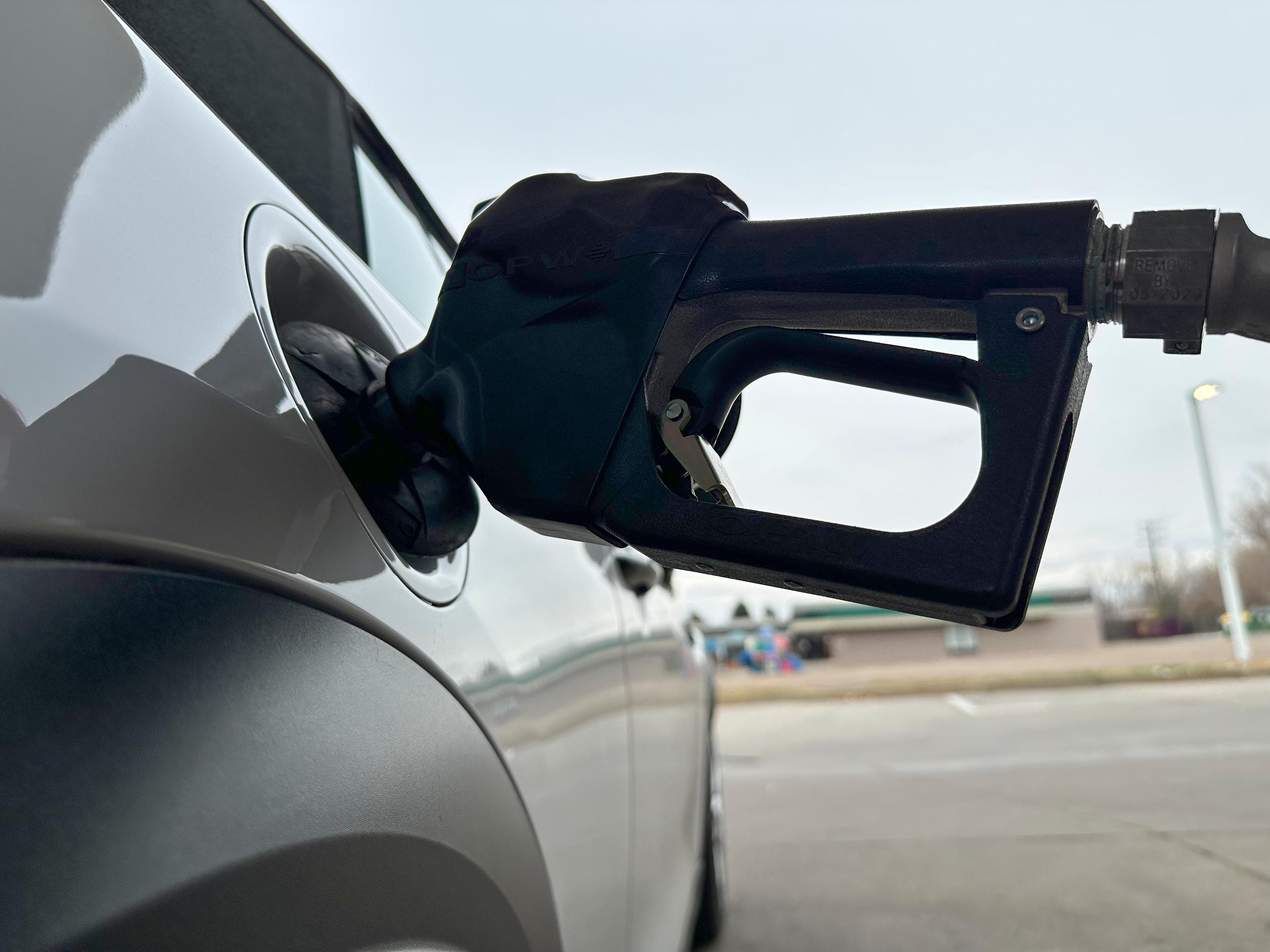

Gasoline prices will be going up this week, perhaps as much as 10 to 30 cents a gallon in the wake of the U.S.-Israel attack on Iran.
“Most drivers should prepare for gradual increases this week,” said Patrick De Haan, head of petroleum analysis at GasBuddy, which tracks prices.
Whether those price increases will last, though, is impossible to predict.
“While oil markets continue to react to potential tensions in the Middle East, history has shown that the price increases are temporary and quickly fall back,” wrote Joseph Brusuelas, chief economist and principal at RSM US, on his Real Economy Blog.
Prices were already on the way up. Warmer weather historically means higher prices as demand rises and refiners produce a summer-blend product. But the Iran conflict, which President Trump said Monday could last another four to five weeks, “has injected fresh uncertainty into energy markets,” De Haan said.
Wholesale prices have already begun to climb, and that should mean quick increases at the pump.
De Haan predicted on his Fuel Insights Substack that by later Monday, the national average price of a gallon of regular gasoline would top $3 for the first time this year. AAA reported earlier Monday that the national average was $2.997, up from $2.938 a week ago.
Over the next few weeks, De Haan said, prices are likely to go up to at least $3.10 to $3.15 per gallon.
So what about the future?
Brent crude oil, considered the global standard, jumped to the upper 70s per barrel early Monday, up from the low 70s last week.
Some analysts see prices having the potential to go as high as $100 a barrel.

“The forecasts are wide-ranging from over $100/barrel to lower prices this week on new Iraqi oil hitting the market,” Matt McCall, founder of NXT Wave Research, an investment and market-analysis firm, wrote in a tweet. “I see a spike to start the week ... and then it depends on the longevity of the war. A quick war and oil does not stay elevated. What is almost certain is volatility.”
Oil pricing is a complex maze, dependent on a wide variety of factors, including supply and demand, geopolitical developments, willingness of oil producers to increase or decrease supply, seasonal blend changes, and so on.
Probably the biggest unknown concerns the Strait of Hormuz, where the Iranians can exercise control. One-fifth of the world’s oil passed through in 2024, according to the Energy Information Administration.
EIA called the Strait “one of the world’s most important oil chokepoints.” Located between Oman and Iran, it is “deep enough and wide enough to handle the world's largest crude oil tankers,” EIA noted.
Most Iranian oil goes to China. The U.S. exports more oil than it imports. Canada is the leading importer of U.S. oil, followed by Mexico and Saudi Arabia, according to EIA.
But any change in the Strait’s activity could impact prices worldwide. S&P Global reports traffic has already declined, and the notion that the area could be further disrupted is already having some impact, De Haan said.
“Even without a sustained blockade, the new risk of closure is already changing behavior,” he said. De Haan listed ship rerouting, war-risk insurance premiums going up, and “freight markets bracing for significant cost increases.”
In other words, stay tuned.
“The situation remains fluid,” De Haan said, “and forecasts will adjust as new information develops."