
Feb. 23, 2026, 5:52 p.m.
WASHINGTON, D.C.— Maryland Gov. Wes Moore didn’t shy away from addressing the elephant in the room. President Trump had ratcheted up his criticism in the weeks leading up to the National Governors Association’s annual meeting, culminating in the president’s refusal to invite Moore to White House events.
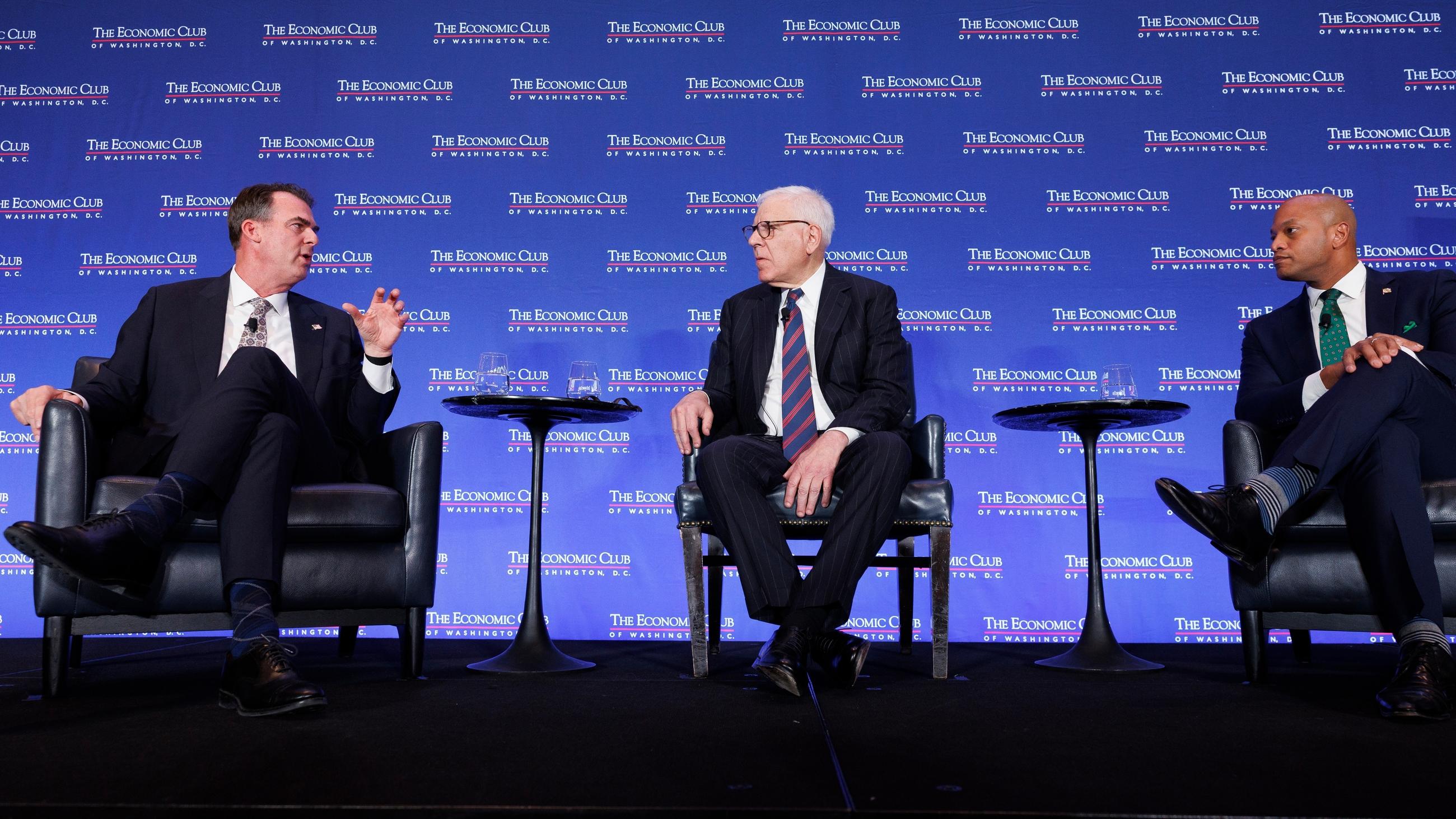
“I think people should look at this that, despite everything that we have seen and heard and all the booby traps that were laid out that had an intention of blowing this up, that we're standing here at the end of this conference, stronger than ever, united,” Moore, NGA vice chair, said on a panel about unity.
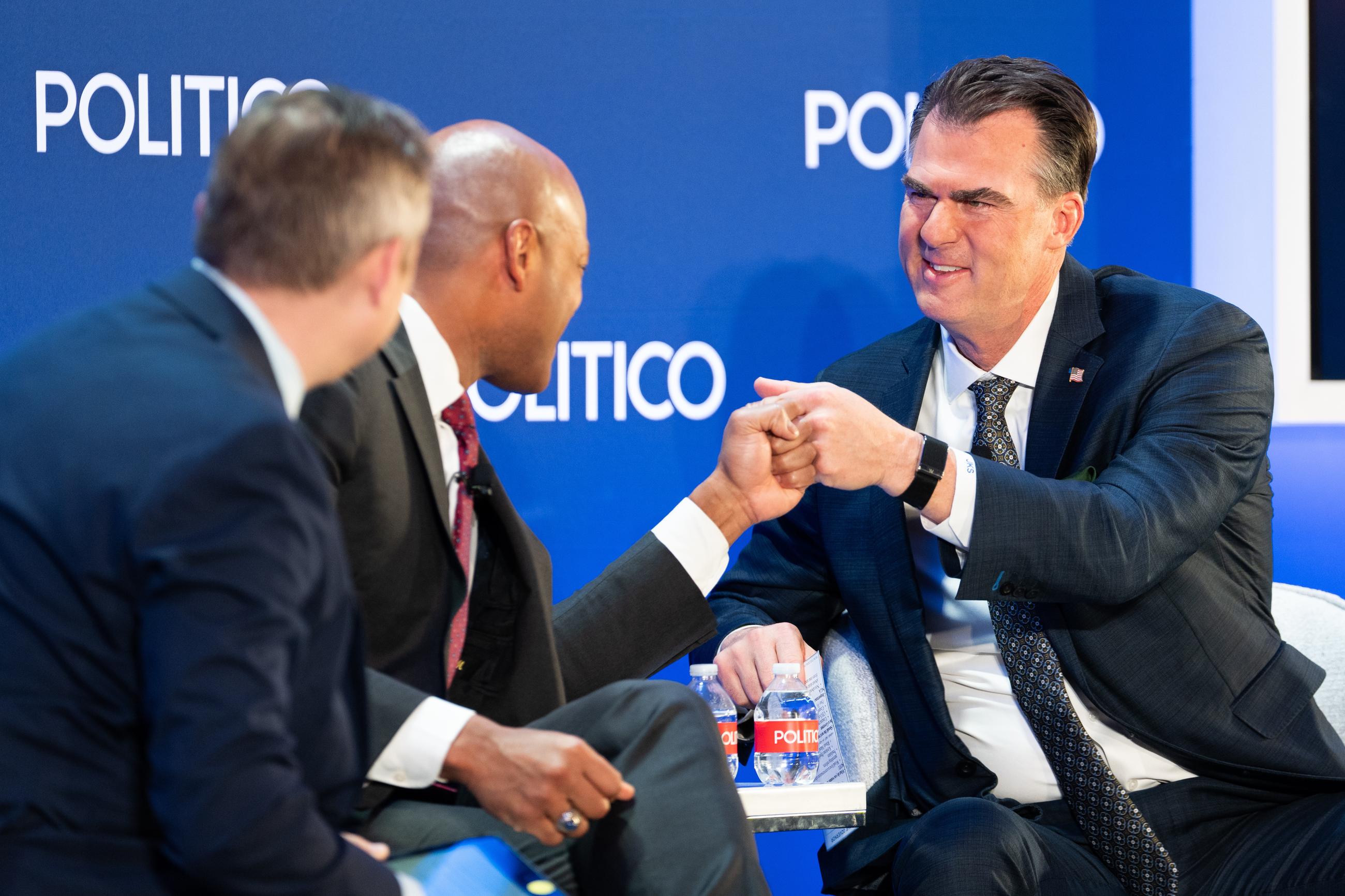
Governors from both parties at the NGA acknowledged the difficulty of striking unity amid political divisive times, but they did not dismiss it as impossible. Moore routinely praised Oklahoma Gov. Kevin Stitt, NGA chair, for his leadership in the face of a White House unwilling to invite all governors. As the two wrapped up their last panel together, discussing overcoming political divisions, they shared a hug underneath the stage lights.
That level of bipartisanship is always the name of the game at the National Governors Association’s annual winter meetings. But for Democratic governors, this year’s gathering was also a race to middle-of-the-road politics in the face of heightened partisanship.
Democrats, whose 2028 presidential primary is likely to be stacked with governors, used the weekend gathering to cast themselves as pragmatic leaders who are willing to work across the aisle while being unafraid to stand up to Trump when needed.
Their positioning stood in stark contrast to the meeting’s partisan lead-up. Trump initially excluded Democratic governors from the Friday working breakfast, and did not invite Democratic Govs. Moore and Jared Polis of Colorado to the black-tie dinner. Trump said Moore and Polis were “not worthy of being” at the White House, prompting the NGA to pull the working breakfast and dinner from its official schedule.
Moore brushed off the personal attacks from the president, saying he’s “here to focus on the people of my state” and won’t spend “a second talking about a petty attack.” Instead, he framed the president’s moves as an attempt to sway the bipartisan mission of the NGA.
“At a time when political toxicity threatens to tear us apart, at a time when this tribal belief of political parties somehow supersedes your allegiance to this country, at a time when we could have seen even just relatively recent events force this organization to tear its seams, I'm thankful to say that this organization is stronger than ever before,” Moore said onstage at the event.

Secretary of State Marco Rubio whispers to CIA Director John Ratcliffe during the National Governors Association dinner at the White House on Feb. 21. (AP Photo/Allison Robbert)
ASSOCIATED PRESS
That argument, that governors can rise above the dysfunction and partisanship of Washington, became Democrats’ guiding message at the weekend’s events. But other Democratic governors have cast doubt about whether the NGA can bridge the partisan divide. Govs. Laura Kelly of Kansas and Tim Walz of Minnesota left the NGA last summer, frustrated over the organization's response to Trump’s policies impacting states.
The focus, many Democratic governors said during NGA programming, should be on kitchen-table issues like lowering costs, expanding housing, funding health care, and delivering results to their entire states, not just their partisan base.
“So as I look at this country right now, the two biggest threats are the division that we all see out there, and then the concern by so many of our families that the American Dream is no longer real,” Kentucky Gov. Andy Beshear said on an affordability panel alongside Democratic Gov. Maura Healey of Massachusetts and Republican Govs. Mike Braun of Indiana and Greg Gianforte of Montana.
Even the White House meeting, despite its dramatic prelude, was described by attendees as productive. Moore ended up attending the Friday working breakfast, despite the initial snub.
New York Gov. Kathy Hochul said the president told the governors that his administration won’t send federal immigration agents to cities whose leaders don’t want them, a win for Democratic governors whose cities have been the target of federal enforcement.
“I am proud of the governors who stand up at a time when there's so much uncertainty and fear and challenges in our nation, that we can be the ones who are level-headed, who have to bring people together in our own space and solve the major problems,” Hochul said at a press conference following the breakfast meeting.
Still, as Democratic governors leaned into bipartisanship, they insisted that does not mean passivity.
Moore repeatedly struck a stern tone criticizing the outside “forces” that he said were “hell-bent” on breaking up the organization, an apparent nod to Trump’s attempt to upend the bipartisan nature of the NGA.
“This might have been one of the most complicated times in the history of the NGA, because I think for a lot of people, there are questions about is the NGA relevant in a moment like this," Moore told the press after the winter meeting wrapped up. "I think this weekend just answered that question, because there are a lot of things that were put in our way to try to distract us from our mission, to try to divide us as individual governors.”
Pennsylvania Gov. Josh Shapiro struck a similar balance. He vowed to “work with anyone to deliver for Pennsylvania,” but highlighted his administration’s work to sue Trump over a dozen times so far in the president's second term.
“I think what you've also seen with me is I'll stand up to them when they do things that harm our Commonwealth,” Shapiro told the press.
Shapiro bypassed a question on whether he will run for president. Moore sidestepped multiple questions about his 2028 plans. Axios co-founder Mike Allen introduced Beshear as a possible 2028 candidate as the governor walked on stage, donning his black and white On Cloud sneakers, drawing applause.
With the Democratic presidential primary possibly in mind, the state executives at the NGA not only positioned themselves as bipartisan leaders, but as politicians more productive than those in Washington.
Casting Washington as unproductive and focused on partisanship, Democratic governors argue that they can demonstrate productive governing.
“States and governors, I think, are where it's at in terms of leadership on policy,” Massachusetts Gov. Healey said.
Beshear made a similar case, highlighting investments in rural Kentucky and record economic development. He argued that a healthy state economy can help cool the heated political temperature that turns off many voters.
“You see less division, neighbors aren't yelling at each other, because we're doing well," Beshear said. "And in the end, our neighbor isn’t the enemy from within. They're our neighbor. We want them to do well. We want their kids to do really well.”