
A year from now, Democrats may well officially reclaim control of the House. But it will take far longer than that for Capitol Hill to reclaim the power GOP lawmakers, with the help of the courts, have ceded to the White House.
Advocacy groups are already offering suggestions. They’ve been busy conceptualizing proposals that would impose guardrails on the executive power Donald Trump has aggressively expanded by issuing tariffs, freezing spending, rebranding institutions, commandeering independent agencies, and using the military to occupy cities or attack foreign adversaries.
The Roosevelt Institute is examining ways to improve government efficiency on a host of policy fronts. The Center for American Progress is exploring ways to put teeth back into government watchdogs. And the Partnership for Public Service, a vocal defender of the nonpartisan civil service system Trump is trying to weaken, has launched its Government for a New Era agenda.
“When the founders signed the Declaration of Independence 250 years ago and began shaping what would become America’s federal government, they could not have anticipated a fraction of the challenges modern government faces,” said Max Stier, president and CEO of the Partnership for Public Service, when the initiative was announced in November. “We cannot prepare for the future with a government designed for the past.”
The libertarian Cato Institute is leaning in as well, pushing Congress to pass laws reasserting its authority on tariffs.
Think tanks stocked with former administration honchos and policy wonks have long floated government reforms, hoping that their ideas find traction in the White House, in Congress, or with candidates on the campaign trail. Those efforts have typically been overlooked in the past, but it’s worth paying attention these days thanks to the recent success of the Heritage Foundation, whose Project 2025 became the governance blueprint for Trump’s second term.
Ben Olinsky, senior vice president for policy and strategy at the left-leaning Center for American Progress, says CAP’s approach to restoring institutional checks and balances is unlike Project 2025, which he called “a singular effort” by those who served in Trump's first term “to come up with a governing agenda specifically designed for him.”
But these groups, like Heritage, are proposing policy blueprints of their own that they hope will be taken up by future leaders.
“We're we're doing what think tanks should do, and have always sort of played a role in D.C., which is to come up with the next generation of ideas that then help germinate the debates among candidates, and then certain candidates will take up and run on and build political capital to move to fruition if they're elected,” Olinsky said. “And ultimately, if there's a Democratic Congress, I'd expect them to take some of our ideas, some of other folks’ ideas, pass some bills next year potentially and ultimately, for those who are running for president, to try to find the best ideas and make their case to the public.”
These organizations already are looking at key issues Congress should address:
Independent agencies: Presidents have routinely installed Senate-confirmed loyalists to run quasi-independent entities such as the Federal Trade Commission and the Securities and Exchange Commission, but Trump’s unprecedented efforts to control such bodies and find ways to remove commissioners he didn’t appoint have good-government advocates calling lawmakers to bring them more under congressional control so their leaders can’t be summarily dismissed without congressional say-so.
Inspectors general: Trump fired 17 of the agency watchdogs early in his administration without notifying Congress or waiting 30 days as law requires. A judge later ruled the administration had violated the law, but stopped short of reinstating the IGs. That has groups such as CAP pushing lawmakers to put the Senate-confirmed presidential appointees completely under congressional control.
Civil service: The administration is in the process of expanding the pool of political appointees under the president’s direct control, from some 4,000 to about 50,000 federal employees who would be easier to promote and fire. Groups such as Democracy Forward are advocating greater civil service protections amid Trump’s slashing of thousands of jobs and his efforts to shutter federal agencies such as the U.S. Agency for International Development and the Education Department.
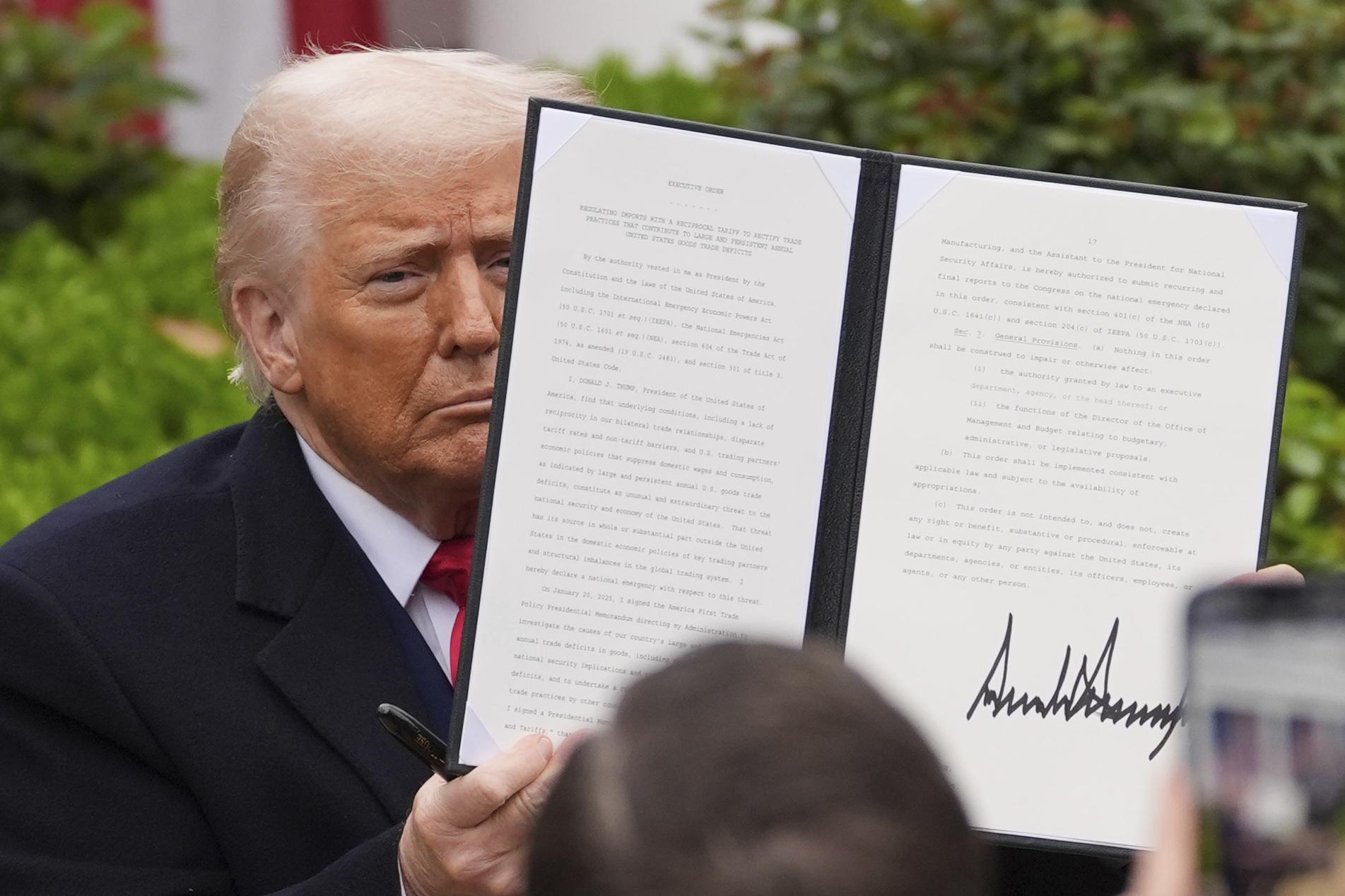
Tariffs: CATO is pressing Congress to “reclaim some of its constitutional trade powers” by passing the Global Trade Accountability Act and similar legislation from GOP Sen. Rand Paul that would require Congress to approve tariffs proposed by the president. That effort could be rendered moot if the Supreme Court rules against Trump’s ability to bypass Capitol Hill and impose tariffs, but critics worry the justices might continue to let the president exercise broad power.
It’s why Olinsky says Congress has to act. A future president may willingly give up some of the authority Trump has carved out, but that’s not guaranteed.
“So it's going to absolutely require Congress,” he said. “And also because of the ways some of these changes will need to be made to respond to a pretty aggressive, extreme right-wing Supreme Court majority around things like unitary executive theory, I think you will absolutely need Congress to weigh in and to pass some pretty major changes.”