National Journal Logo
×

Welcome to National Journal!

Enjoy this premium "unlocked" content until March 21, 2026.

Continue

GOP shrugs off possible cuts to Medicare Advantage ahead of November

Most Republicans want to rein in the program, but the party is already facing criticism over rising ACA premiums and Medicaid cuts.

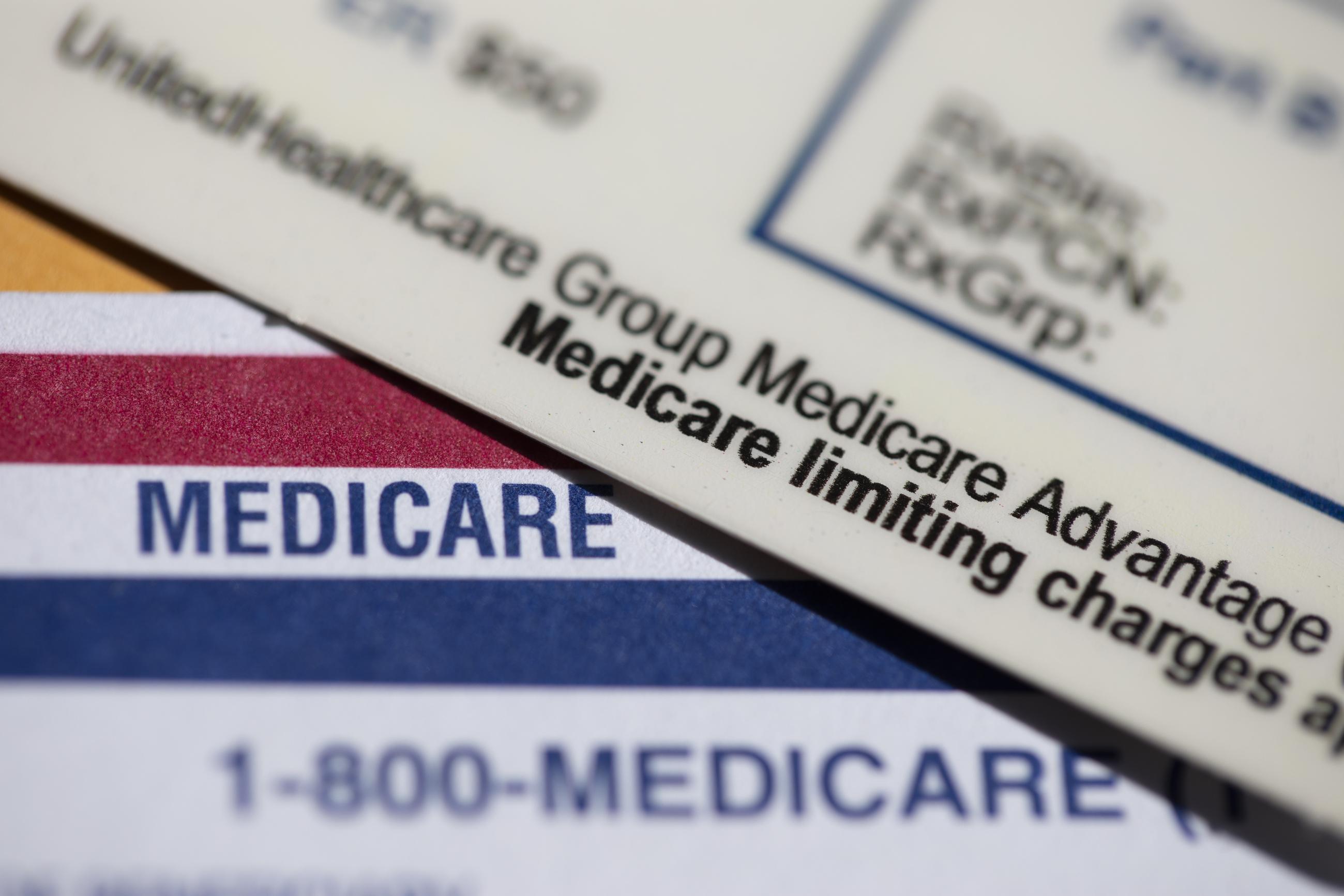
(AP Photo/Jenny Kane, File)
None

Want more stories like this?

Subscribe to our free Sunday Nightcap newsletter, a weekly check-in on the latest in politics & policy with Editor in Chief, Jeff Dufour.

Feb. 11, 2026, 7:25 p.m.

Republicans had promised not to go after Medicare. But Medicare Advantage might be facing a cut.

At the end of January, the Centers for Medicare and Medicaid Services issued a proposed payment bump to Medicare Advantage plans that stands as one of the lowest in recent years—an increase of less than 1 percent, or about $700 million, for 2027. It caught a number of health insurers off guard, after CMS Administrator Mehmet Oz had voiced public support of the program for years.

But don’t expect most Republicans to defend what they once considered the better alternative to traditional Medicare. Instead, GOP lawmakers have been shifting toward promoting austerity within the privately-run plans, arguing that insurers receive too much money from the federal government while driving up health care costs and making coverage inaccessible.

“I think [CMS is] giving them way too much,” said Sen. Roger Marshall, a member of the Senate Health, Education, Labor, and Pensions Committee. “I think that United [Healthcare] and these health care companies have huge profit margins. … So I think Medicare Advantage is one of the most broken programs up here, and three or four big insurance companies have broken it.”

Health insurers are sounding the alarm on what they consider a payment cut from CMS. They contend the modest payment increases in recent years are not enough to counter skyrocketing health care costs amid economic headwinds and an increasing demand for health care, and that it could mean higher out-of-pocket costs, reduced benefits, and fewer MA plans for seniors.

A political headache

Democrats are already pushing the narrative of a GOP insensitive to the health care costs faced by average Americans. New concerns surrounding Medicare Advantage could spell trouble for Republicans in vulnerable districts who will already have to defend Medicaid cuts from last year's One Big Beautiful Bill and the expiration of popular enhanced subsidies that help enrollees pay for premiums.

“The reality is, if the growth rate doesn't keep with the cost of medical care, then it is going to impact seniors,” said one health care executive. “And obviously, that is a political consideration, because seniors will have less choice, they'll have higher out-of-pocket costs, and so that will have an impact on what seniors pay and what they get for their health care in MA.”

The agency’s proposed rate sent shock waves through the market last month, with the stocks of several health-insurance companies including UnitedHealth Group and Humana plummeting on the news. More than a week after the announcement, Molina Healthcare announced it would pull out of MA’s prescription-drug plan, otherwise known as Part D, due to financial pressures.

Although this is just the proposed rate—a finalized payment rate will be released in April—the modest pay bump surprised many in the industry. At a J.P. Morgan health care conference last month, Chris Klomp, the agency’s Medicare director, said officials were putting a focus on “stability” and predictability—a signal a sizable pay increase was coming.

The day after the rate notice had gone out, however, Klomp clarified that while the agency was “focused on ensuring [the program] continues to provide excellent value to our beneficiaries,” CMS wanted it done in a “cost-effective” manner to ensure that “program integrity and trust” were maintained, along with the long-term sustainability of MA.

“But in the process, somewhere along the way over the last several years, there has been a breach of trust,” Klomp said during a Paragon Health Institute webinar last month. “The American people have maybe had a little bit of a lack of confidence that Medicare Advantage—and that the government who is overseeing and regulating and stewarding that program—are being the wisest stewards possible of that program, and of our otherwise scarce taxpayer resources.”

Reining in MA

Republicans once touted the program as a possible money-saver, arguing that adding private-sector competition would help to spur innovation and improve health care for seniors. However, the sentiment against MA from conservative fiscal hawks has been bubbling under the surface in recent years.

Although Democrats have long demanded an overhaul of the program, some GOP lawmakers have grown increasingly supportive of reining in MA. This follows reports from independent agency watchdogs, inspector-general offices, and news organizations that health insurers were paid tens of billions more than traditional Medicare, and were exploiting the program by registering additional or more-expensive illnesses for medical patients without providing further care, a practice known as “upcoding.”

There has been some bipartisan legislation aimed at tackling the issue.

Last year, Sens. Bill Cassidy and Jeff Merkley introduced the No UPCODE Act, which would go further than CMS’s latest actions to crack down on the phenomenon. CMS’s advance notice issued last month similarly goes after upcoding by changing how the agency calculates “risk” in payments to insurers.

However, the issue of reforming Medicare Advantage can be politically tricky. Seniors are a reliable voting bloc, and MA is a popular program. In 2025, more than half of eligible Medicare beneficiaries—34.1 million—participated in MA plans.

Senate Republicans considered adding the Cassidy-Merkley bill to the reconciliation package last summer before pulling the idea over worries it would boomerang against them in the midterms.

One Republican lobbyist for the health care industry noted that the Medicare payment rate, if finalized, could possibly undercut the party’s pledge not to touch Medicare.

Fiscal conservatives paying attention

And some lawmakers—even the most fiscally conservative ones—are taking note of the proposed rate’s possible impact.

“We want to make sure that we wouldn’t see a reduction in the benefits of our Medicare recipients,” said Sen. Rick Scott of Florida, a former health care executive whose state heavily relies on the program. “I know that there’s a significant deficit in running Medicare [Advantage]. I hope this isn't the way just to solve that problem.”

But when asked if the payment rate should be bumped, Scott cautioned: “It’s got to be tied to actual costs.”

The vow to curb MA payments comes amid an emphasis from Republicans to eliminate “waste, fraud, abuse” from federal health programs.

“It is not up to the American Taxpayer to be the source of Insurance Company profits,” Rep. Greg Murphy, a co-chair of the GOP Doctors Caucus, said in a statement. “Their continued dependence on taxpayer handouts for their book of business is at an end.”

The timing of possible changes is politically significant. After the finalized rate is published, insurers must estimate how much, on average, it will cost to cover beneficiaries under MA plans they propose to offer. These plans will be submitted to CMS in June to be negotiated with the health-insurance companies.

CMS will then publish the approved plans on Oct. 1 ahead of the open-enrollment period. That means seniors will be able to observe any changes—or cuts—to their plans ahead of the November election.

“If I'm a moderate member, I'm also now concerned that the administration is going to be making changes in a really sensitive population, and they're going to find out this information right before the November election,” the Republican lobbyist told National Journal.

No final decision yet

Several moderate members running for reelection told National Journal they were not aware of the proposed changes made by CMS, or were not particularly concerned about the attacks from Democrats on the GOP cutting health care.

The profitability margin of seniors’ health-insurance Advantage plans—they have a high profit margin,” said Rep. Mariannette Miller-Meeks, a purple-district Iowa Republican who is also a physician. “So it's not something I am particularly concerned about, and I don't think it will impact their enrollment.”

Others, however, said they were closely tracking the subject.

“We have started to hear about this issue, and we want to maintain affordability and health care for everybody, including our seniors,” said Rep. Ryan Mackenzie of Pennsylvania, another vulnerable Republican who has bucked leadership on the issue of health care. “It's something that we're going to have to follow up on with the administration, but I think we're still learning about the situation and how we as members can help improve the situation.”

A number of policy experts noted that the proposal is still being considered by CMS and the agency will have time to consider stakeholder opinion as it looks to finalize payment rates. In past years, the finalized rate has usually been higher than the proposed one.

Furthermore, experts point to past years during the Biden administration when low payment rates were issued—and larger insurers were able to stay in the program while offering the extra benefits that traditional Medicare does not.

“We’ve seen comparable proposed payment increases before,” said Neil Patil, a senior fellow and policy director at Georgetown’s Center on Health Insurance Reforms. “If historical trends provide any indicator of what might happen, MA markets have typically remained pretty stable, they're very competitive, plan offerings remain pretty high, and supplemental benefit offerings continue to remain at a pretty high rate as well.”

What We're Following See More »

Republican U.S. Sen. Steve Daines of Montana dropped his bid for reelection to a third term Wednesday.

[image or embed]

— The Associated Press (@apnews.com) March 4, 2026 at 8:11 PM

Welcome to National Journal!

Enjoy this featured content until March 21, 2026. Interested in exploring more
content and tools available to members and subscribers?

×
×

Welcome to National Journal!

You are currently accessing National Journal from IP access. Please login to access this feature. If you have any questions, please contact your Dedicated Advisor.

Login