National Journal Logo
×

Welcome to National Journal!

Enjoy this premium "unlocked" content until February 21, 2026.

Continue
LEADING INDICATORS

Our understanding of partisanship and ideology is outdated

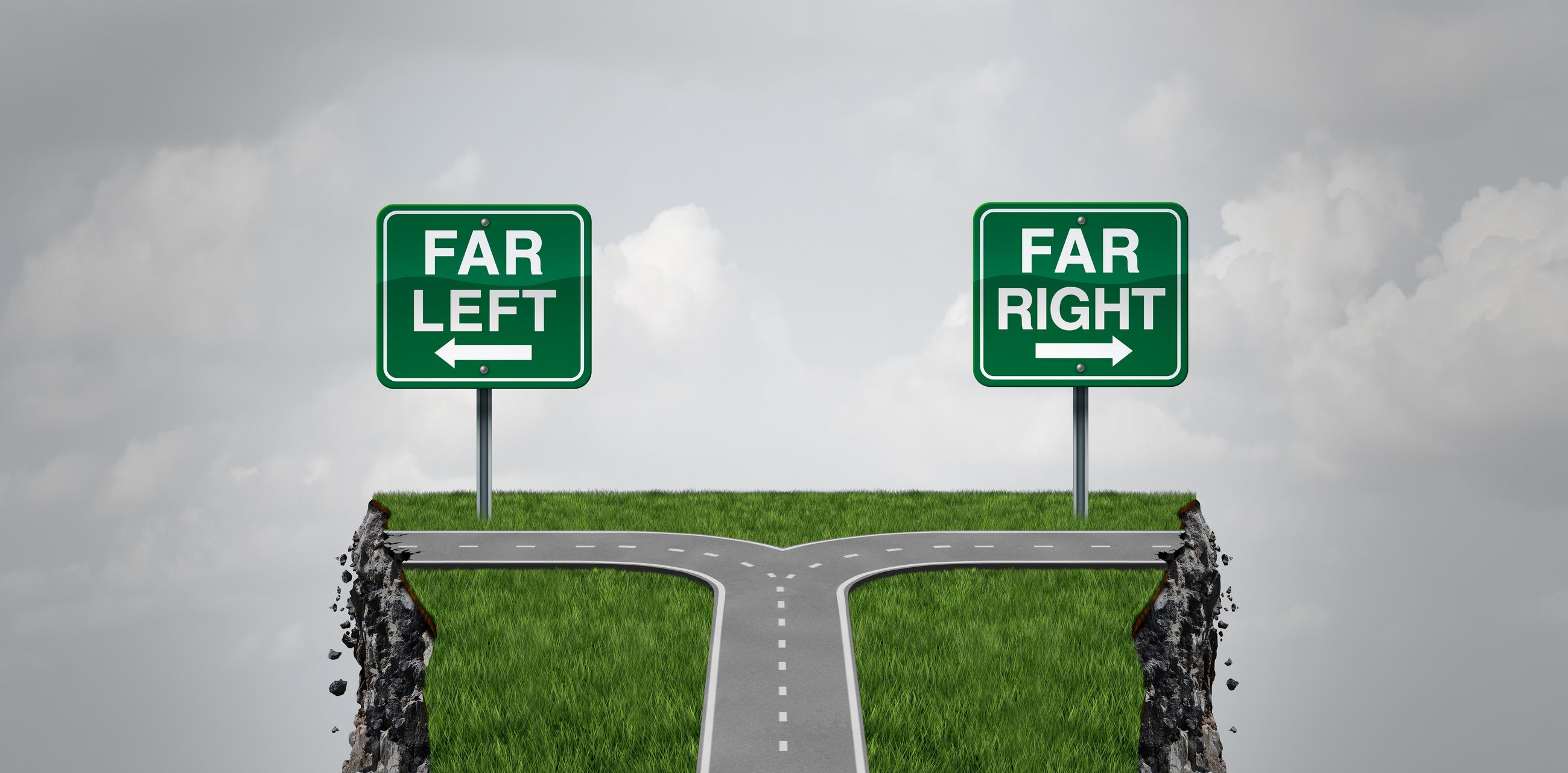
Twenty percent of Democratic-leaning independents say they are “far left.”

Adobe Stock

Want more stories like this?

Subscribe to our free Sunday Nightcap newsletter, a weekly check-in on the latest in politics & policy with Editor in Chief, Jeff Dufour.

Feb. 3, 2026, 5:27 p.m.

Most Americans are not particularly ideological. Sure, they’ll give you an answer if you ask whether they’re liberal or conservative (although many will say they are moderate or don’t know). It’s only because of the close correlation between ideology and partisanship that we assume most regular people identify as “liberal” or “conservative.”

Even those who know what their ideology is may struggle to place themselves on a liberal-to-conservative scale because our language is changing. The left wing of the Democratic Party tends to use the term “progressive,” and a small minority identify as “socialist.” On the Right, we have MAGA, which isn’t necessarily far-right but is distinct from more-traditional conservatism.

That’s why I found a recent YouGov poll particularly interesting. They asked respondents to place their political beliefs on a more intuitive 7-point ideological scale: far right, right, center right, center, center left, left, or far left.

Spend too much time on social media, or media generally, and you might believe that most people exist at the extremes. But reality is far more nuanced. Only 9 percent of respondents identified as far left and 5 percent as far right. Another 15 percent identify as left, and 17 percent identify as right, for a total of 24 percent left or far left and 22 percent right or far right.

Combining the "center" options—center left, center, and center right—gives us 40 percent of the population. Add on the 14 percent who said they didn’t know where they are on this scale, and you have a 54 percent majority of Americans who don’t really identify as left or right.

Responses to the left-right scale generally line up with partisanship in logical ways, although there are some intriguing nuances.

According to Gallup, 45 percent of Americans identify as independents, the highest proportion since it started tracking partisanship in 1988. When those independents are asked whether they lean toward Democrats or Republicans, however, only 10 percent remain in the middle, while the rest divide roughly evenly in either direction. The question becomes whether those “leaners” are closet partisans who don’t want to admit it, or are actually distinct from partisans.

Some studies have found that “leaners” are more partisan than those who say they are weak partisans. (Surveys typically ask those who say they are Republican or Democrat whether they are strong or not-so-strong partisans, resulting in a full 7-point scale: strong Democrat, not very strong Democrat, independent who leans Democrat, independent, independent who leans Republican, not very strong Republican, and strong Republican.)

Still, making the choice not to directly adopt a party label represents a key attitudinal difference from those who do. In the Gallup data, it’s clear age is a factor: Gen Z and millennials are much more likely than older generations to initially say they are independent. They are also more likely to say they are moderate than older generations.

But on the left-right scale in the YouGov data, young people are just as likely to choose a side as older people. It seems they’re not in the middle so much as just not wanting to pick the traditional sides of Republican-Democrat or liberal-conservative. That makes the left-right scale a useful indicator of what could be happening with these “leaners.”

Leaners toward both parties are more likely to say they are far left or far right, as the case may be, than the not-strong partisans. Only 1 percent of not-strong Republicans identify as far right, compared to 4 percent of independents who lean Republican. That’s not really a big difference, though, especially once you account for sampling error and survey-respondent quirks.

There’s a larger gap on the Democratic side: 8 percent of not-strong Democrats say they are far left, while 20 percent of independents who lean Democratic are far left. It’s likely that the independent-lean-Democratic category contains a substantial segment of voters who think the party is not far-left enough.

Indeed, 37 percent of Democrats and Democratic-leaning independents who say they are Democratic socialists also say they are far left. Who is more likely to be Democratic socialist? Young people. This is evidence of a young, far-left ideological group who won’t claim the Democratic Party but will say they lean toward it if they have to choose.

That shakes up our understanding of the party categories fairly substantially in ways we don’t get from using liberal-conservative comparisons.

Contributing editor Natalie Jackson is a vice president at GQR Research.

Welcome to National Journal!

Enjoy this featured content until February 21, 2026. Interested in exploring more
content and tools available to members and subscribers?

×
×

Welcome to National Journal!

You are currently accessing National Journal from IP access. Please login to access this feature. If you have any questions, please contact your Dedicated Advisor.

Login