National Journal Logo
×

Welcome to National Journal!

Enjoy this premium "unlocked" content until February 21, 2026.

Continue
POINT OF ORDER

The spending lesson Congress is teaching Trump

The president marched into office vowing to slash spending at multiple agencies, but both Republicans and Democrats have opted to ignore much of his proposed budget.

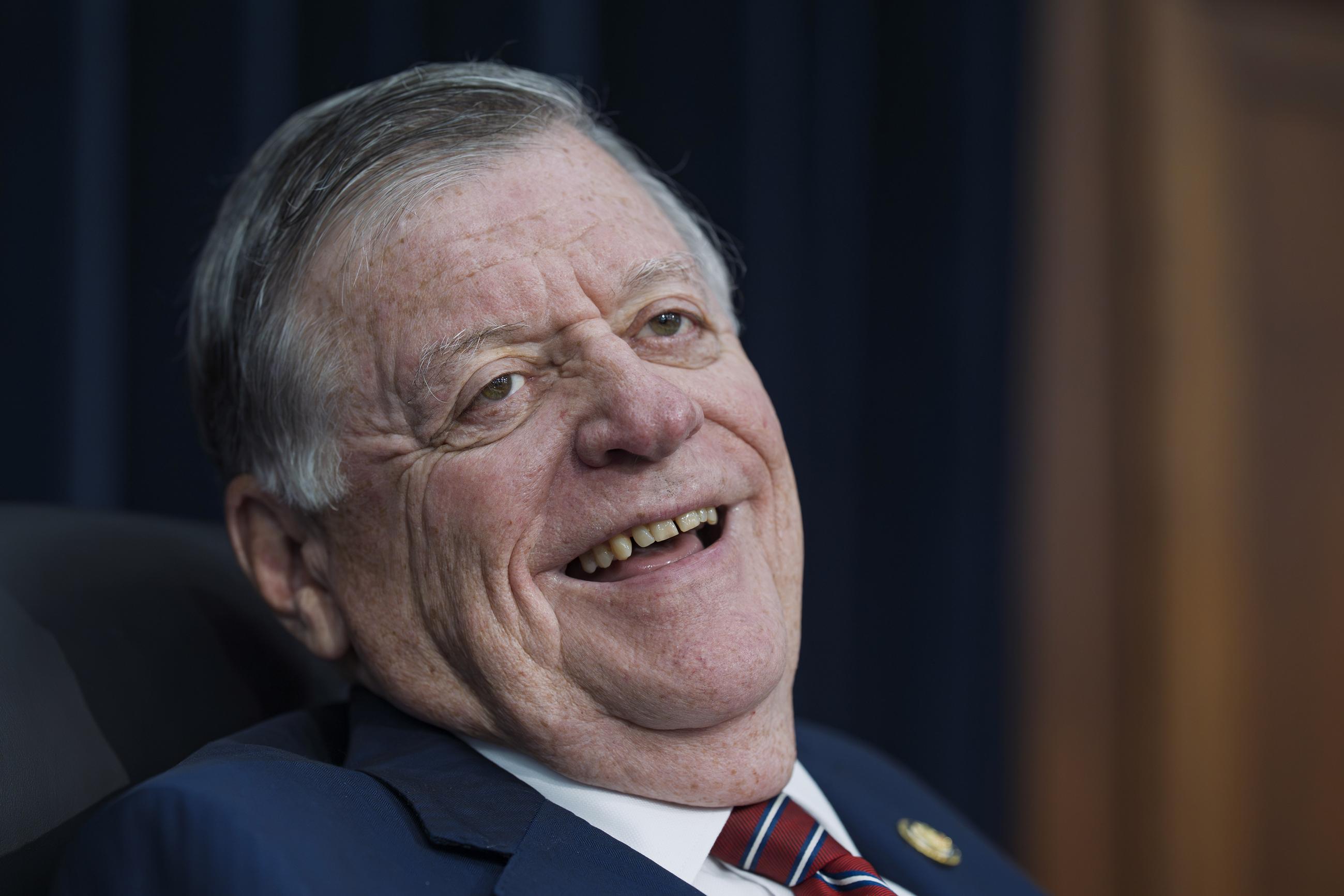
House Appropriations Committee Chair Tom Cole (AP Photo/J. Scott Applewhite)
None

Want more stories like this?

Subscribe to our free Sunday Nightcap newsletter, a weekly check-in on the latest in politics & policy with Editor in Chief, Jeff Dufour.

Jan. 29, 2026, 6:17 p.m.

As Congress hurtles towards another spending crisis, consider this: Donald Trump already has lost the battle over federal belt-tightening.

He marched into office vowing to slash spending at multiple agencies. He proposed a fiscal 2026 budget in March that would have done just that. But the Republican-led Congress never got the memo, passing spending bill after spending bill that ignored the president’s wishes.

Trump’s budget proposed cutting Labor Department spending by 35 percent (from $13.2 billion to $8.5 billion), but the House approved an increase to $13.5 billion. The budget would have sliced the Environmental Protection Agency by more than half ($9.1 billion to $4.2 billion), but the spending bill included $8.8 billion—a slight haircut. NASA faced a nearly 25 percent reduction to $18.8 billion but landed at $24.4 billion, a less than 2 percent cut. Remember how the Education Department was supposed to vanish? It’s getting more this year ($79 billion) than last ($78.7 billion).

The bipartisan spending bills for Labor and Education are expected to get Senate approval. Trump already has signed the spending bill that includes NASA and the EPA.

The Federal Emergency Management Agency was targeted as well, with Trump saying he wanted to abolish the agency and give the money to states, who he said were better positioned to oversee local emergency rescue and recovery efforts. But FEMA would get an increase in the budget—from $27.3 billion to $32 billion—assuming that figure remains in the overall Homeland Security Department appropriations bill, which is currently embroiled in a funding dispute between Democrats and Republicans over funding for Immigration and Customs Enforcement.

And what about Voice of America, the anti-authoritarian broadcasting arm Trump sought to dismantle? Congress has tentatively agreed to provide $643 million for its parent, the U.S. Agency for Global Media. That’s less than the $867 million lawmakers provided last year but considerably more than the $153 million the president proposed in his budget to commence the agency's “orderly shutdown.”

The funding amount left Kari Lake, the deputy CEO of the agency who has championed its demise, “disappointed” and resistant—a rare moment in Washington when a bureaucrat complains that Congress has handed over far too much taxpayer money.

That’s not to say Trump hasn’t won some spending fights.

The U.S. Agency for International Development, now tucked under Marco Rubio’s bulging portfolio in the State Department, is essentially no more. After federal money dried up for the Corporation for Public Broadcasting, which subsidized NPR, PBS, and scores of local radio and TV stations, its board voted to dissolve itself earlier this month. And the Elon Musk-led DOGE chainsawed its way through the federal workforce, excising tens of thousands of people from government payrolls while upending operations at numerous agencies.

Trump’s lack of success slashing as much as he wants is due to a few factors, including narrow GOP majorities in both chambers that require bipartisan deals to be made. As my colleague David Lightman points out, the push to reduce the debt has abated a bit, making deficit spending a palatable option. And the president is discovering a fundamental rule of Congress: It’s OK to cut the other guy’s priorities, just not mine.

Democratic Sen. Martin Heinrich, who sits on the Appropriations Committee, says he isn’t surprised that Republicans have largely rejected Trump’s budget.

“They weren’t realistic. The budget wasn’t realistic,” Heinrich said. “And my [GOP] colleagues have to live with the on-the-ground consequences of those budgets. And so if they would have engaged my Senate colleagues, they might have gotten more support.”

Presidential candidates often run on a platform to rein in wasteful government spending, only to find lawmakers have their own agendas to fund. But Trump returned to Washington with a self-proclaimed “mandate,” a mission to cut, and a cadre of aides—notably Budget chief Russell Vought—with sharp knives. Then he summoned Musk to help.

Vought has tried his own end run around Congress. The Government Accountability Office, Congress’s watchdog, found that the administration had violated the Impoundment Act on several occasions. In May, for instance, GAO concluded that billions in congressionally approved funding for electric-vehicle charging stations had been improperly frozen.

GOP Sen. Mike Rounds, who was governor of South Dakota before coming to Capitol Hill, said executives shouldn’t expect to get everything they want.

“I could make recommendations, but in both the South Dakota Constitution and the United States Constitution, the power of the purse lies with the legislative branch of government,” he said. “That’s our role, is to make those decisions as to where we spend the money and what it should be spent on. … I think there's negotiations in all of it, and if you notice I think you’ll find he signed the bills, which means they worked their way through.”

Rounds, a member of the Appropriations Committee, cut his own deal with the administration.

Amid the push to end funding for public radio stations, Rounds successfully fought to keep money for those run by Native American tribes in his state, where he said the remoteness of communities makes such media outlets vital.

“Was that a change from what they originally proposed? Yes,” he said. “But I think it addressed an area that, after further consideration, they decided we had made a point. I think that is a good way to do business.”

Welcome to National Journal!

Enjoy this featured content until February 21, 2026. Interested in exploring more
content and tools available to members and subscribers?

×
×

Welcome to National Journal!

You are currently accessing National Journal from IP access. Please login to access this feature. If you have any questions, please contact your Dedicated Advisor.

Login