
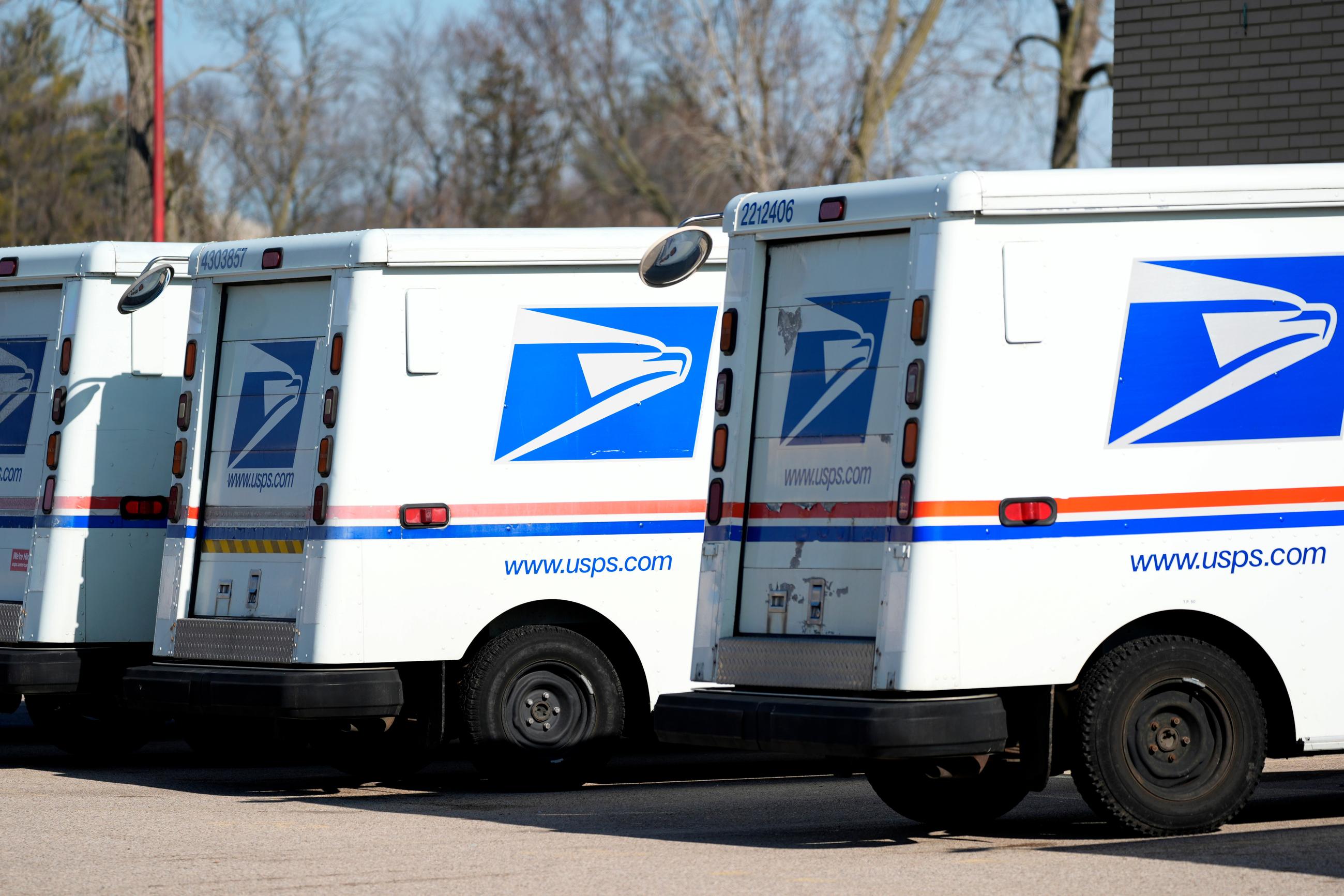

Get-out-the-vote groups have long begged voters to submit their ballots early, and new guidance from the United States Postal Service might add some weight to their pleas.
The guidance, which is not a change from previous policy, states that there is no guarantee that mail dropped into a mailbox will be postmarked on the same day. The guidance comes as the USPS navigates falling revenues and consolidation of processing facilities.
The practice of mail-in voting surged during the 2020 pandemic and has remained above pre-pandemic levels since. Roughly 30 percent of voters used mail-in ballots in 2024.
Jonathan Diaz, director of voting advocacy and partnerships at the Campaign Legal Center, said making the guidance explicit gives voters a better idea of how mail-in voting will be impacted.
“It’s a good thing, because we don’t want people to have incorrect assumptions about how quickly their mail will be processed or when a postmark will be applied,” Diaz said.
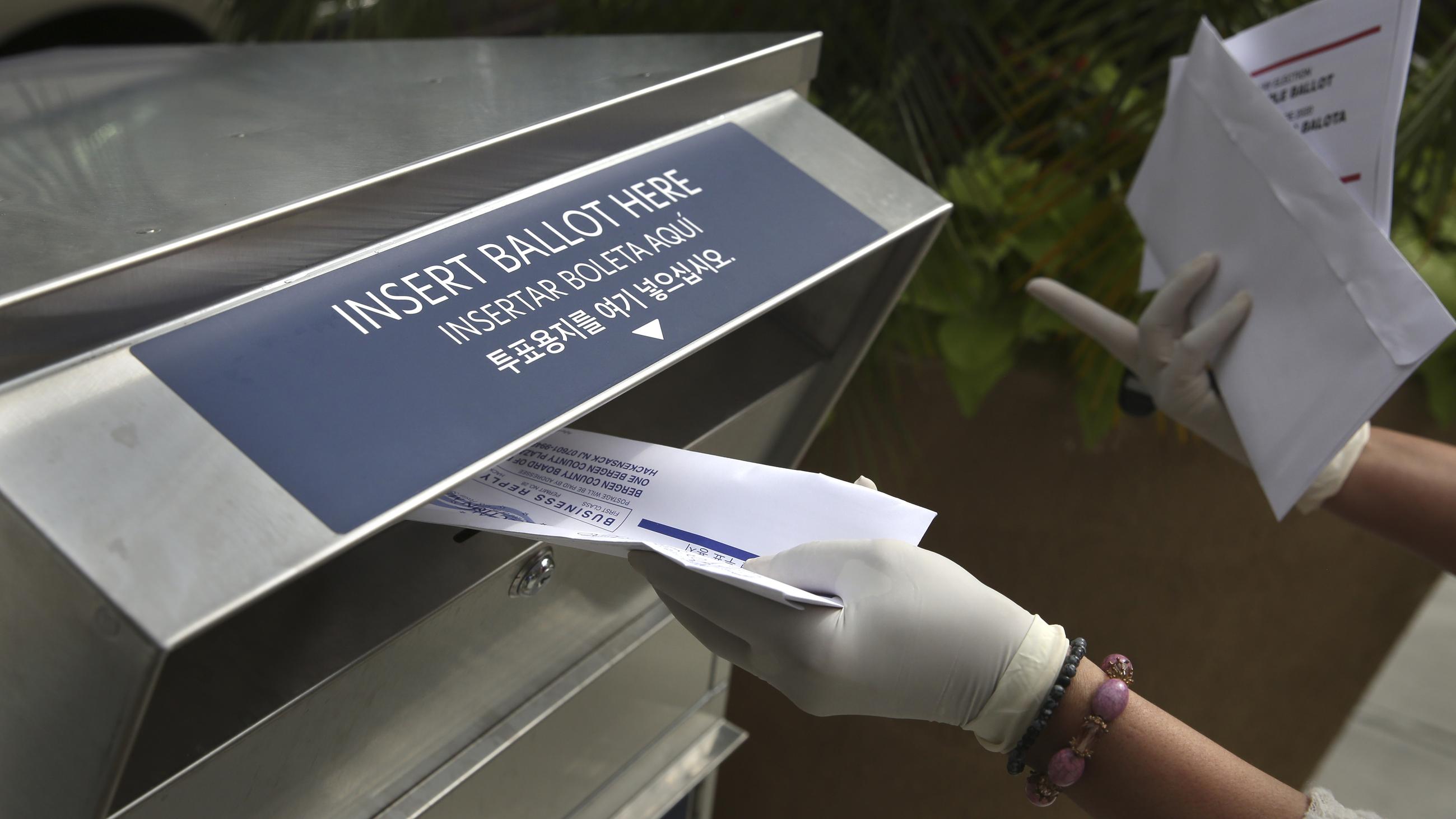
Most states only accept mail-in ballots received by Election Day, but 14 states accept ballots between one and 21 days afterward, so long as they are postmarked by Election Day. Twenty-nine states provide grace periods for military and overseas ballots.
Along with mail-in ballots submitted in the general election this November, the guidance will have implications for primaries throughout the year and for voter registration. In primaries, Washington state accepts ballots postmarked by Election Day for up to 14 days afterward.
The guidance comes as USPS embarks on an overhaul of its mail-processing system. In 2021, then-Postmaster General Louis DeJoy announced his “Delivering for America Plan,” which would close 200 mail-processing facilities in favor of regional hubs, often across state lines. DeJoy agreed to postpone the overhaul until 2025 after lawmakers argued it could impact the 2024 election.
Rural areas will likely be most impacted by the changes, as the postal service has reduced service and plans to consolidate further. Part of DeJoy’s plan is Regional Transportation Optimization, which reduces the trips made to pick up mail from post offices more than 50 miles away from regional processing hubs to once daily, usually in the morning.
“Those consolidations are likely to increase processing delays and processing times, and that could very well affect how soon a mail ballot is postmarked, depending on where you live and how your service area is affected by the consolidations,” Diaz said.
Outreach groups said they have historically advised voters to submit their ballots early to account for any unforeseen delays. They said that, as a rule of thumb, if voters have not put their mail-in ballots in the mailbox one week before Election Day, they should probably return it in person, either to an election office or to a dropbox—depending on the state—or vote in person instead.
“Voters can always choose to vote in person, even if they’ve received a mail ballot,” said Center for Election Innovation & Research Executive Director David Becker.
Since the 2020 election, Democrats have been more likely to vote by mail than Republicans, and Republicans are trying to expand their mail-in voting campaigns, despite President Trump having expressed skepticism over the process.
Last week, 14 Democratic senators, including Sens. Catherine Cortez Masto and Jacky Rosen of the swing state of Nevada, sent a letter calling on Postmaster General David Steiner to “reverse the underlying mail processing changes which contribute significantly to new postmark delays.”
“We should be working to make voting easier for eligible voters, not harder,” the senators wrote. “These changes will only increase the likelihood of voter disenfranchisement.”
USPS spokesperson Martha Johnson said the postal service “received the senators’ letter and will respond directly to those who sent it.”
“Our public filing was made to enhance public understanding of exactly what a postmark represents, its relationship to the date of mailing and when a postmark is applied in the process,” Johnson told National Journal in a statement. “That understanding we believe will help the mailing public plan accordingly.”
DNC Civic Engagement and Voter Protection Director Herlande Rosemond said the Democratic National Committee will create toolkits for state parties, campaigns, and organizational partners, including information on the USPS guidance.
“While Republicans and the Trump administration try to make it harder for Americans to cast ballots that get counted, Democrats are working overtime to relay new guidance to eligible voters, with our north star being a seamless voting process for everyone,” Rosemond said in a statement.
Republicans argue that states should only accept ballots received by Election Day.
“The USPS guidance highlights why clear deadlines matter, as processing delays can create uncertainty for voters and election officials,” Republican National Committee national press secretary Kiersten Pels told National Journal in a statement. “Where states allow mail-in voting, we will continue to communicate the rules clearly and work to ensure all lawfully cast votes are counted.”
The USPS has recommended that those who want to ensure their mail is postmarked on the day it was submitted can request a manual postmark from the post office. In their letter, Democratic senators said that idea was “unrealistic for millions of voters who vote by mail and will only serve to discourage mail voting.”
Rebekah Caruthers, president and CEO of the Fair Elections Center, said post offices frequently operate on standard business hours, which may make it more difficult for voters to go in to request a manual postmark.
Some voting-rights advocates see the guidance as part of the Trump administration’s continuing scrutiny toward voting processes. The Supreme Court ruled last week that candidates can challenge their states’ voting laws, after Rep. Mike Bost of Illinois challenged the state’s rule accepting ballots after Election Day. Later this year, the Supreme Court will hear arguments in Watson v. Republican National Committee, a similar case challenging the Mississippi law accepting ballots received within five days of Election Day.
“What we’re seeing is more friction being injected into the system of voting in this country,” Caruthers said.
Caruthers said the USPS guidance has sparked voter confusion over the reliability of voting by mail, but that she and other voting-rights advocates still stress the validity of mail-in ballots.
“Now, we’re seeing this administration being extremely hostile to would-be voters in this country, and so now we’re going to have to educate those voters,” she said.
“Our system is functional,” she added. “It can work. It will work.”