National Journal Logo
×

Welcome to National Journal!

Enjoy this premium "unlocked" content until March 31, 2026.

Continue

A year into office, Trump threatens to fall into the same traps as Biden

Inflation, foreign entanglements, and health concerns have plagued the pair of presidents.

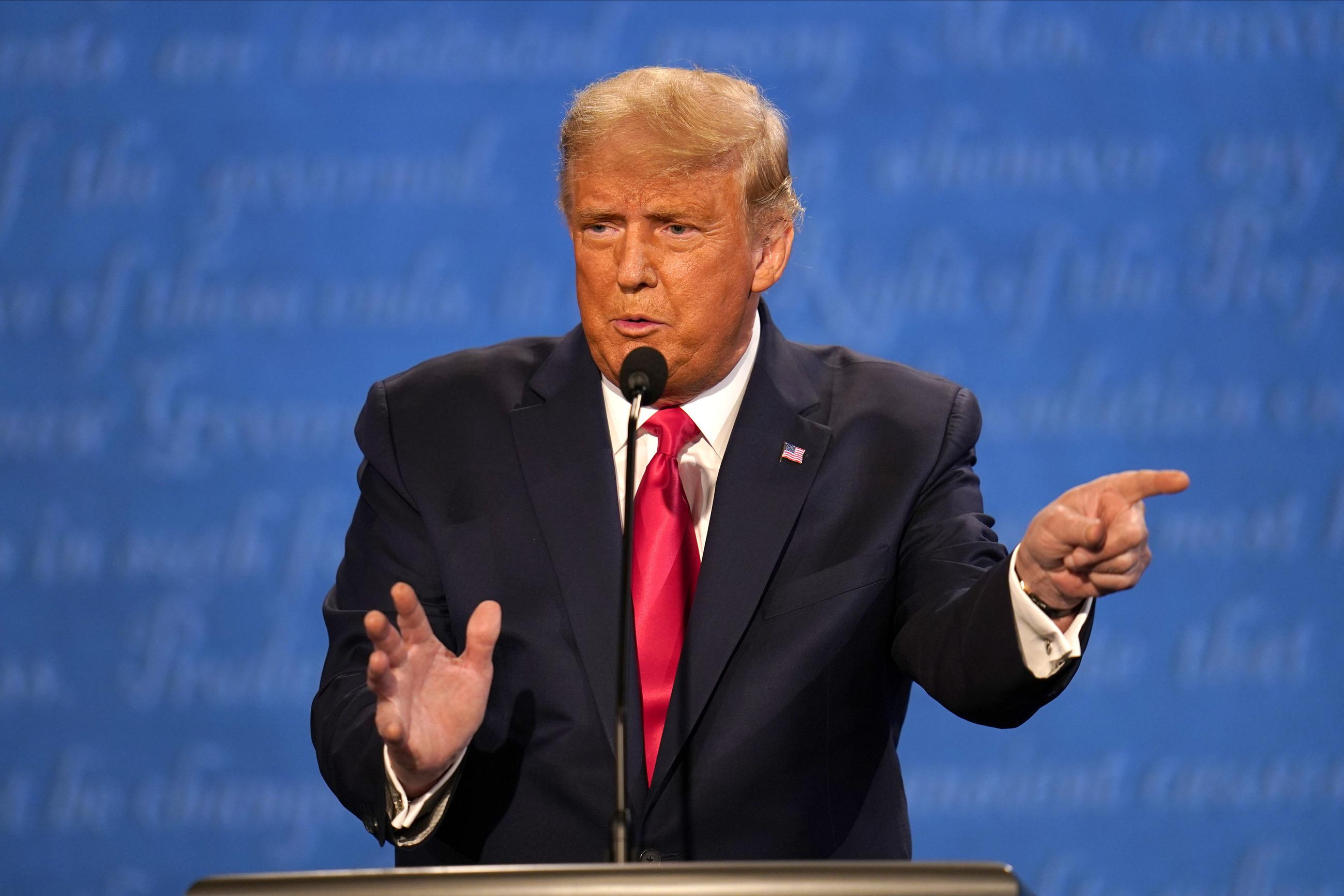
Donald Trump debating Joe Biden in October 2020 (AP Photo/Julio Cortez)
ASSOCIATED PRESS

Want more stories like this?

Subscribe to our free Sunday Nightcap newsletter, a weekly check-in on the latest in politics & policy with Editor in Chief, Jeff Dufour.

Add to Briefcase
Erika Filter
Jan. 20, 2026, 3:55 p.m.

A septuagenarian president battles concerns over his age and struggles to convey to voters his economic message, denying their felt experience with cost of living. Instead he points to the stock market, 401(k)s, and low unemployment. Foreign entanglements vex him despite his campaign vows to end American adventurism and his claims to be able to make deals with other heads of state.

Murky information about his physical and mental health trickles out in anonymously sourced reports as the president insists he’s up to the task of leading the free world. In some corridors of power, there are hushed whispers of sidelining him, but party elders are standing down—for now. As his party's base distances from him, figures from other wings of the party battle to succeed him.

The similarities between President Trump and former President Biden are striking, especially as the former appears to be falling into the same traps as the latter. Though on the campaign trail Trump excoriated Biden for his handling of the economy, his age, and his foreign entanglements, he has not apparently shifted his anger inward even as he approaches a year in office.

“Joe Biden gave us a colossal catastrophe, but my administration has rapidly and very decisively ended that,” Trump said during an economic speech in Detroit last week. “We have quickly achieved the exact opposite of stagflation—almost no inflation and super high growth.”

During his term, Biden acknowledged inflation and high food and gas prices, but he struggled to convey his economic successes such as job growth and wage gains. Trump, who has dismissed affordability as a “fake word” and a “hoax,” is similarly struggling to win voters’ support on the economy.

“Maybe I have bad public relations people, but we’re not getting it across. We inherited high numbers and we brought them way down,” Trump said at a press briefing Tuesday.

A PBS News/NPR/Marist poll taken last month showed 36 percent of Americans approve of the president’s handling of the economy. Biden’s approval on the economy also dipped to 36 percent in early 2022 but improved slightly before the end of his term.

“He does run the risk of looking like he’s massively out of touch with the electorate,” Republican strategist Liz Mair said of Trump.

Just 24 percent of independents approve of Trump’s economic stewardship, compared to 32 percent who approved in July. Mike Madrid, a GOP strategist and co-founder of the anti-Trump Lincoln Project, said that while "his base is more cohesive than Biden's was" and may stick with him, the flight of independents may sound the death knell for the GOP in the midterms.

Trump’s always been absurd, but the absurdity is increasing at a time when he’s starting to lose political capital. 
— GOP strategist Rob Stutzman

Toward the end of Biden's time in office, other issues also came to define him and led Democratic dissent. Democrats criticized his handling of immigration and of Israel’s war against Hamas.

On the campaign trail, Rep. Dean Phillips was Biden's sole, long-shot primary challenger.

Phillips stepped down from his leadership position in the House over his arguments for an alternative to Biden, and he lost his challenge handily.

Despite his worsening approval on the economy and low consumer sentiment, Trump has pursued retribution against his political enemies and has focused on efforts abroad like ending Israel’s war in Gaza, intervening in Venezuela, and most recently discussing the prospect of buying Greenland—trusting his base to stick with him.

“Trump’s always been absurd, but the absurdity is increasing at a time when he’s starting to lose political capital,” GOP strategist Rob Stutzman said.

While congressional Republicans have largely stayed in line with Trump, there have been cracks in the coalition. Rep. Thomas Massie launched a revolt against Trump and House Speaker Mike Johnson, leading a near-unanimous vote in Congress to release the Epstein files after the White House had pressured lawmakers to drop the issue.

“He completely rolled the speaker and the president, legislatively. That’s powerful,” Stutzman said of Massie. “He did it because he had the base behind him.”

Then-Rep. Marjorie Taylor Greene similarly went head-to-head with Trump on the Epstein files, called on Congress to end the 47-day government shutdown, and broke with Trump on foreign affairs positions like involvement in Israel’s war and the bailout of Argentina.

Aside from the Epstein vote, a number of congressional Republicans have had notable splits with Trump in recent months, with some supporting a Democratic-backed measure to extend Affordable Care Act subsidies and voting to block him from further military interventions in Venezuela.

Some of Trump’s more outspoken critics, including Greene and Sen. Thom Tillis, decided to head for the exits shortly after breaking with him. But GOP strategists said the claws may come out more strongly if Republicans lose the congressional majority this fall.

“The post-Trump world is in full effect after the midterms if the Democrats do well,” Madrid said.

Whether Trump will maintain a hold on his coalition will also color the 2028 presidential primary. Vice President J.D. Vance is the president’s heir apparent, but like former Vice President Kamala Harris when she tried to succeed Biden, he may be unable to overcome the president's negative headwinds. Sens. Rand Paul, Josh Hawley, and Ted Cruz are all positioning themselves to take alternative paths to 2028, though none have publicly expressed ambition for higher office.

“The inability for him to keep the base in line is a demonstrable sign that there’s positioning for a post-Trump world,” Madrid said. “That’s not really something we’ve seen before.”

Following Trump’s departure from the Oval Office in 2021, he quickly bounced back to relevancy within the party, impacting Republicans’ midterm performance and ultimately defeating primary challengers to win the presidential nomination once more in 2024. Now, without another reelection battle on the horizon in 2028, his influence might fade.

“I wouldn't be terribly surprised if whoever is the defining character in the Republican Party by the time we get to 2028 is completely different to Donald Trump and the only real similarity is the party label, Democrats trotting out the same old attacks whether they’re true or not, and some focus on lower taxes,” Mair said.

Welcome to National Journal!

Enjoy this featured content until March 31, 2026. Interested in exploring more
content and tools available to members and subscribers?

×
×

Welcome to National Journal!

You are currently accessing National Journal from IP access. Please login to access this feature. If you have any questions, please contact your Dedicated Advisor.

Login