National Journal Logo
×

Welcome to National Journal!

Enjoy this premium "unlocked" content until February 28, 2026.

Continue

James Fishback tests how GOP addresses groyper-aligned movement

Far-right candidates are likely to gain steam ahead of 2028, experts say.

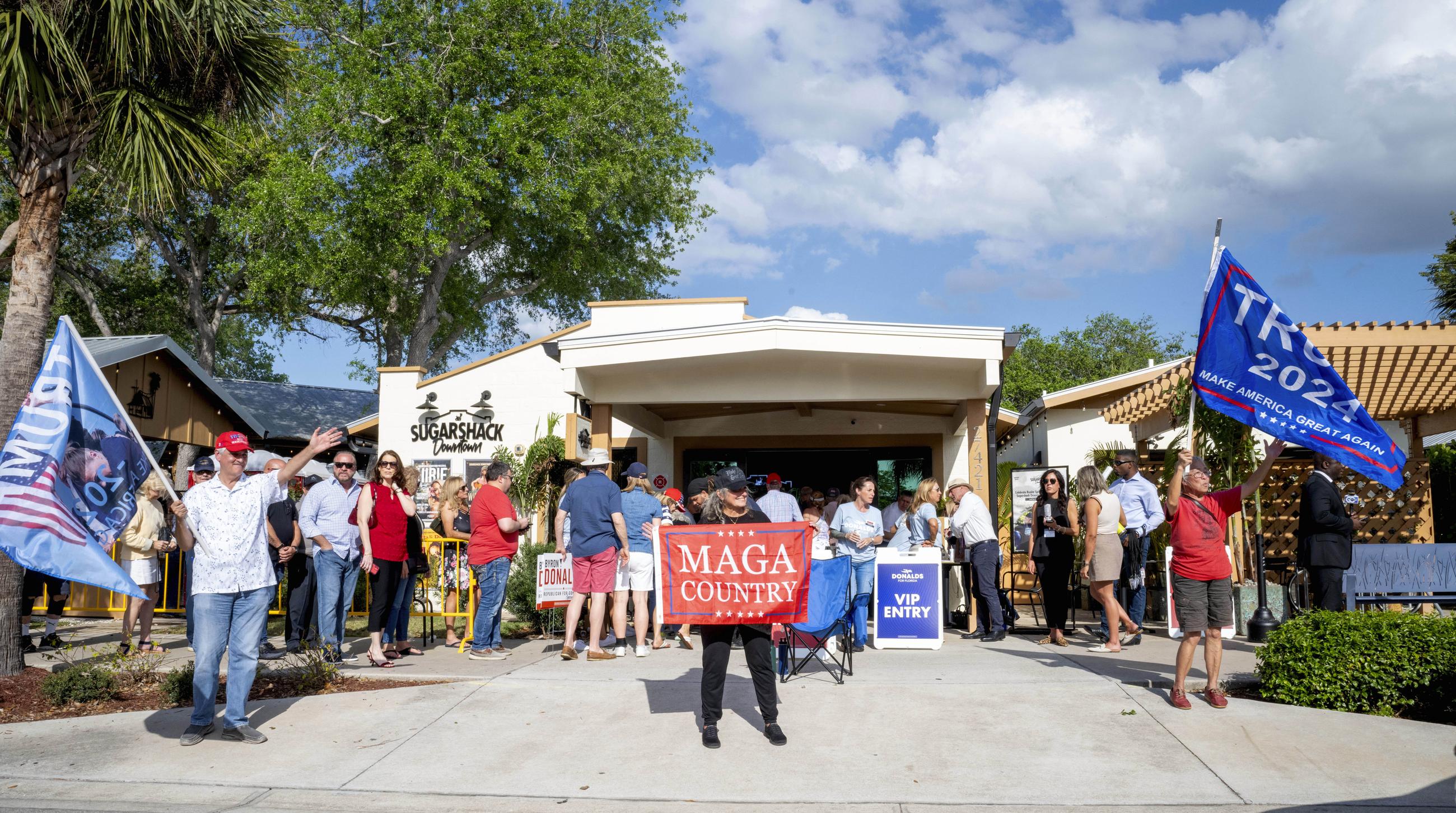
Supporters stand in line and wave flags before the start of the gubernatorial campaign kickoff rally for Rep. Byron Donalds in Bonita Springs, Fla., in March. (AP Photo/Chris Tilley)
ASSOCIATED PRESS

Want more stories like this?

Subscribe to our free Sunday Nightcap newsletter, a weekly check-in on the latest in politics & policy with Editor in Chief, Jeff Dufour.

Add to Briefcase
Abby Turner
Jan. 13, 2026, 5:18 p.m.

Florida gubernatorial candidate James Fishback rejected a potential endorsement from white nationalist Nick Fuentes. Not over his far-right views, but because Fuentes isn’t a Florida resident.

“I would not welcome or solicit an endorsement with anyone who is not eligible to vote in the state of Florida,” Fishback told National Journal. Fuentes, who has been described as a “Nazi” by former Vice President Mike Pence, said he’s “very impressed” by the long-shot candidate but won’t endorse him now over fears of harming Fishback’s campaign.

As far-right figures such as Fuentes gain online influence and the ear of younger conservative voters, Republicans remain divided over how to respond, wary of alienating a base they need to win elections. That hesitation is creating space for candidates such as Fishback to run hard-line nationalistic campaigns, which experts and politicos expect more of ahead of 2028 as Republicans grapple with defining themselves in a post-Trump era.

Fishback is running on a platform that includes opposing legal immigration, banning H-1B visas, and fully divesting from Israel—positions at odds with mainstream Republicans.

His campaign has drawn praise from both Fuentes and former Fox News host Tucker Carlson—a Florida resident—who, when interviewing him last week, told Fishback “you’ve gotten my vote” and predicted "winning Republicans” will soon sound like the candidate.

At the same time, Fishback has drawn criticism for racially charged language. He called his opponent, Rep. Byron Donalds, “By’rone” and a “slave” for accepting pro-Israel funds, saying he would turn the state into a “section 8 ghetto.” He’s also taken shots at Ohio gubernatorial candidate Vivek Ramaswamy, telling a crowd he doesn’t know how to hold a fork or wear shoes.

Though his views haven't propelled him to the front of the Florida gubernatorial race, they are resonating with the growing younger, dissatisfied wing of the Republican Party.

Nick Fuentes (AP Photo/Jacquelyn Martin, File)
Nick Fuentes (AP Photo/Jacquelyn Martin, File) ASSOCIATED PRESS

Fishback told National Journal he regularly hears from Florida college students frustrated with the job market, “not because the economy is bad, but because companies are deciding to import cheap foreign labor instead of higher qualified Americans right here in our state.”

He has also praised supporters of Fuentes, known as “groypers” online originating from the Pepe-the-Frog meme, as “incredibly informed and insightful.”

“I think I can only speak for the people that I've met in person, the young men who say that Nick Fuentes is someone they regularly watch online, the young men that I have met, that I've sat across with and shaken their hand,” Fishback told National Journal. “I found them to be very insightful and patriotic.”

When asked if he agrees with The Bulwark’s label of him as the first “groyper politician,” he said “the only label that I identify with is an unapologetic American and a Christian.”

Despite the attacks and proposals at odds with mainstream GOP platforms, Republicans are largely remaining silent.

Matt Dallek, a political historian at George Washington University, and Joseph Uscinski, professor of political science at the University of Miami, said the silence reflects a strategic calculation by Republicans not to alienate a growing wing of the party.

“There are always candidates who run and express views that voters don't like, and many of them don't win, and we tend to forget about those candidates,” Uscinski said. “What parties need to think about is if we allow people with outsider views or potentially offensive views to run under the banner, what are we going to lose versus what do we gain if you start pushing people out of the party? You lose them and their supporters.”

The more the party calls out these candidates, the more legitimate they appear to their followers, Dallek said. Republicans might be keeping quiet in order not to “give these people more oxygen” or “call attention as well to how far the groypers have come within the Republican Party,” he added.

Not all agree that silence is the right approach. Gabriel Groisman, a GOP consultant and former mayor of Bal Harbour, Florida, agreed that Republicans haven’t engaged because Fishback faces an uphill battle in the governor’s race. Still, he said the candidate's recent interview with Carlson elevates him to a larger stage and gives Republicans an opportunity to reject and condemn his rhetoric.

“He's not going anywhere at all politically speaking. But when you realize that it's part of a broader movement that's coming rolling across our country, that's something that I think all people need to pay attention to,” Groisman said.

Ramaswamy has also urged conservative leaders to “condemn—without hedging—Groyper transgressions.” He warned in a New York Times op-ed that the rise of the movement represents a deeper threat than ordinary policy disagreements.

Experts say a campaign like Fishback’s is unlikely to be an isolated case. Right-wing internet activists, and candidates, are now appealing to crowds that weren’t a part of the GOP coalition years ago or were an underserved portion of the party, Uscinski said.

The Ohio gubernatorial race is a prime example. Casey Putsch, a long-shot opponent to Ramaswamy in the GOP primary who has 350,000 Youtube subscribers, is running on a campaign similar to Fishback’s, supporting banning legal immigration and H-1B visas.

Putsch called political commentator Ben Shapiro a “rodent” and said Shapiro is wrong for saying Adolf Hitler had “no good ideas.” He has also criticized his opponent’s op-ed condemning groypers, saying Ramaswamy “wanted to group everybody into a corral, because 'if you don't like Vivek Ramaswamy, it's because you're a racist, terrible person' and not because Vivek Ramaswamy is actually a garbage candidate.”

Still, social media buzz does not equal campaign donor engagement, Uscinski said. Fishback raised $950 in the last five weeks of 2025 and has yet to crack double digits in any polls. But he is still framing his bid as a “proxy for what the party looks like,” as he put it on Carlson’s show.

Campaigns such as Fishback’s and Putsch’s aren’t primarily about winning races, but about seeing how far they can push the party.

“They're doing it on the Right. They’re not going to win, but what they're doing is continuing to inflame their movement, their own movement, and with the hopes of pulling the party and the conservative movement more and more to the right,” Groisman said.

The Florida race is unlikely to be the last proxy race for Republicans. A party that doesn’t “explicitly, forcefully and consistently condemn its more extreme elements is likely to see those elements grow within their rank,” Dallek said.

“It wouldn't be surprising if in 2028 you had more groypers running.”

Welcome to National Journal!

Enjoy this featured content until February 28, 2026. Interested in exploring more
content and tools available to members and subscribers?

×
×

Welcome to National Journal!

You are currently accessing National Journal from IP access. Please login to access this feature. If you have any questions, please contact your Dedicated Advisor.

Login