National Journal Logo
×

Welcome to National Journal!

Enjoy this premium "unlocked" content until March 31, 2026.

Continue

Redistricting reflections with NDRC President John Bisognano

The Democrats' redistricting chief takes stock of an unprecedented scramble for seats, and looks ahead to coming battles.

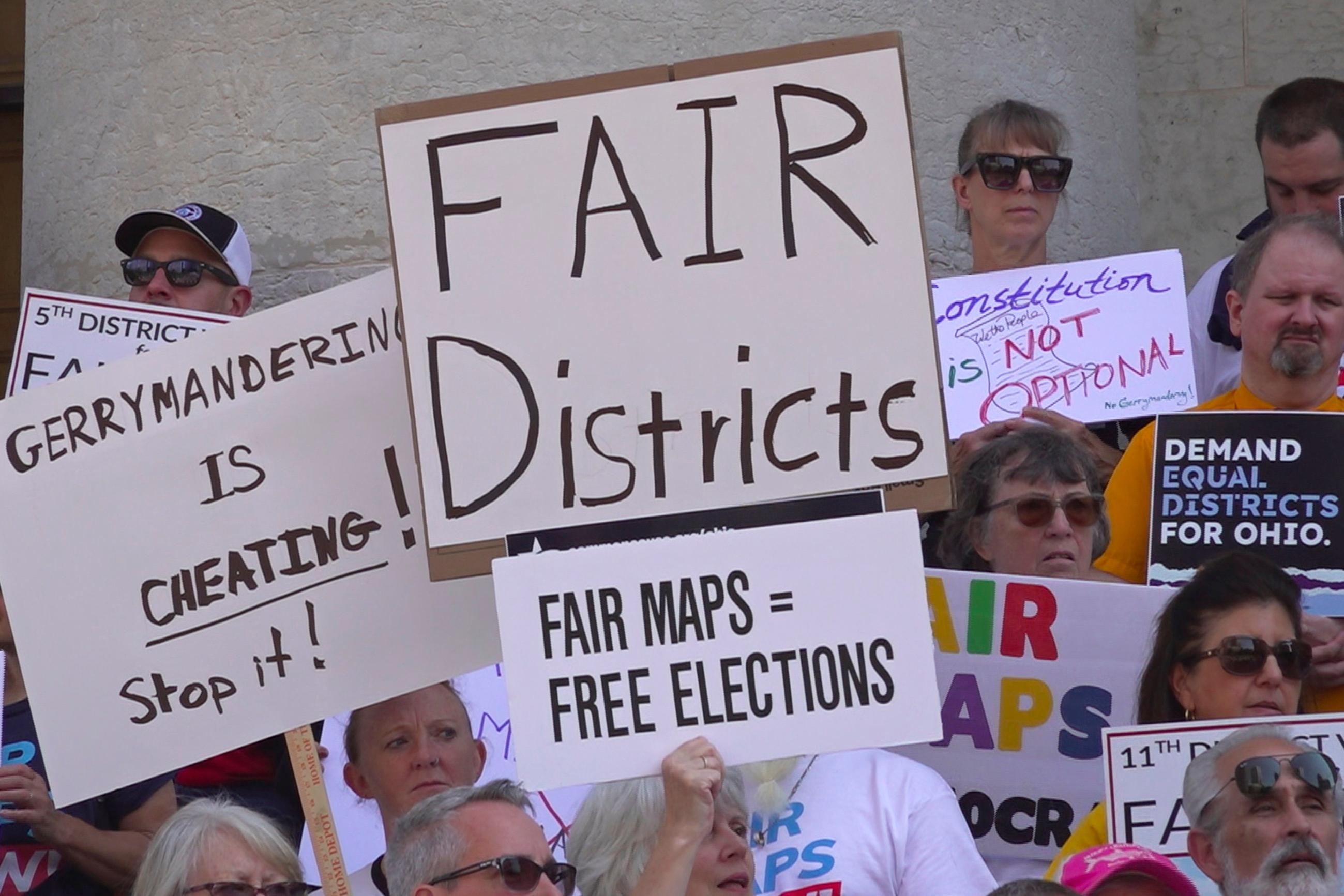
This photo taken from video shows organizers rallying outside of the Ohio Statehouse in Columbus to protest gerrymandering on Sept. 17, 2025. (AP Photo/Patrick Aftoora-Orsagos, File)
ASSOCIATED PRESS

Want more stories like this?

Subscribe to our free Sunday Nightcap newsletter, a weekly check-in on the latest in politics & policy with Editor in Chief, Jeff Dufour.

Jan. 6, 2026, 6:09 p.m.

BOSTON—Redistricting began 2025 primarily as an afterthought, as it does most years. There were a handful of lingering legal challenges concerning questions of racial bias in some states, but nothing out of the ordinary. The same nationwide congressional map hasn’t been used in consecutive elections since 2014.

That trend seemed certain to continue until last summer, when President Trump called upon Texas to redraw its lines during a special session, potentially netting Republicans up to five seats.

That spurred a race around the country for other states to find legal and political avenues to redistrict their maps, upending the House battlefield and casting a shadow of chaos and uncertainty as the midterms loomed. The outlook appeared dire for Democrats at the beginning as Republicans raced to find new districts wherever they could.

Missouri Republicans quickly drew a Democrat out of a Kansas City-area seat, and North Carolina managed to add a Republican seat with little fanfare. However, Republican redistricting in 2025 came to a dramatic close in Indiana, where state Republicans at the end of December rejected a Trump-pushed map that would have netted the party two seats, putting an exclamation mark on a rapid half year of map-drawing.

National Democratic Redistricting Committee President John Bisognano reflected on the rollercoaster year of redistricting with National Journal from a café in Boston’s historic North End. He said he believed the redistricting battles were not yet finished and will continue up to filing deadlines.

“I actually think it started in January when Donald Trump began doing his maximalist approach to the world, and everyone slowly began to process what he was going to be like as a second-term president,” Bisognano said.

Since its inception, the NDRC has traditionally supported removing politicians from the districting process in favor of independent commissions. Bisognano added that he felt he and his team were prepared for potential machinations in Texas and elsewhere, which led to NRDC Chairman Eric Holder’s response in supporting the California gerrymander.

Bisgonano said Trump threatened to return the congressional battlefield “to the days of 2014, where only one party could win,” which catalyzed his committee’s pivot toward supporting mid-decade redraws. The California plan, which passed overwhelmingly via statewide initiative, marked a major win for Holder, Bisognano, and the committee. After California, Democrats began to chip away at GOP gains throughout the summer months. They scored a win in Utah when a district court judge struck down the Republican-drawn map and selected one with a new Democratic seat in the Salt Lake County area. Virginia Democrats also kicked off the process by passing a constitutional amendment through the Legislature.

Heading into 2026, Bisognano said there’s still much to be determined before votes are cast in the midterms, and he said he’s concerned that Indiana’s failure might only embolden Trump to more aggressively pursue redistricting in other states.

“I think places like Virginia and Florida are going to be critical to what the map looks like nationally in 2026,” he said.

Virginia Democrats announced that they plan to reengage with redistricting next week when they return to Richmond for the start of their legislative session. The path to a new map in Virginia is not without hurdles, as lawmakers must pass an amendment through both Democratic-controlled chambers before a statewide vote to grant the Legislature the authority to redraw the map. Some Democrats in the commonwealth want to net up to four seats.

In Florida, Republican Gov. Ron DeSantis has flirted with redistricting for months, arguing that population shifts in the state since the last Census necessitate a new map. Republicans could pick up somewhere between three and five seats there.

Then, the Supreme Court decided to rehear a case on a Louisiana map, threatening the Voting Rights Act and minority-protected districts.

All told, Bisognano said he’s happy with the work his group accomplished last year in raising awareness on an issue that’s otherwise relatively insignificant for voters, pointing to the more than 7 million voters who came out in favor of the California map.

“I think most people reject the notion that the House of Representatives should be rigged and only have the ability for one party to maintain power,” he said.

“I genuinely believe that if you talk to a person on the street, maybe they won’t say, ‘I definitely want Democrats to win the House of Representatives in 2026.’ What they probably will say is, ‘I want whomever gets the most votes to be able to win the House.’”

Welcome to National Journal!

Enjoy this featured content until March 31, 2026. Interested in exploring more
content and tools available to members and subscribers?

×
×

Welcome to National Journal!

You are currently accessing National Journal from IP access. Please login to access this feature. If you have any questions, please contact your Dedicated Advisor.

Login